
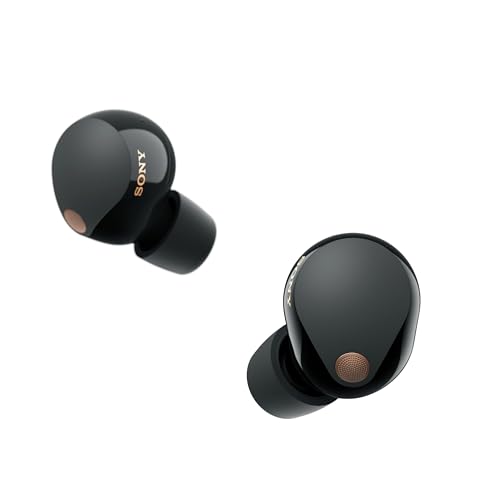

One-line verdict: Choose Sony for the more platform-neutral premium ANC package; choose Samsung when a recent Galaxy phone, stronger weather protection, and Samsung-only conveniences define the purchase.
Why this matchup matters
These earbuds compete at the premium end of true wireless, yet they create value in different ways. Sony treats the earbud as an independent audio product: its strongest reasons to buy travel across compatible phones, and LDAC gives many Android users a higher-quality codec option. Samsung treats the Buds3 Pro as an extension of a Galaxy device, where its proprietary codec, 360 Audio, and integrated controls can operate as a coordinated system.
That distinction matters more than a small score difference. A Galaxy owner may receive more practical benefit from Samsung every day, while someone who changes phone brands could lose part of that advantage. Sony is less dependent on one manufacturer, but its foam-style tips and lower IPX4 protection introduce their own ownership tradeoffs. The right answer therefore starts with your phone, fit, and routine—not a universal ranking.
Decision scorecard
This scorecard is a decision aid, not a claim of controlled laboratory superiority. The winners reflect the product design, supported features, and the use cases in which those differences are most likely to matter.
| Decision | Sony WF-1000XM5 | Samsung Galaxy Buds3 Pro |
|---|---|---|
| Best default | Winner for mixed-device and broad Android use | Best when paired with Galaxy |
| Sound options | LDAC and Sony EQ tools | SSC/SSC-UHQ on supported Galaxy devices |
| Travel and ANC | Mature commute-first package | Strong feature-led alternative |
| Durability | IPX4 splash resistance | IP57 dust and water resistance |
| Ecosystem | Less phone-brand dependent | Winner for Galaxy integration |
| Fit priority | Seal-sensitive foam-style tips | Stem design and conventional daily handling |
Sound and technical philosophy
Sony’s philosophy is smooth, controlled, and adjustable. The WF-1000XM5 is positioned as an all-rounder rather than an earbud that forces one dramatic signature. Sony’s app EQ and LDAC support on compatible Android hardware give listeners useful ways to shape or preserve the presentation. Codec support does not guarantee better sound by itself: source quality, Bluetooth conditions, fit, and mastering remain important.
Samsung combines a dual-driver approach with processing built around its own devices. On compatible Galaxy hardware, SSC and SSC-UHQ are central to the proposition; outside that environment, the earbuds fall back to more conventional codec support. The evidence pattern favors Samsung for an owner who will actually use its complete stack, but Sony for buyers who want their core sound features to survive a future phone change. Neither option should be chosen from codec names alone.
Noise canceling and features
Sony has the clearer commute-first identity. Its combination of active noise cancellation, passive isolation from the tips, ambient control, and a mature companion app is designed to reduce friction across trains, offices, and walking routes. Results will still depend heavily on seal: poor tip contact lets outside sound bypass both products and can make an otherwise capable ANC system seem ineffective.
Samsung counters with adaptive and voice-oriented features, 360 Audio, and close integration with Galaxy settings. Those can be genuinely useful, but they are not all equally valuable to every listener. Buyers should separate features they will enable weekly from impressive menu items they may try once. For simple cross-platform noise reduction, Sony is the safer inference; for a Galaxy-centered routine, Samsung’s broader system behavior can outweigh that edge.
Fit, comfort, and daily use
The Sony buds are compact, but their foam-style tips make fit a deliberate part of ownership. A secure seal can improve bass consistency and isolation; the wrong size can create pressure, loosen during movement, or require more cleaning. Buyers who dislike foam maintenance should account for that before choosing Sony, because theoretical ANC strength is irrelevant if the tips discourage regular use.
Samsung’s stem format changes handling and control placement, while its IP57 rating gives it the more reassuring specification for dust, sweat, and rain. That does not make either model indestructible, and charging cases should still be kept dry. Ear anatomy remains decisive. Buy from a seller with a suitable return policy if you cannot try them, and test comfort over a normal work session rather than judging only the first five minutes.
Ecosystem and connectivity
Sony is the more neutral choice. Its app, EQ, and LDAC story is particularly relevant to Android, yet the basic earbud proposition is not built around owning a Sony phone. That makes it easier to recommend in mixed households or to buyers who replace phones independently of audio gear. Multipoint-style workflows and app behavior should still be checked against the exact devices you intend to use.
Samsung’s best case is intentionally narrower. Galaxy device switching, Samsung codec support, 360 Audio, and system-level controls are reasons to choose it with a recent compatible Galaxy product. iPhone or non-Galaxy Android owners should not pay as though every headline feature transfers unchanged. Compatibility can also vary by device generation and software, so confirm your phone’s support rather than assuming the Galaxy name alone unlocks everything.
Battery and calls
Battery figures for true-wireless products vary with ANC, codec, volume, calls, and feature use. Treat manufacturer endurance claims as planning ceilings rather than guaranteed daily outcomes. Both cases extend listening through recharges, but real ownership is also shaped by how often you use the buds for short sessions and whether the case is routinely topped up.
For calls, microphone processing must balance voice clarity against wind and traffic. The stem arrangement may make Samsung attractive for frequent conversational use, while Sony’s processing package remains designed for everyday calls. Neither specification sheet can promise performance in your exact street or office. If calls are mission-critical, prioritize retailer return terms and test with the phone, conferencing app, and locations you actually use.
Value and pricing context — July 2026
As of July 2026, both are mature premium models and promotional pricing can change quickly by color, retailer, and region. MyHiFi is not inserting an unverified “current” dollar figure here. Compare the live total at checkout, warranty coverage, return window, and whether a deal is for new, refurbished, or marketplace stock.
At similar prices, Sony offers broader value because fewer benefits depend on one phone brand. Samsung can be the better value for a compatible Galaxy owner because ecosystem features are part of the product they will use, not an abstract bonus. A meaningful Samsung discount can also shift the decision for durability-focused buyers; a Sony discount strengthens its position as the general-purpose recommendation.
Sony WF-1000XM5
- You use mixed devices or may change phone brands.
- Commute-focused ANC and a compact case are priorities.
- You want LDAC on compatible Android hardware and Sony EQ tools.
- You accept foam-style tip care in exchange for strong isolation.
Samsung Galaxy Buds3 Pro
- A recent compatible Galaxy phone is your daily device.
- You will use Samsung codec, 360 Audio, and device features.
- IP57 protection matters for workouts, rain, or dusty bags.
- You prefer Samsung’s stem-style controls and system integration.
Final buying advice
For most shoppers without a firm ecosystem commitment, start with the Sony WF-1000XM5. Its feature set is easier to carry between devices, and its ANC-oriented design suits the common premium-earbud jobs of commuting, office focus, and travel. Make sure you are comfortable with the tip material and can obtain a stable seal.
For a committed Galaxy owner, the Galaxy Buds3 Pro can be the more coherent purchase. Its proprietary features and IP57 rating are practical differentiators, not merely branding, when your phone supports them. Ignore the overall score if Samsung better matches your hardware and environment; ignore ecosystem promises if you use another phone. That simple filter resolves this matchup more reliably than chasing a single declared winner.
For the product-by-product context behind this comparison, read the Sony WF-1000XM5 full review and the Samsung Galaxy Buds3 Pro full review.
MyHiFi may earn a commission from purchases made through affiliate links. This does not influence our editorial decisions or source selection.