
One-line verdict: DX5 II is the better deal for most systems. Element IV is worth the extra US$250 only when its hardware-resident correction, encoder and support are part of the purchase—not as a promise of audibly cleaner stock output.
The price gap is buying philosophy
Both products combine a transparent DAC, powerful headphone amplifier, digital volume and variable line output. Both store parametric equalization on the device. Both can drive sensitive earphones and demanding full-size headphones. A basic feature checklist therefore makes Element IV's US$549 price look uncomfortable beside DX5 II at US$299.
The distinction is where each company spends the budget. Topping maximizes silicon, balanced power, input/output count and measured value. JDS Labs concentrates on an unusually large optical encoder, persistent output-specific correction, continued firmware development, customization, direct support and a US-assembled product. One is the stronger specification purchase; the other is the more deliberate interaction design.
Measured transparency: stop expecting a night-and-day DAC difference
DX5 II's dual ES9039Q2M implementation reaches exceptionally low distortion and approximately 133dB published SNR/DNR. Independent testing placed it among the strongest measured DACs in that program. Its 1.8µVrms noise floor is low enough for sensitive IEMs, and minor low-level linearity imperfections do not create a reasonable everyday audibility claim.
Element IV's RCA output measures roughly 117.4–118.0dB SINAD, around 119.5dB AES17 dynamic range and 120.7dB SNR in separate exact-model tests. Audible-band headphone noise also measures 1.8µVrms, with 0.22Ω output impedance and excellent low-level channel matching.
DX5 II can win a leaderboard while both remain transparent in normal use. Neither measurement set supports paying US$250 for an obvious uncorrected sound-quality transformation. Speakers or headphones, EQ, level matching and recording quality will dominate. Element IV's defensible audible advantage is what its DSP can intentionally change.
Power: DX5 II wins the headline, with one important qualifier
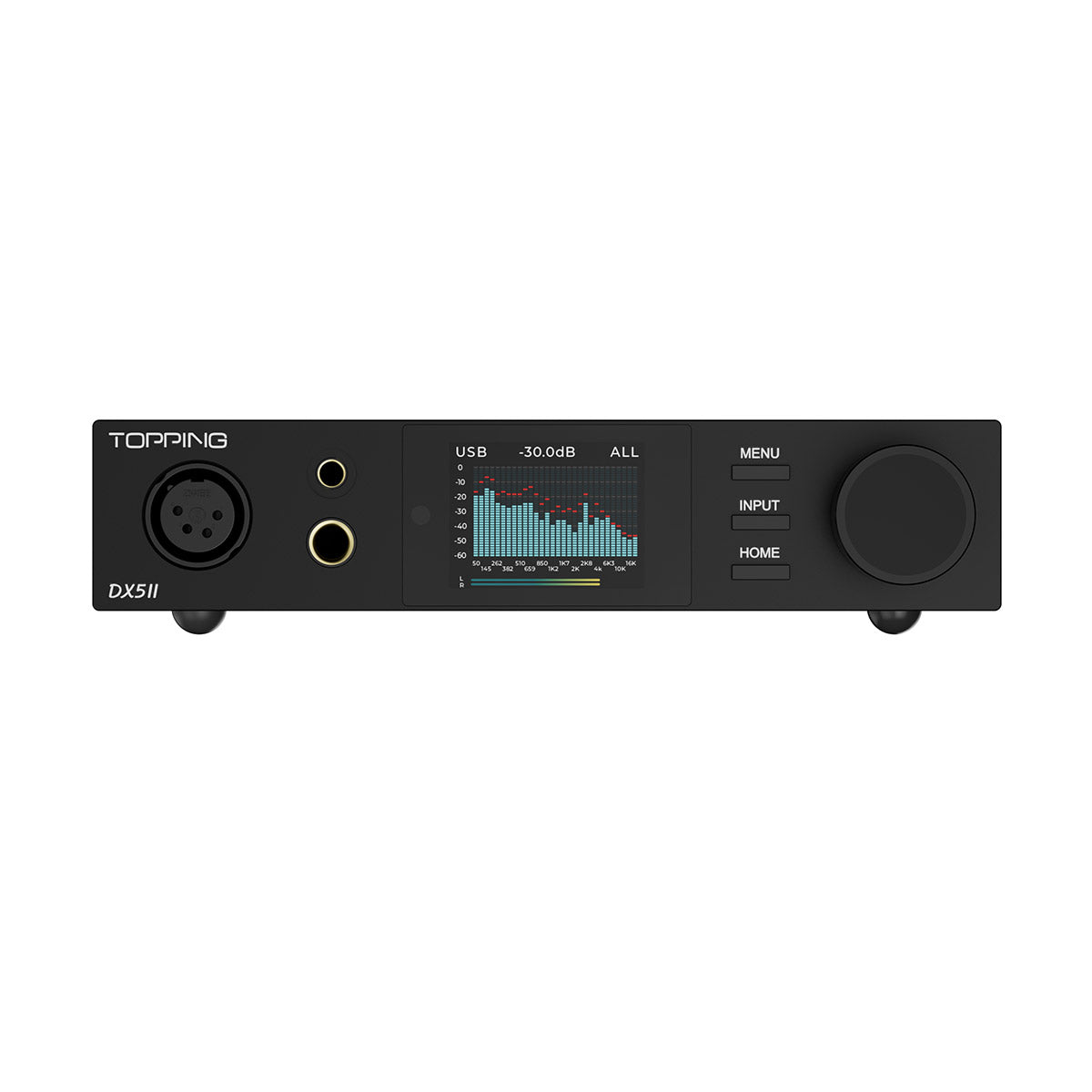
DX5 II publishes 7.6W per channel into 16Ω and 6.4W into 32Ω from its balanced output, plus 990mW/300Ω and 490mW/600Ω. It provides 4-pin XLR and 4.4mm balanced headphone sockets alongside 6.35mm single-ended. This is extraordinary headroom at US$299.
Element IV's standard output is one single-ended 6.35mm jack. Independent sweeps reach approximately 3.14W/33Ω and 349mW/300Ω at extremely low distortion, while voltage reaches about 10Vrms into loads of 32Ω or higher. It is powerful enough for almost every conventional headphone even though DX5 II wins the balanced wattage contest.
JDS will substitute a 4.4mm connector on request, but publishes the same power and does not document a bridged-balanced topology. Treat that as cable convenience, not the electrical equivalent of DX5 II's balanced outputs. Buyers comparing headline watts should also confirm which jack produced each figure.
DSP: Element IV earns its clearest win
Current Element IV firmware supports 12 stereo bands or 24 independently assigned left/right bands, stored output-aware profiles, automatic headroom, loudness, crossfeed, stereo width and graphical/community profile tools. Headphone and RCA modes retain separate volume and correction state. Settings persist when the device moves between computers, consoles or optical sources.
Its firmware history matters. Element IV launched with ten USB-only bands, then gained optical DSP, 12 bands, profiles, mobile control, left/right correction and XMOS-native PCM volume. The product bought in July 2026 is materially more capable than launch reviews or the stale ten-band manual imply.
DX5 II provides ten-band parametric EQ stored on-device. That is excellent at US$299 and enough for conventional headphone correction. The compromise is Topping Tune's Windows-centric workflow and less developed cross-platform experience. Choose Element IV when creating, switching and retaining profiles is daily behavior; choose DX5 II when a smaller number of curves can be configured once and left alone.
Inputs, outputs and preamp use
DX5 II is much broader. Digital inputs are USB-B, optical and coaxial, with Bluetooth 5.1 supporting LDAC and aptX variants. It offers fixed or variable RCA and balanced XLR line outputs, a 12V trigger, remote control and an internal IEC power supply. That makes it practical as a desktop DAC/amp or the controller for a speaker system across the room.
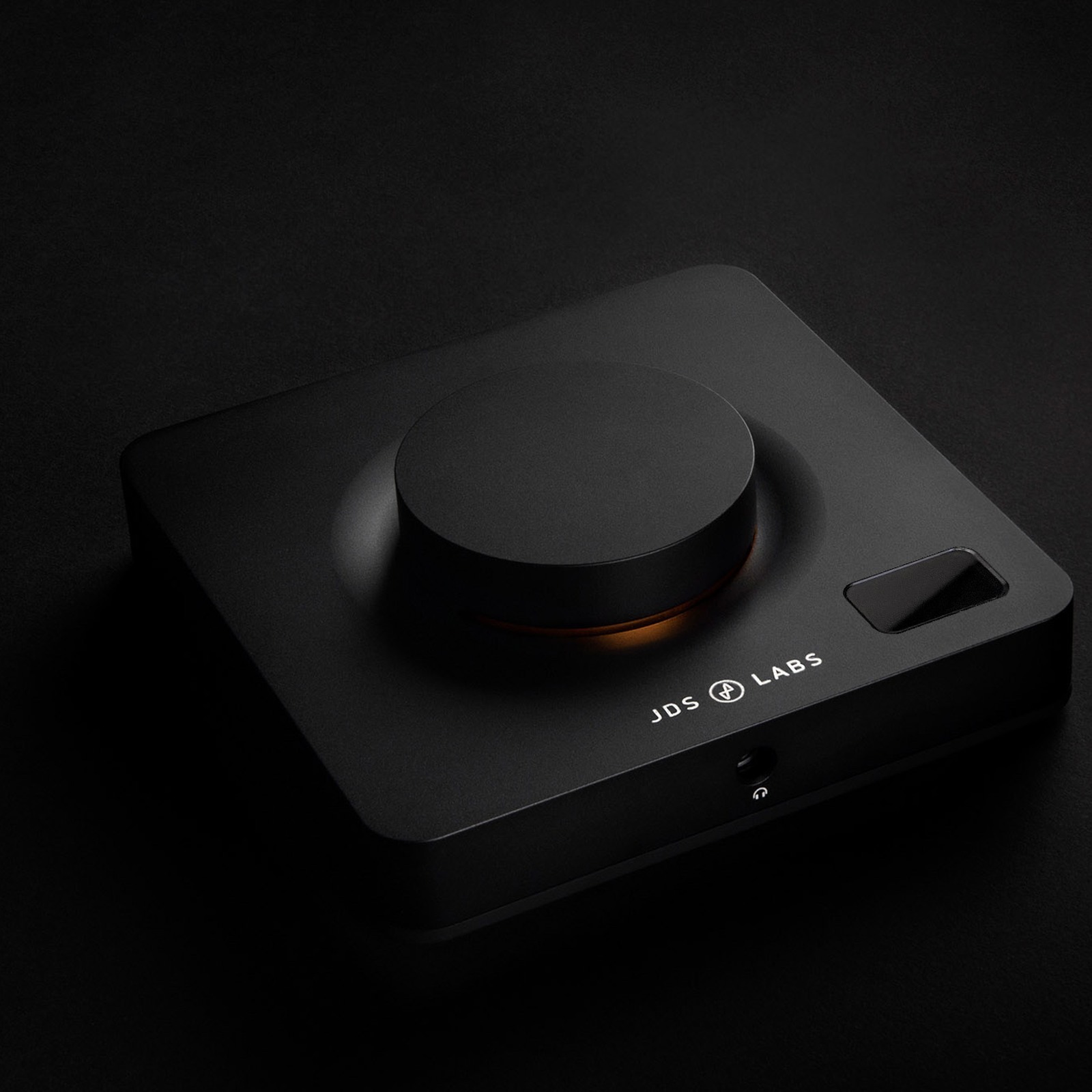
Element IV accepts USB-C data and optical. Outputs are its front headphone jack and variable RCA preamp; only one is active at a time. There is no coaxial input, analog input, Bluetooth, balanced line output, fixed RCA mode, trigger or remote. The external 17VAC transformer also occupies power-strip space.
Element IV's preamp path has one workflow advantage: RCA and headphone modes remember their own DSP and volume. Pressing the main knob toggles them. At an arm's-reach desk with powered monitors, that can feel more coherent than DX5 II's broader but more conventional routing. Across a room, DX5 II's remote and outputs win easily.
Controls, build and ownership
Element IV's large top-mounted 255-step optical encoder is the physical reason many buyers consider it. Default 0.5dB steps, automatic 1×/5× gain and digital channel matching support fine IEM control. The top display is small and rear switches are less convenient, but the primary interaction is unusually polished.
DX5 II uses a compact CNC aluminum chassis, two-inch color display, front buttons and encoder. Its internal power supply keeps the desk cleaner, and the included remote extends its preamp usefulness. The plastic remote and USB-B connector are the obvious cost reminders, not structural failures.
JDS Labs offers custom engraving, a Silver Edition and request-only connector changes, backed by a heavily praised direct-support record in its manufacturer-hosted owner corpus. That corpus carries selection bias, but no recurring exact-model functional failure is visible. DX5 II is the mass-market value play; Element IV is the more personal service-and-customization purchase.
Sensitive IEMs, hard planars and practical pairing
Both cover sensitive IEMs with measured noise around 1.8µVrms. Element IV's 0.22Ω output impedance and smooth low-level control are particularly reassuring for multi-driver earphones. DX5 II also offers low gain and sufficient noise performance for hiss-free use reported in its evidence set.
For difficult planars, DX5 II has more balanced current reserve. Element IV still covers most real headphones with its combination of roughly 3W/32Ω and 10Vrms capability. Strong bass EQ consumes headroom on either unit because negative pregain must prevent digital clipping. Original low-sensitivity Susvara-class loads remain a case for actual level calculations rather than brand claims.
Value and Canadian context — July 2026
DX5 II's US$299 price is the central fact. It bundles exceptional measurements, huge balanced power, three headphone sockets, Bluetooth, remote control, balanced preamp outputs, trigger integration and stored PEQ. Buyers who mostly want transparent conversion and amplification should stop there.
Element IV is US$549 in black or US$598 in Silver Edition. A tested Ontario checkout produced US$581 including the lowest quoted shipping but before Canadian tax, import or brokerage; no authorized Canadian in-country stock was verified. The premium becomes larger after cross-border costs.
Element IV is still rational when its correction workflow, encoder, output memory and support are used every session. It is poor value when purchased for prestige or an imagined stock-sound advantage. DX5 II's 90/100 and Element IV's 91/100 are both Exceptional, but the one-point gap is not a US$250 sound-quality verdict.
JDS Labs Element IV
- Persistent correction is the heart of the system.
- You frequently change headphones and output-specific profiles.
- The large encoder is the control you will touch all day.
- Customization and direct support justify a premium.
Topping DX5 II
- You want the highest performance-per-dollar result.
- Balanced power, Bluetooth, coaxial input and XLR output matter.
- You need remote preamp use and a 12V trigger.
- Ten stored EQ bands cover your correction needs.
Final buying advice
Buy Topping DX5 II unless you can clearly name the Element IV feature you will use every day. At US$299, it is the stronger default: more power, more connections, balanced paths, remote control and enough stored EQ for most listeners.
Buy Element IV when the answer is the workflow itself. Its mature correction platform, output-specific memory, tactile encoder, customization and support create a more coherent arm's-reach tool. That experience can justify US$549; transparent stock output alone cannot.
For the full evidence behind each product, read the JDS Labs Element IV review and Topping DX5 II review.
MyHiFi may earn a commission from purchases made through affiliate links. This does not influence our editorial decisions or source selection.