
One-line verdict: HD 550 is the better recommendation for most new buyers; HD 600 is the more specialized purchase for listeners who already know they want its intimate midrange presentation and mature serviceable platform.
A lower model number is not a downgrade
Sennheiser's naming suggests a simple hierarchy: HD 550 belongs to the lighter, less expensive HD 500 family, while HD 600 carries the historic reference badge. That hierarchy remains obvious in parts availability and product identity, but it does not map cleanly to current acoustic capability.
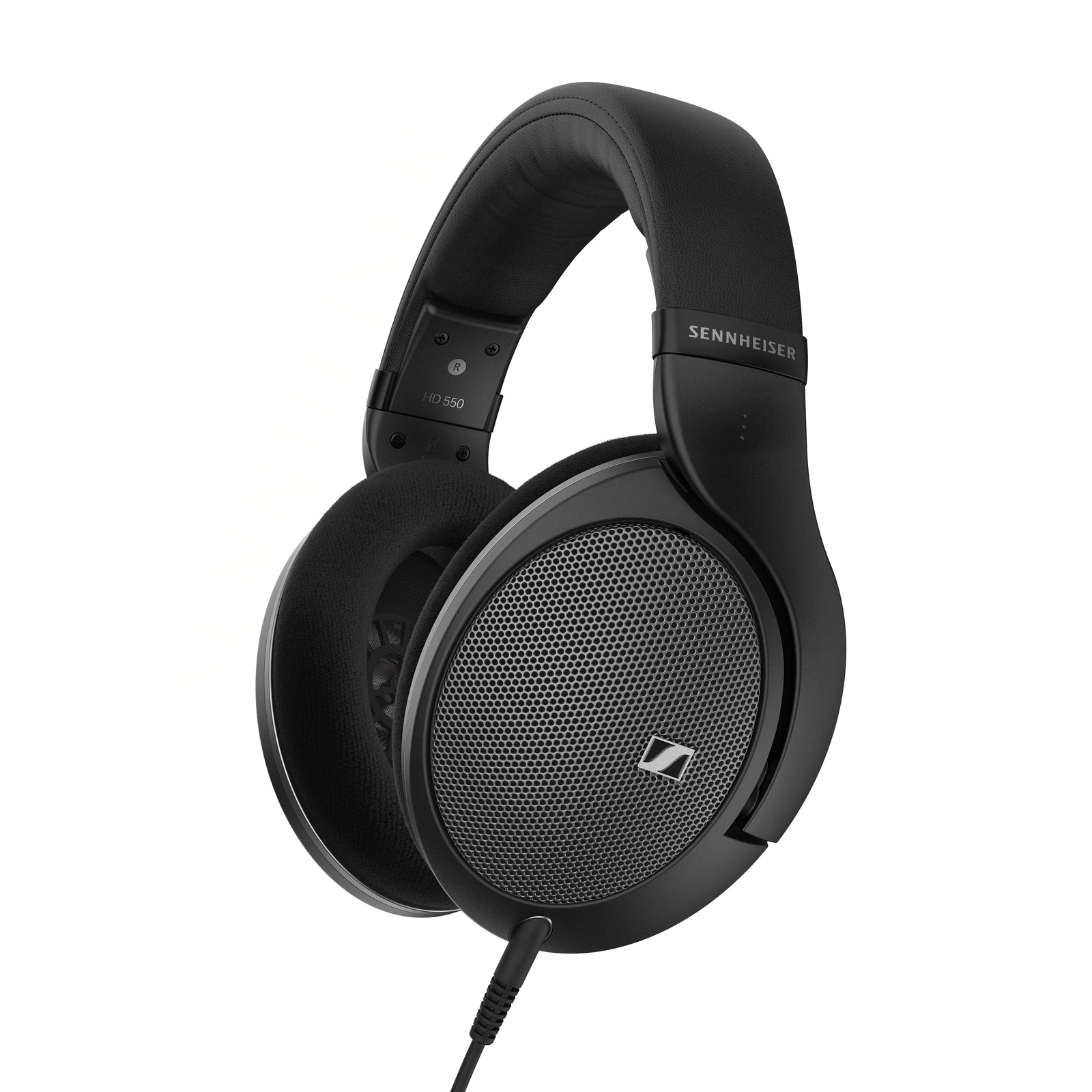
HD 550 uses a 38 mm angle-mounted driver in the HD 500-series chassis. Its tuning extends bass farther, reduces the classic 2–4 kHz emphasis and spreads stereo positions more continuously. HD 600 uses the established HD 6-series platform and keeps the concentrated midrange and intimate image that made it a reference. The newer headphone does not replace the older one; it broadens the use case.
The MyHiFi scores reflect that distinction. HD 550 earns 85/100 because it combines stronger technical performance with easier drive, lower weight and broader music/gaming usefulness. HD 600 earns 76/100 because it is less versatile and its current price is difficult, not because its defining midrange suddenly stopped working.
Tonal balance: contemporary neutral versus classic midrange-first
HD 550 keeps Sennheiser's natural lower mids but relaxes the upper-mid region relative to HD 600. Vocals remain clear without sitting as close to the listener, and dense mixes retain separation. Its broad balance is neutral to slightly warm rather than thin, making it easier to move among rock, orchestral, electronic, games and spoken content.
HD 600 makes vocals and acoustic instruments the centre of the experience. Its gentle presence emphasis supports intelligibility and harmonic texture, while low distortion through the critical midrange preserves natural proportions. This is the reason it remains useful as a tonal baseline even when newer headphones outperform it at the frequency extremes.
The choice is partly one of perspective. HD 550 presents the mix as a connected field with the midrange integrated into the whole. HD 600 places the listener closer to singers, strings and small ensembles. Buyers who use “reference” to mean the most evenly capable modern all-rounder should choose HD 550. Buyers who mean a familiar vocal and acoustic anchor may still prefer HD 600.
Bass: HD 550 removes the traditional penalty
Independent HD 550 measurements agree that bass extends deeper than HD 600 without creating a mid-bass hump. The bottom octave remains lighter than a sealed headphone or large planar, but notes retain more usable level before rolling away. Low distortion and clean compression behavior also leave room for a moderate bass shelf.
HD 600 has articulate, controlled mid-bass but attenuates significantly below 50 Hz. Kick drums and bass fundamentals remain organized; deep synthesizer notes and cinematic effects lose physical weight. That can be acceptable for vocal, jazz, chamber and acoustic listening, but it is a real limitation rather than an audiophile virtue.
Neither headphone delivers closed-back pressure, and both leak freely. HD 550 simply asks for less compromise across modern bass-heavy material. HD 600 remains coherent when its restrained low end matches the recording and listener, but buyers should not expect amplification to create extension that the acoustic response does not provide.
Treble: one localized risk versus one familiar restraint
HD 550's main tonal complication is localized lower-treble energy. Exact-model measurements place the feature somewhere in the 5–8 kHz region depending on fixture, position and sample. Listener reports are correspondingly divided: some hear dryness or scratch on consonants and cymbals, while others hear a smooth, non-fatiguing balance.
Fit changes the outcome. Moving the cups or changing ear-to-driver position can shift the apparent peak. That makes auditioning unusually useful. Above this local region, HD 550 generally avoids an aggressively bright upper treble.
HD 600 is more restrained above 10 kHz and does not pursue an airy, spotlighted presentation. Its 3 kHz presence can still sound forward to sensitive listeners, but the upper range is mature and predictable. HD 600 wins for buyers who already know they tolerate its familiar balance; HD 550 offers more extension and openness with greater anatomy-dependent risk.
Imaging, soundstage and gaming
HD 550 provides a wider and more continuous lateral presentation than the classic HD 600 family. Positions move more evenly across the field rather than clustering strongly at left, centre and right. Width is not enormous, but height, separation and positional transitions are useful for competitive and single-player gaming.
HD 600 is intimate. Its strength is image coherence around the centre, especially for voices and small ensembles, not a broad environmental field. That focus can make close recordings emotionally direct, while games and large orchestral works feel less expansive.
HD 550 is the safer choice when one headphone must cover music, editing and gaming. HD 600 is the deliberate choice when spatial breadth matters less than a stable, close midrange image. Neither isolates outside sound, so both require a private room regardless of spatial preference.
Amplification: compare sensitivity units correctly
HD 550 is nominally 150 ohms and measures approximately 154–155 ohms. Its 106.7 dB SPL at 1 Vrms sensitivity allows normal levels from competent laptops, dongles, interfaces and portable players. An amplifier becomes useful for very high levels or substantial negative pregain and bass EQ, not as a mandatory entry ticket.
Current official HD 600 specifications state 300 ohms and 97 dB SPL at 1 V. The unit matters: dB per volt and dB per milliwatt are not interchangeable sensitivity figures and imply different electrical requirements. At 97 dB/V, HD 600 needs materially more voltage than HD 550 for the same level.
That does not mean every phone fails or that an expensive amplifier changes the fundamental tuning. It means buyers should verify source voltage, desired peak level and EQ headroom. A capable desktop amplifier is the simpler recommendation for HD 600; HD 550 is much less demanding when the system must stay portable or minimal.
Comfort: HD 550 is lighter, HD 600 is more established
HD 550 weighs 237 g officially and about 242 g in independent measurement. Its lower clamp, generous oval openings and breathable velour pads support long sessions and glasses. The main concern is the thin, undivided headband cushion, which can create a crown pressure point for sensitive users.
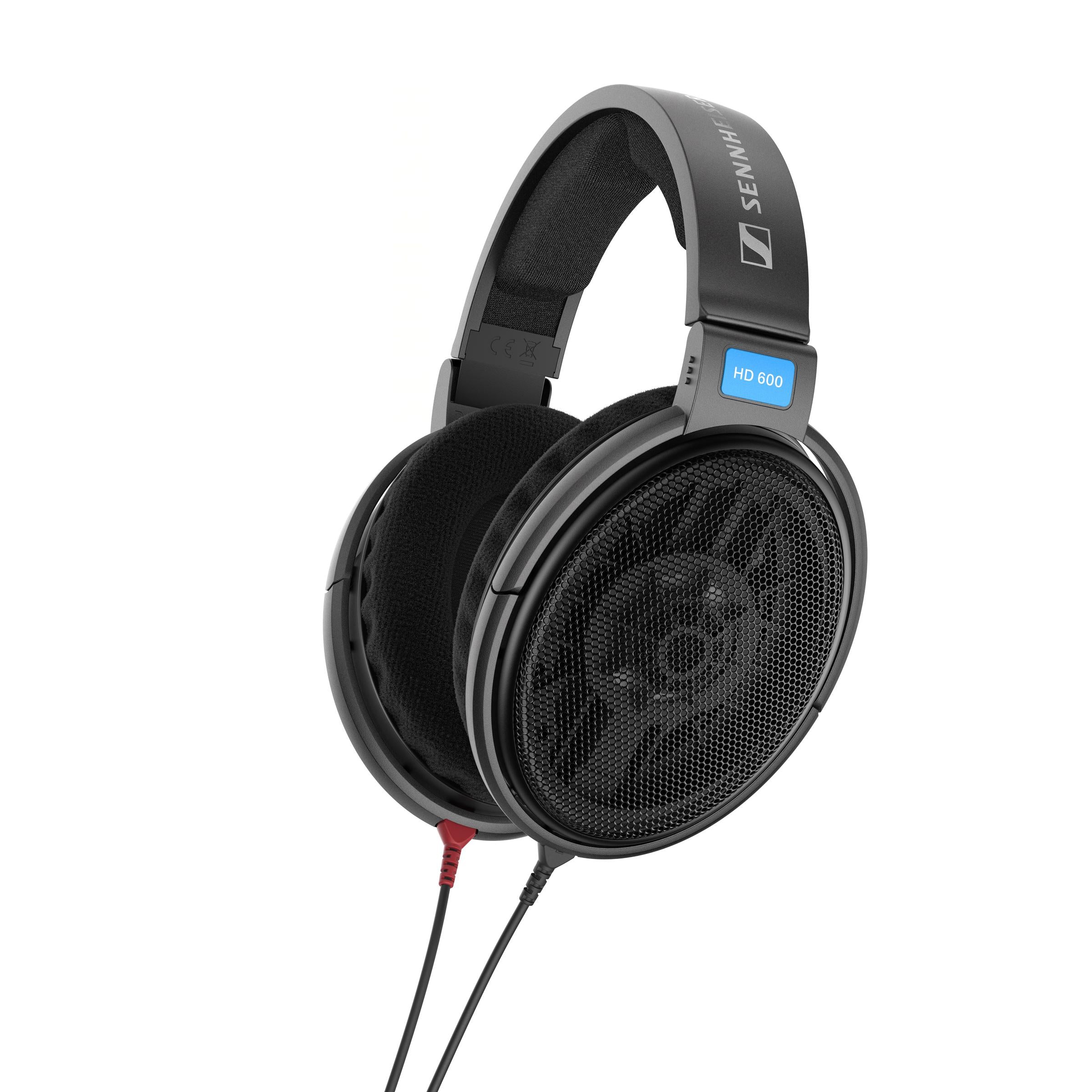
HD 600 is approximately 260 g, still light by modern planar standards. Its velour pads and established oval shape remain comfortable for many listeners, though new units can clamp more firmly. Pad condition matters because compressed pads alter both comfort and response; replacement is normal ownership maintenance.
HD 550 wins pure low-mass comfort. HD 600 counters with decades of known fit behavior and readily replaceable wear parts. Head shape remains decisive enough that neither should be bought solely from weight specifications.
Build, cables and long ownership
Both headphones use plastic strategically to keep weight down. HD 550's polycarbonate HD 500-series frame can feel cost-conscious near its current price, and its single-sided locking cable narrows cup-end replacement options. Pads and cable are replaceable, but the thin headband cushion is not as clearly established as an ordinary spare.
The current graphite HD 600 uses the familiar metal-reinforced HD 6-series frame, open metal grilles, blue model badges and proprietary two-pin connectors at both cups. The cable, pads and headband padding have a mature replacement ecosystem. This serviceability—not luxury materials—is its strongest build argument.
HD 600 therefore wins for planned decade-long maintenance even though its plastics do not feel premium at the current direct price. HD 550 is lighter and simpler for daily use, but its platform has a shorter exact-model history and a less comprehensive wear-part story.
Price and value — July 2026
Sennheiser Canada listed HD 550 at C$399.95 on July 15, 2026, while a US marketplace offer was US$349.95. That is above the approximately US$299.95 launch position, but the combination of tuning, comfort, imaging and easy drive remains competitive.
On July 18, 2026, Sennheiser directly listed the current graphite HD 600 at C$579.95 in Canada and US$499.95 in the United States. Marketplace discounts can be lower, and HD 600 value changes dramatically with the checkout price. Its 85/100 legacy value subscore should not be interpreted as a fresh claim that the direct 2026 price beats HD 550.
At the verified prices, HD 550 is the rational default. HD 600 becomes compelling when discounted closer to HD 550 or when its midrange, parts ecosystem and known long-term platform are explicitly worth paying for. Do not spend the difference hoping the higher series number guarantees better bass, imaging or general technical performance.
Sennheiser HD 550
- You want one open-back for mixed genres and gaming.
- Deeper bass and more continuous imaging matter.
- You prefer a lighter, lower-clamp fit.
- You do not want amplification to dominate the system plan.
Sennheiser HD 600
- Vocals and acoustic timbre are the main event.
- An intimate reference image is preferable to wider staging.
- Long-term wear-part availability matters more than features.
- You have suitable voltage headroom and find a good price.
Final buying advice
Buy Sennheiser HD 550 if this is your first serious open-back or the only one you plan to own. It retains natural Sennheiser mids while extending bass, broadening imaging, lowering weight and reducing source requirements. The fit-sensitive lower treble and cost-conscious chassis are real, but they are narrower compromises than HD 600's limited bass, intimate stage and voltage demand.
Buy Sennheiser HD 600 when its narrow job is exactly your job: vocals, acoustic instruments and familiar midrange reference listening in a quiet room. Its repairable ecosystem and enduring platform remain meaningful. At current direct pricing, however, it is a preference-driven purchase rather than the automatic step above HD 550.
For the full evidence behind each product, read the Sennheiser HD 550 review and Sennheiser HD 600 review.
MyHiFi may earn a commission from purchases made through affiliate links. This does not influence our editorial decisions or source selection.