Sennheiser's open-back family used to present an easy ladder. The HD 500 series handled affordable listening and gaming; the HD 600 family delivered the serious midrange reference. The HD 550 makes that hierarchy less tidy.
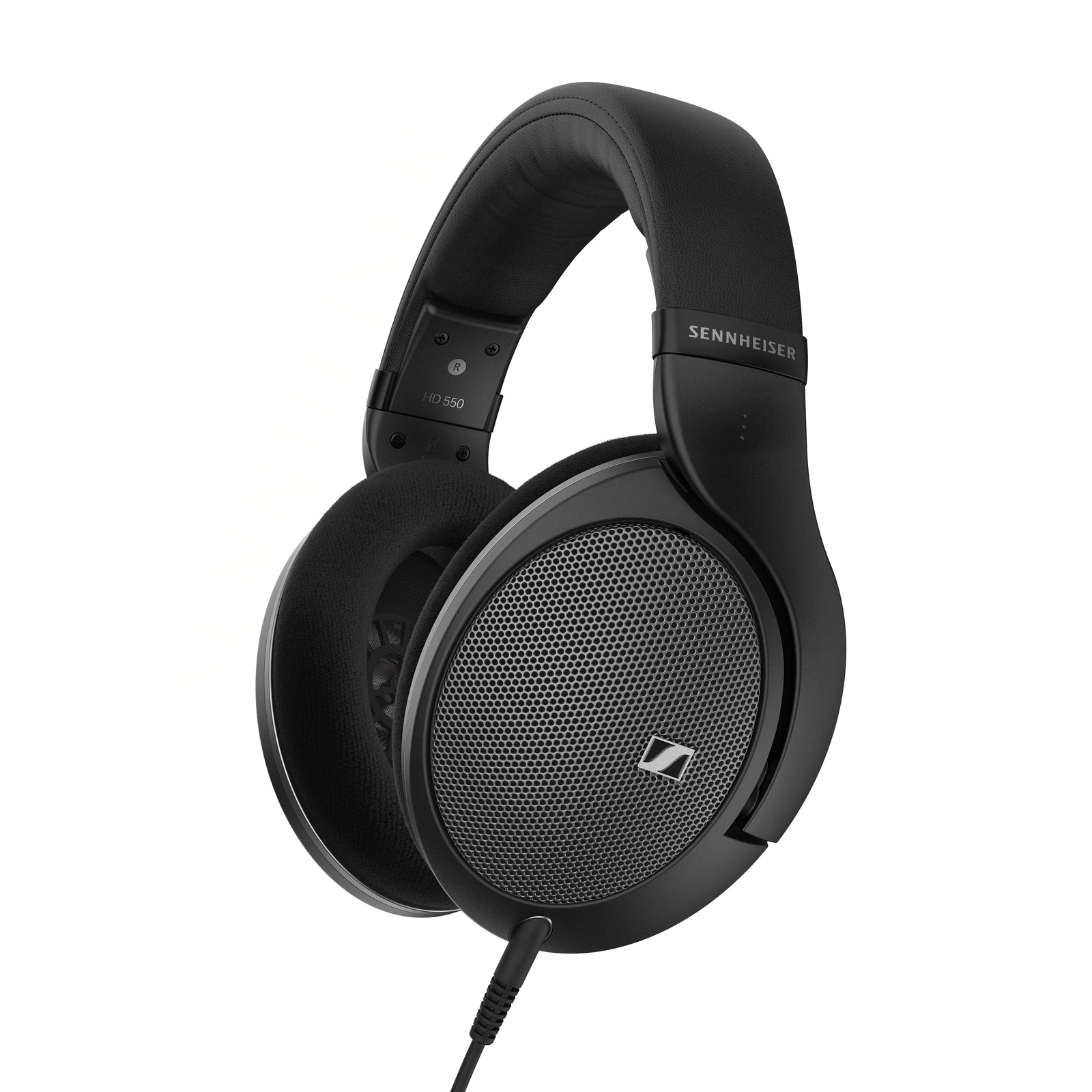
It uses a 38mm angle-mounted driver in a 237g HD 500-series chassis, but its tuning borrows the coherence associated with Sennheiser's more expensive headphones. Bass reaches deeper than the HD 600 and HD 650, upper mids are less assertive, and stereo placement spreads more evenly across the field. At the same time, a localized lower-treble emphasis can sound dry or sharp depending on fit and ears.
The harder question is price. The HD 550 launched around US$299.95, while an exact US offer was approximately $349.95 in July 2026. At the launch price, it is an easy bridge between the HD 560S and HD 600. At $350, its plastic construction, basic cable and drawstring bag become harder to ignore.
Scorecard
Neutral mids, deep open-back bass extension, low distortion and even imaging; localized lower-treble emphasis and average macro-punch
Extremely light, comfortable and serviceable in key areas; plastic chassis, thin headpad and proprietary locking cable feel cost-conscious
Excellent at the original $299 price, still competitive around $350 but now challenged by the HD 600/6XX ecosystem
Easy to drive, useful for music, editing and gaming; open-back leakage, fit-sensitive treble and no included balanced cable limit use cases
Who it is for: listeners who want Sennheiser midrange accuracy with better bass extension and wider imaging than the classic HD 600 family; gamers who value positional separation over isolation; owners who want a lightweight open-back that works from ordinary headphone outputs.
Who should skip it: commuters, shared-office users and anyone needing isolation; bassheads seeking physical sub-bass impact; listeners sensitive to 5–8kHz energy; buyers who expect premium materials and accessories at $350.
Verified specifications
| Specification | Published or independently measured value |
|---|---|
| Type | Open-back circumaural dynamic headphone |
| Driver | 38mm custom angle-mounted transducer |
| Impedance | 150Ω nominal; approximately 154–155Ω measured |
| Sensitivity | 106.7 dB SPL at 1 Vrms |
| Frequency response | 6Hz–39.5kHz, tolerance not published |
| THD | <0.2% at 1kHz, 1V |
| Weight | 237g published; 242g independently measured without cable |
| Cable | Detachable 1.8m, locking left-cup connector, 3.5mm TRS |
| Adapter | Screw-on 6.35mm included |
| Pads | Replaceable synthetic velour |
| Included storage | Drawstring bag |
Build and comfort: lightness with visible cost control
The HD 550 uses the familiar oval HD 500-series silhouette: polycarbonate cups and frame, open metal rear grilles, broad velour pads and a single cable entering the left cup. It is understated rather than luxurious. At 237g, it disappears more readily than most planar headphones and remains cooler than closed-back alternatives during long sessions.
Comfort consensus is strongly positive. Clamp is lower than earlier HD 500 designs, the ear openings are generous, and the pads accommodate glasses without destroying bass response. The exception is the headband. Its thin, undivided synthetic-leather cushion can create a pressure point for crown-sensitive users, and unlike the earpads and cable, the headband pad is not clearly established as an ordinary user-replaceable spare.
Material judgment is divided. Some users consider the plastic functional and durable; others find it flimsy beside the HD 600 family. Both can be true: low mass is a practical advantage, but the surface finish and yoke do not communicate a $350 product.
The 1.8m cable is soft enough for desk use and terminates in 3.5mm with a screw-on 6.35mm adapter. Its locking cup connector prevents accidental removal but narrows replacement choices. Compatible 4.4mm balanced cables exist within Sennheiser's HD 500 accessory family, though one is not included.
Measurements: a modern Sennheiser balance
Independent exact-model measurements across several fixtures agree on the broad shape. Bass extends deeper than the HD 600, HD 650 and HD 560S without adding a mid-bass hump. The midrange remains neutral to slightly warm, while the 2–4kHz region is less elevated than the HD 600. That reduction lowers vocal glare and makes high-level listening easier for many people.
The principal complication sits higher. Multiple datasets show localized lower-treble energy, but its apparent frequency shifts with fixture, wearing position and anatomy. Some listeners hear dryness or scratch around 5–6kHz; others hear sparkle closer to 7–8kHz; another group considers the treble soft and non-fatiguing. The disagreement is real rather than a simple winner-loser verdict. Moving the cups forward or changing ear-to-driver position can alter the result.
One measurement archive includes five stock samples and several placements, providing unusually useful evidence that fit and unit variation matter. Separate left/right testing found no recurring channel-matching problem. Available distortion and compression results show clean operation at ordinary levels, with no obvious excursion limit and enough headroom for moderate bass EQ.
The official 6Hz–39.5kHz response endpoints lack a tolerance and should not be interpreted as flat extension. Practical evidence instead supports gently reduced bottom-octave output, strong extension for an open-back dynamic and controlled upper treble beyond the localized presence region.
Sound character: mids first, without the old bass penalty
Midrange remains the HD 550's strongest argument. Voices and acoustic instruments retain the natural proportions expected from Sennheiser, but the presentation is less forward than the HD 600. Lower mids carry enough warmth to avoid thinness, while reduced masking preserves separation in dense arrangements.
Bass is clean, extended and unbloated. It reaches lower than older Sennheiser open backs, but extension is not impact. The HD 550 does not provide the pressure of a closed-back or the effortless bottom octave of a large planar. Owners split almost evenly between praising the added body and applying a sub-bass shelf. Both responses fit the measurements.
Treble depends on the listener. Above the lower-treble presence area, the HD 550 generally avoids aggressive upper-treble brightness and sibilance. For sensitive ears, however, the localized peak can add a papery or dry edge to cymbals and consonants. Auditioning is more valuable here than reading one person's tonal label.
Stereo presentation is more continuous than the classic HD 600 family's concentrated left-centre-right image. Width ranges from solid to broad rather than enormous, but positional transitions are even and useful for gaming. Height and separation are strengths; image depth and physical punch are less exceptional. Detail emerges from low masking rather than exaggerated air.
Amplification and everyday use
A 150Ω specification looks demanding, but sensitivity matters more. At 106.7 dB SPL per volt, the HD 550 reaches normal levels from competent laptop outputs, dongles, portable players and desktop interfaces. An external amplifier is useful for very high levels or substantial EQ headroom, not a baseline requirement.
Source output impedance can affect tonal balance because the headphone's impedance rises around its driver resonance. Normal low-impedance solid-state outputs preserve the intended response. Very high-output-impedance amplifiers can add warmth and loosen bass. Expensive power does not unlock a hidden version of the headphone; appropriate voltage and low source impedance are enough.
As an open-back design, the HD 550 leaks freely and isolates very little. That benefits spatial openness but excludes travel, libraries and shared rooms. The lightweight chassis and gaming imaging make it especially suitable for a private desk.
Comparisons within the Sennheiser family
The Sennheiser HD 600 remains the purer vocal and acoustic reference. Its denser midrange and long service history make it the conservative choice, while the HD 550 offers deeper bass, reduced upper-mid intensity, more even lateral imaging and easier everyday drive. Choose HD 600 for the classic intimate reference; choose HD 550 for a more contemporary all-round balance.
The Sennheiser HD 660S provides a more substantial chassis, richer accessories and a focused midrange presentation. The HD 550 is lighter, less intimate and generally more spacious. Current pricing determines the value decision: when the two approach each other, the HD 660S feels more premium; when the HD 550 returns near $300, its tuning and comfort are difficult to beat.
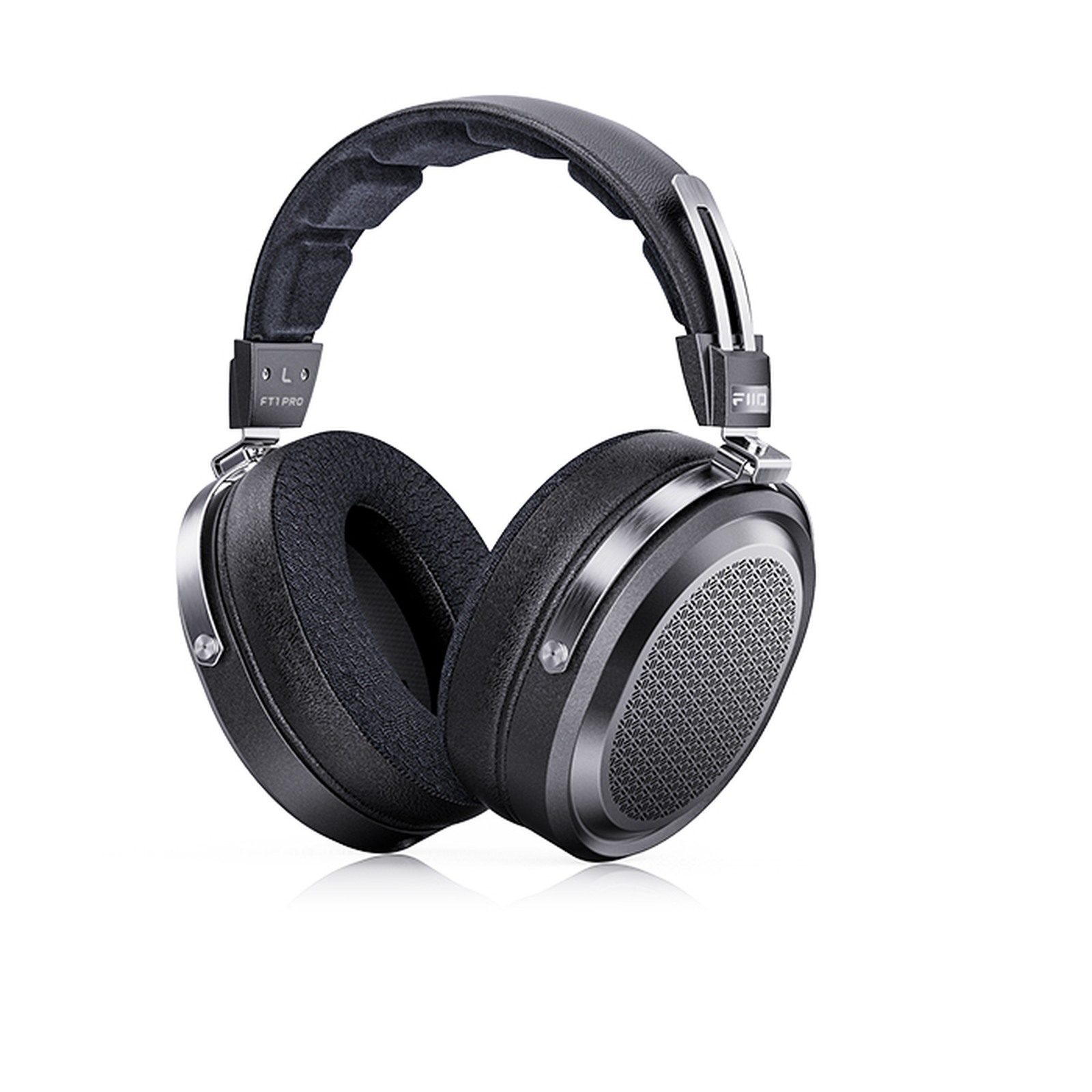
The FiiO FT1 serves a different environment. It is closed-back, warmer and more physically forceful in the bass, with useful isolation. The HD 550 is the stronger choice for open spatial cues, neutral mids and long private-room sessions.
Value and verdict
Sennheiser Canada listed the HD 550 at C$399.95 on July 15, 2026. A US marketplace offer was US$349.95, above the roughly $299.95 launch position. Aggregate US retailer feedback stood at 4.7/5 from 57 ratings, while the independently inspected owner sample was broadly positive on comfort, mids and imaging.
At $300, the HD 550 is one of the strongest open-back recommendations in Sennheiser's current range. Around $350, the answer becomes conditional. Its sound competes comfortably, but the chassis, headband serviceability, cable and package do not move upward with the price.
The Sennheiser HD 550 earns 85/100 and a Highly Recommended rating. It modernizes the company's familiar open-back strengths without turning them into a bass-heavy or treble-showcase product. The HD 550 trades heirloom materials for a tuning that is easier to recommend than its family tree suggests.
MyHiFi weights Technical Performance at 30%, Value at 30%, Build Quality at 25% and Versatility at 15%. The weighted composite is 85.0, producing an 85/100 Highly Recommended result.
Methodology
This assessment uses multiple independent exact-model frequency-response datasets, three broader technical test packages, five field-complete professional evaluations, supplementary physical/setup evidence, more than 20 firsthand owner reports, separate retailer-rating pools, manufacturer documentation and live July 2026 pricing. Several launch-window review units were manufacturer-supplied, and revision equivalence was not documented. Confidence is High for broad tonal balance, comfort consensus, impedance and current Canadian price; Moderate for treble fit dependence, imaging and value; Low-to-Moderate for long-term durability. MyHiFi did not perform hands-on testing.
Affiliate disclosure: MyHiFi may earn a commission from purchases made through affiliate links. This does not influence our editorial decisions or source selection.