
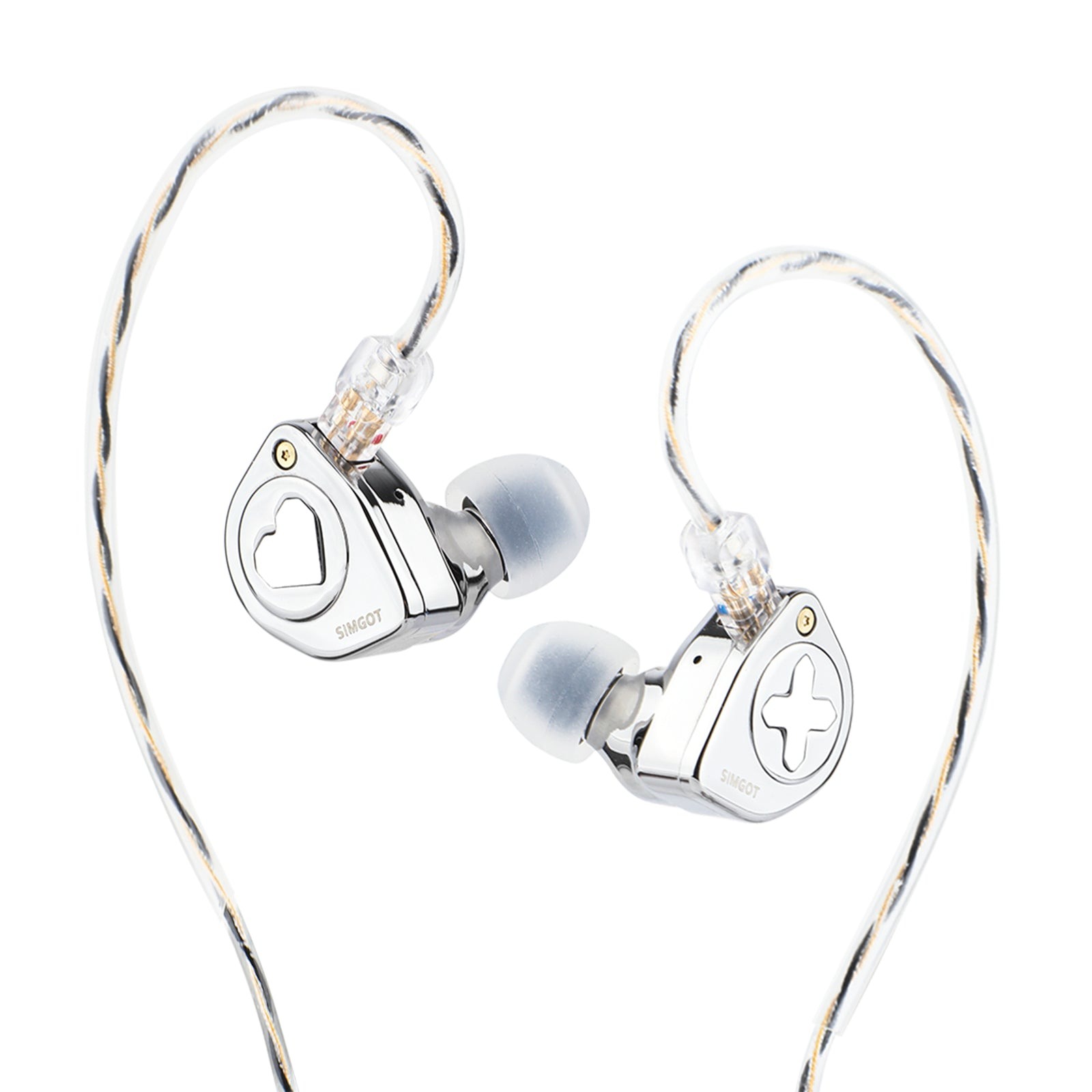
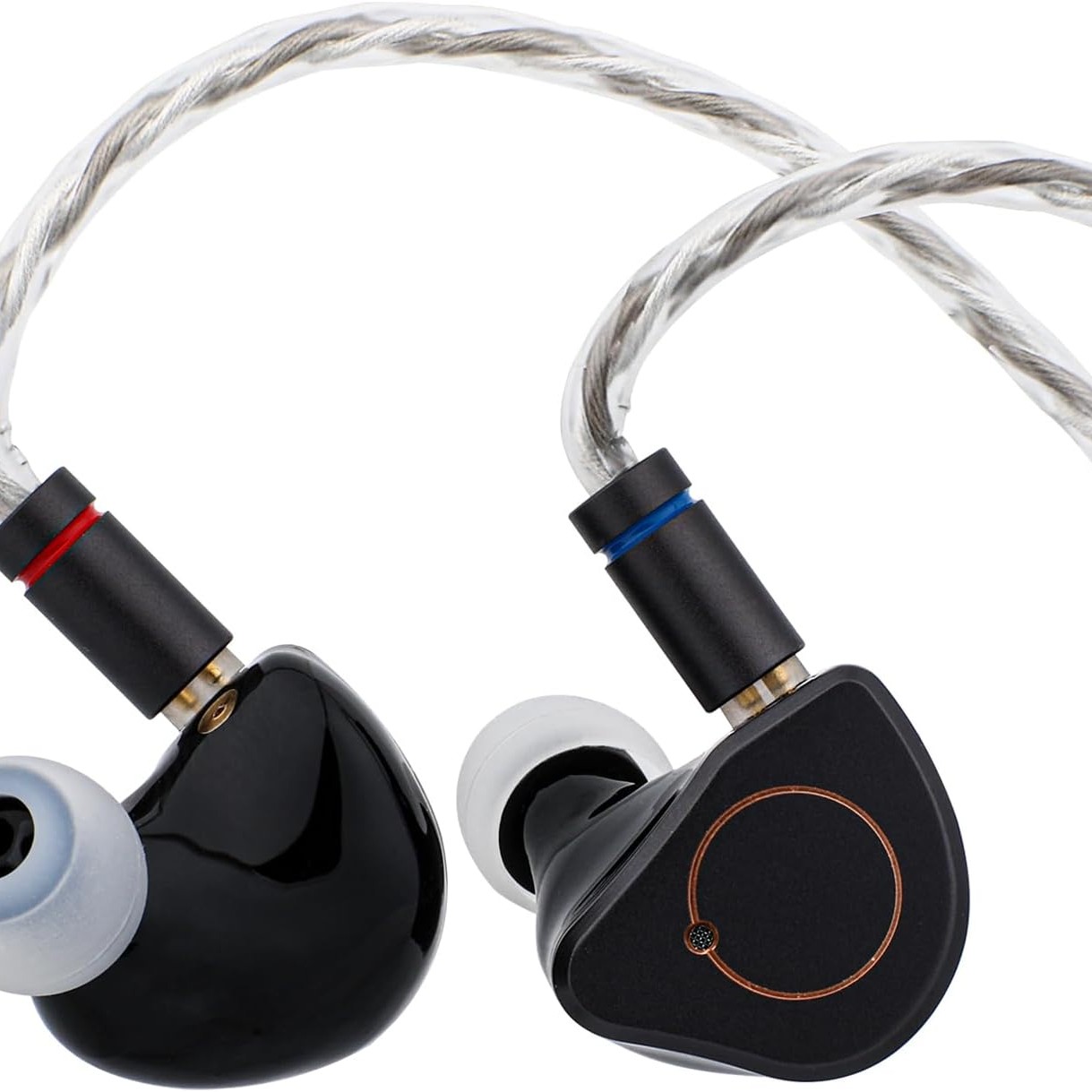
One-line verdict: EW300 is the smarter purchase for most buyers; SuperMix 4 is the justified upgrade only when its stronger spatial performance and isolation address needs the cheaper IEM cannot.
First, quarantine the exact EW300
“EW300” can refer to three products that should not share evidence. This comparison uses the standard mirror-silver edition with the passive analog 3.5 mm cable. The USB-C DSP version contains signal-processing electronics that can alter response. The black collaboration edition is separately tuned. Neither is silently folded into this page.
The standard EW300 places a 10 mm dynamic driver, 6 mm annular planar unit and piezoelectric ceramic driver in each compact alloy shell. SuperMix 4 uses a different shell and four-way architecture: 10 mm dynamic, balanced armature, micro planar and piezoelectric drivers, with separate acoustic paths.
The comparison is therefore not “three drivers versus four” in a simple ladder. Each product has different tuning, fit, impedance behavior and crossover challenges. Driver count describes architecture; it does not score sound quality.
Tuning: adjustable warmth versus a fixed target
EW300 is the warmer, thicker and more forgiving of the pair. Both supplied nozzles retain its substantial sub-bass shelf, while the threaded filters adjust the presence region. The silver nozzle adds energy through roughly 1–5 kHz, bringing vocals forward and increasing bite. The gold nozzle reduces 2–6 kHz energy, increasing the perceived bass-to-midrange ratio.
That makes the nozzle set meaningful rather than decorative. It does not create two unrelated earphones, and gold is not guaranteed to be smoother in every ear. Tip, insertion and filter foam can change the result enough that a stable seal should come before any nozzle verdict.
SuperMix 4 follows a fixed consumer-preference-oriented balance: elevated sub-bass, neutral mids, modest upper-mid presence and generally smooth treble. Its bass and clarity feel more separated than EW300's denser warmth. Buyers who want one polished default rather than physical tuning options may prefer that consistency.
EW300 wins flexibility. SuperMix 4 wins for listeners who already want its bass-forward neutral presentation and do not need to alter the presence region physically.
Bass: quantity is not the whole decision
EW300 carries significant sub-bass energy—roughly 9–12 dB above the normalization region across available exact-model measurements—with a slope down through midbass. The result is weight without a broad lower-midrange plateau. Its bass can sound satisfying and textured, but dense tracks expose average speed or softened kick definition for some listeners.
SuperMix 4's dynamic driver also delivers elevated sub-bass, but reports describe the result as tauter and more controlled. It retains punch and rumble while leaving more room around midrange information. That difference supports its higher-price technical case even though it is not necessarily bassier.
Choose EW300 when warmth, mass and value matter. Choose SuperMix 4 when bass separation and control matter. Neither has accessible evidence supporting a universal low-distortion claim across level, so the comparison does not invent one.
Midrange and treble: two different integration risks
EW300's broad rise toward 3–4 kHz keeps vocals readable. Silver moves them closer; gold pulls them back. Most evidence supports a warm body without broad veil, but some listeners hear a metallic planar/PZT edge or less natural overtones when arrangements become complicated.
SuperMix 4 presents a clearer, more neutral midrange with upper-mid emphasis. Reception still divides: vocals can sound precise and forward, yet one detailed evaluation found them boxed-in and short on dimensional air. More drivers do not guarantee more natural vocal space.
Treble is the key SuperMix 4 uncertainty. Some evidence describes a smooth, safe and slightly dark top end. Another evaluation repeatedly heard cymbal and chime transients blur when dense material reached the handoff between planar and piezoelectric elements. A response curve cannot settle a transient or crossover dispute by itself.
EW300 has its own treble variability. Silver can retain bite, gold reduces presence, and output above roughly 6–8 kHz changes substantially with insertion and fixture. There is no honest universal cohesion winner: auditioning remains useful for both products, just for different reasons.
Detail, layering and stage: where the premium pays
EW300 performs well around US$80. Lateral width and positional clarity are frequently useful, including for games. The limitation is depth: some arrangements remain well organized, while others collapse into a flatter, thicker presentation with moderate separation.
In exact-model direct comparison evidence, SuperMix 4 provides more nuance, stage and imaging. Its larger shell and four-way architecture do not prove that outcome by themselves; the repeated practical result is what matters. Spatial layers are easier to distinguish, positional cues are more precise and complex mixes retain more room.
This is the clearest reason to spend the extra US$90. If the buyer listens casually, prioritizes tone over depth or does not use spatially demanding games, the gain may not justify more than doubling the price. If image precision and separation are primary, SuperMix 4 is the real upgrade rather than merely the more complicated product.
Isolation and gaming
EW300's compact shells can be comfortable, but the short nozzle produces shallow insertion for many ears. Isolation and retention depend heavily on finding a tip that anchors the shell. Positional clarity is good enough to make it a strong budget gaming option once seal is stable.
SuperMix 4 fills more of the outer ear and blocks environmental noise more effectively. That stronger passive isolation supports immersion on transit and reduces distraction during games. Its wider image and stronger positional cues compound the advantage.
The trade-off is physical size. Smaller ears may reject SuperMix 4 during long sessions even when the sound and isolation are ideal. EW300 wins compactness; SuperMix 4 wins isolation. Fit can reverse the practical recommendation before sound quality enters the discussion.
Build, cable and maintenance
EW300's polished CNC-alloy shells feel unusually substantial for US$79.99. Recessed 0.78 mm 2-pin sockets, a replaceable cable and threaded nozzles all support maintenance. The mirror finish attracts fingerprints and can show scratches, while the metal feels cold at first insertion.
Its removable filters also create an ownership task. Moisture or debris can reduce one channel's output, and a quiet side should prompt a clean-nozzle swap and cable check before assuming driver failure. Let the earphones dry after use and keep the spare filter set protected.
SuperMix 4 uses black 3D-printed resin with a CNC metal faceplate. Its supplied silver-plated cable is well regarded, detachable and tangle-resistant. The shell looks less jewel-like than EW300 but provides the volume needed for its four-way acoustic system and isolation.
EW300 wins materials-per-dollar. SuperMix 4 wins neither luxury nor compactness; its build case is functional isolation, a solid cable and a one-year warranty.
Fit: short nozzle versus large body
EW300's fit problem is depth, not shell bulk. The nozzle is short, and the three included silicone sizes do not solve every ear. Longer, grippier or wider-bore aftermarket tips repeatedly improve seal, retention and treble consistency. Budgeting for tips is reasonable even though the IEM itself is inexpensive.
SuperMix 4's problem is the opposite. Its shell provides deep isolation but occupies more ear space. Small ears and long sessions create the highest risk. Aftermarket tips can improve the seal, but they cannot shrink the body.
Choose EW300 for smaller conchas if tip experimentation is acceptable. Choose SuperMix 4 only if a large resin shell fits securely without creating pressure. Returns matter more than published dimensions when exact ear geometry is unknown.
Source matching and volume
EW300 is specified at 28 ohms with 121 dB/V sensitivity for silver and 119 dB/V for gold. Phones, portable players and competent dongles consistently provide adequate level. No complete exact-model impedance sweep was retained, so use a normal low-output-impedance source rather than making strong load-flatness claims.
SuperMix 4 is also sensitive at 120 dB/V, but its nominal impedance is only 7.2 ohms and available impedance data rises toward lower frequencies. A source with appreciable output impedance can alter the intended balance, thickening bass and reducing treble.
Both products are easy to make loud. EW300 is easier to recommend across ordinary sources. SuperMix 4 benefits from a modern low-impedance dongle or interface; power output is less important than electrical matching and low noise.
Price and value — July 2026
The standard analog EW300 was verified in stock at US$79.99 and C$115.99 on July 16, 2026. That is US$10 above launch but still buys metal shells, two physical filters, a detachable cable, strong bass and competitive detail below US$100.
SuperMix 4 was verified at US$169.99 in July 2026, up US$20 from launch. The exact US premium over EW300 is US$90. It buys stronger stage, imaging, nuance and isolation—not an automatic win in tuning, fit, build materials or driver integration.
EW300 therefore wins value and overall score. SuperMix 4 remains worthwhile when its specific advantages are priorities rather than curiosities. Spending more solely to obtain a fourth driver type is the wrong buying logic.
Simgot EW300
- You want maximum performance per dollar.
- A warmer balance and two nozzles appeal.
- Compact metal shells suit your ears.
- Tip experimentation is acceptable.
Simgot SuperMix 4
- Stage, imaging and separation justify the premium.
- Strong passive isolation matters.
- A large resin shell fits comfortably.
- Your source has low output impedance.
Final buying advice
Buy Simgot EW300 if this is a first serious hybrid, a compact daily IEM or a value-focused purchase. It delivers the stronger overall score, better materials-per-dollar and useful tuning flexibility. Solve the shallow fit first, try silver before gold and treat tip selection as part of setup.
Buy Simgot SuperMix 4 if EW300's flatter depth, denser separation or weaker isolation would limit the use case. Its upgrade is real in nuance, stage and imaging, especially for games and complex arrangements. Accept the larger shell, source-matching requirement and unresolved upper-treble integration disagreement.
For the full evidence behind each product, read the Simgot EW300 review and Simgot SuperMix 4 review.
MyHiFi may earn a commission from purchases made through affiliate links. This does not influence our editorial decisions or source selection.