JBL Tune 760NC Review: The Endurance Specialist
JBL’s legacy spans concert stacks and studio monitors, but the Tune 760NC faces a different challenge: delivering usable ANC and musical engagement for the price of a nice dinner. At roughly $130—often discounted to $99—this is a headphone that prioritizes stamina over sophistication, offering features like multipoint connectivity and 50-hour battery life typically reserved for models costing twice as much. The question isn’t whether it outperforms Sony’s WH-1000XM4 (it doesn’t), but whether it solves the right problems for the budget commuter who values logistical freedom over acoustic perfection.
Design & Build
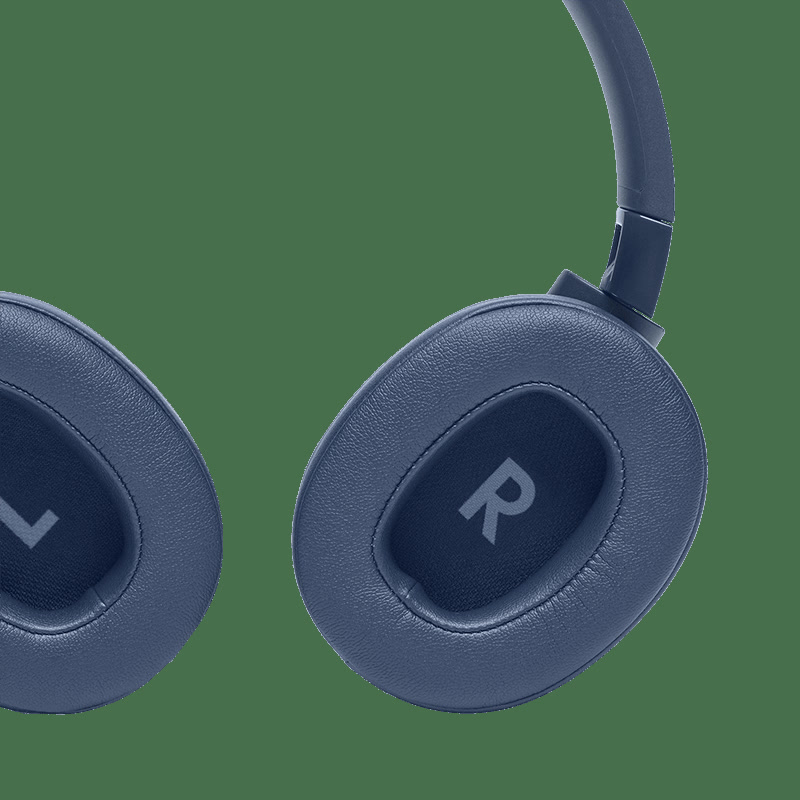
The 760NC commits to lightweight portability over premium tactility. The plastic chassis keeps the weight at a travel-friendly 220 grams and allows a foldable hinge mechanism—something Sony’s similarly priced WH-CH720N inexplicably omits. But that portability comes with immediate caveats. The construction is utilitarian, with visible seam lines and a firm clamp. The firm clamp and shallow cushions may create pressure for some users, particularly spectacle wearers; the existing evidence does not establish a universal time-to-discomfort. The hinges, while functional, exhibit a worrying degree of flex that raises durability questions for daily bag-toss commuters. This is a headphone built to survive travel, not to impress during video calls.
Connectivity & Features
Where the 760NC punches above its weight is connectivity logistics. Bluetooth 5.0 provides the backbone, and while the codec support stops at AAC and SBC—leaving Android users without aptX or LDAC’s higher resolution—the inclusion of true multipoint pairing is a genuine differentiator at this tier. Switching between a laptop’s Zoom call and a phone’s Spotify stream happens without the usual disconnect-reconnect dance, a workflow saver for hybrid workers.
The battery performance is the headline feature: 35 hours with ANC engaged, stretching to 50 hours without. That’s 10 to 15 hours beyond most competitors, effectively eliminating range anxiety for week-long trips. USB-C quick charging delivers two hours of playback from a five-minute top-up—airport salvation when you’ve forgotten to charge overnight. The JBL Headphones app offers functional EQ and firmware updates, though the ANC itself is a fixed, non-adaptive system. It handles low-frequency rumbles—HVAC drones, aircraft engines—with competence, but higher-frequency office chatter and human voices leak through noticeably more than on Sony’s mid-tier alternatives.
Sound Performance
Sonically, the 760NC wears its consumer tuning proudly. The 40mm drivers deliver a distinctly V-shaped presentation: sub-bass is elevated and physical, providing the thump JBL markets as “Pure Bass,” while the lower-mids (200–500Hz) dip to create perceived clarity. This recession thins out male vocals and cellos, giving acoustic instruments a slightly hollow cast, but the upper-mid presence peak around 2–4kHz ensures vocal intelligibility remains intact.
The treble exhibits moderate sparkle in the 6–10kHz range—enough to lend snare drums crack and cymbals shimmer—but some listeners report fatigue after 90-minute sessions, while others find the relaxed upper-treble air less aggressive than Sony’s brighter alternatives. Imaging is adequate for the category; instrument separation holds for pop and hip-hop but congests during dense orchestral passages where the Bluetooth implementation’s dynamic compression becomes apparent.
This is not a headphone for critical jazz sessions or chamber music. The staging is intimate, the micro-dynamics compressed, and the tuning favors engagement over accuracy. But for electronic, modern rock, and podcast consumption, the energetic signature delivers satisfaction without requiring volume escalation.
Comparisons
Against Sony’s WH-CH720N (priced similarly at $149), the JBL wins on practicalities: superior battery life, a foldable design, and multipoint connectivity. However, Sony’s ANC algorithm handles voice frequencies more effectively, and their DSEE upscaling squeezes more detail from lossy streams. Sony’s finish and construction are more polished, even though that model does not fold for travel.
The Anker Soundcore Life Q30 (around $79) offers superior raw value with more granular app-based EQ and customizable ANC. Yet the JBL counters with more disciplined bass tuning—the Anker can sound boomy—and the reliability of a legacy audio brand’s acoustic engineering. For an extra $50, the JBL buys you refinement, not revolution.
Most telling is the comparison with JBL’s own Tune 770NC ($169). For approximately $40 more, the 770NC adds adaptive ANC that responds to environmental noise, softer ear pads that resolve the clamping issues, and faster charging. If your budget stretches, the 770NC is the objectively superior product; the 760NC only makes sense when found on significant discount or when battery life is the absolute priority.
Who It's For
The Tune 760NC serves the long-haul commuter who prioritizes logistical freedom over acoustic perfection. If you need headphones that last a week of train rides without hunting for USB-C cables, and you frequently switch between work laptop and personal phone, these deliver rare convenience at this price.
Look elsewhere if noise cancellation is your primary concern—save for a used pair of Sony WH-1000XM4 or Bose QC45. Critical listeners seeking neutral tonality for classical or jazz should consider wired options like Sennheiser’s HD 400 series. Gamers will find the Bluetooth latency uncompetitive for competitive play, and those with larger heads or thick frames should audition before committing due to the clamping force.
Verdict
The JBL Tune 760NC is a specialist, not an all-rounder. It trades ANC sophistication and luxury materials for marathon battery life and connectivity features that genuinely improve daily workflows. The sound is colored—enthusiastically so—favoring pop and electronic genres with physical bass and clear vocals while sidelining acoustic nuance. It’s a headphone that understands its audience: the budget-conscious traveler who needs music to survive the journey, not to analyze it.
Scorecard
Rating: Recommended. Composite: 74/100.
Buying decision and value
Buy the Tune 760NC when long battery life, folding portability, multipoint pairing, and energetic bass matter more than advanced ANC or neutral tuning. Skip it if voice-frequency noise reduction, spacious sound, low clamp pressure, or gaming latency is the priority. The newer Tune 770NC deserves comparison whenever the price gap is small.
The record lists a $129 MSRP and notes historical discounts around $99. MyHiFi has not independently verified a live July 2026 price, so neither figure should be read as a current offer. The 760NC makes the strongest case at a substantial discount to newer JBL and Sony alternatives.
Methodology
This review is an editorial assessment based on the specifications, comparisons, and reported sound findings preserved in the original review. MyHiFi did not perform hands-on testing of this unit. Historical source files and source counts were not reconstructed. The previously mismatched retailer link was replaced with a product search link rather than an unverified direct listing.
Price context was reviewed in July 2026. Retail prices and availability change; verify the current listing and model number before buying.
MyHiFi may earn a commission from purchases made through affiliate links. This does not influence our editorial decisions or source selection.