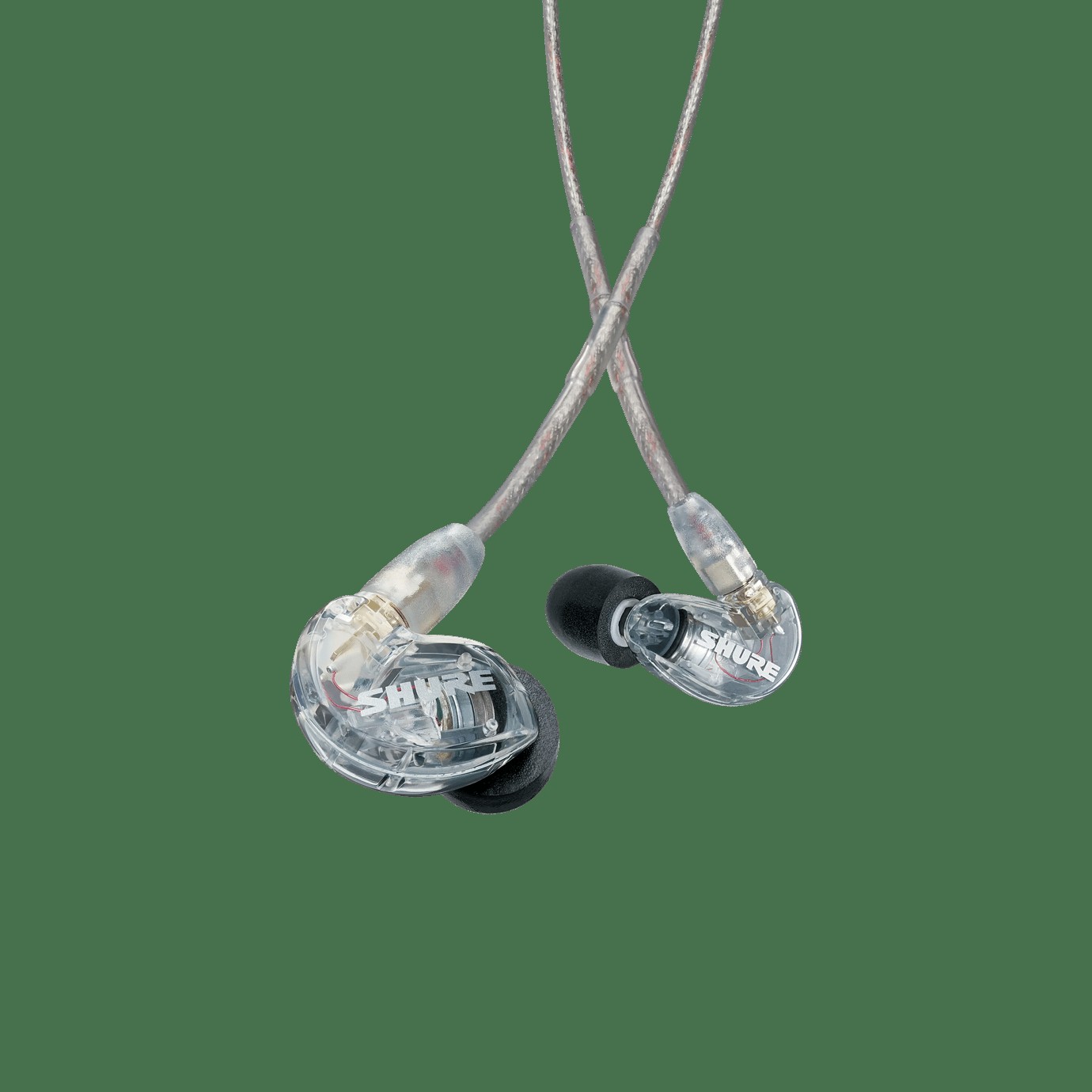
Some products survive because nobody cares enough to replace them. The Shure SE215 survives because nobody has replicated what it does at what it costs. Released around 2011 at roughly $119, this single-dynamic-driver in-ear monitor has been in continuous production for over a decade, accumulating more than 10,000 Amazon ratings and becoming the default entry point into IEMs for a generation of musicians, commuters and audio curious.
That longevity is not because the SE215 is a great-sounding IEM by 2026 standards. Its treble rolls off early, its bass is more prominent than precise, and modern chi-fi IEMs at half the price out-resolve it. What the SE215 does that those alternatives do not is isolate. Up to 37 dB of passive noise reduction, professional-grade Kevlar-reinforced cabling, a secure over-ear fit borrowed from Shure's flagship SE535, and a detachable MMCX connector that extends service life. For stage monitoring, commute survival and sleep-friendly listening, those features matter more than treble extension.
At $93–$109 on Amazon in July 2026, it remains the strongest isolation-per-dollar IEM available — but no longer the strongest sound-per-dollar.
Scorecard
Low measured distortion and coherent mids, but deliberately rolled-off treble and limited resolution by modern standards
Professional Kevlar cable and detachable MMCX, but connector wear is a known long-term issue and recent quality concerns exist
Class-leading isolation and pro features at $93–$109, though modern chi-fi outperforms it sonically for less
Superb for stage, commute, flights and sleep; limited for critical listening, classical or treble-forward material
Who it is for: stage musicians needing reliable monitoring; commuters and frequent flyers who prioritise isolation above all else; sleep listeners; first-time IEM buyers who want pro-grade build and a recognised brand.
Who should skip it: listeners seeking audiophile detail retrieval or treble sparkle; bass-heads wanting theatrical low-end; anyone who has already owned a modern chi-fi IEM under $100 and expects similar resolution.
Verified specifications
| Specification | Published value |
|---|---|
| Transducer type | Single High-Definition MicroDriver (dynamic) |
| Sensitivity | 107 dB SPL/mW at 1 kHz |
| Impedance | 17 Ω at 1 kHz |
| Frequency range | 22 Hz–17.5 kHz |
| Noise attenuation | Up to 37 dB (passive) |
| Maximum input power | 100 mW |
| Connector | MMCX (detachable) |
| Weight | 20.8 g |
| Cable | Kevlar-reinforced, detachable |
Shure's 37 dB isolation claim is a best-case passive figure achieved with foam tips and a proper seal. It depends entirely on tip selection and insertion depth.
Design and comfort: built like a stage tool
The SE215's shell design is borrowed from Shure's flagship SE535. Over-ear cable routing, moulded plastic housings and locking MMCX connectors were engineered for stage use. The cable is thick, Kevlar-reinforced, textured to resist tangling, with a heavy-duty right-angled jack — the same cable Shure uses on models costing three to four times more.
Comfort is generally good once the over-ear routing is mastered. Low-profile shells sit flush in the ear, practical for side-sleeping and motorcycle helmets. Shure includes a generous fit kit; foam tips (Shure Olives) compress before insertion and expand in the canal for a secure seal. Without that seal, both isolation and bass collapse.
The trade-off is ergonomic. MMCX connectors are bulky and angled forward, and professional coverage has noted discomfort compared to Westone monitors with similar shaping. The memory wire ear-loop is stiff and takes practice.
What the measurements mean
Independent coupler measurements confirm what every subjective review describes: a warm, bass-and-mid-forward signature with deliberate treble roll-off. A second independent measurement suite characterises the same profile — elevated bass, forward mids, and recessed treble with only a couple of narrow peaks.
Neither dataset suggests the SE215 is badly engineered. It is tuned for stage monitoring, where midrange clarity and isolation matter more than treble air. Low distortion is confirmed across sources, and frequency-response consistency is good once sealed.
The limitation is resolution. The 22 Hz–17.5 kHz claimed bandwidth tells the story: the SE215 stops where many modern IEMs are just getting started. A Moondrop Chu II at $20 delivers a flatter, more extended frequency response. The SE215 does not compete on sound quality in 2026. It competes on isolation, build and brand trust.
Sound character: warm, safe and deliberately dark
Bass is the SE215's strongest sonic asset — prominent and full-bodied with good depth. The qualification is control: compared to modern single-DD competitors from Moondrop, Simgot or Truthear, the SE215's bass is looser and less textured. Early coverage found it controlled relative to lower-priced rivals; later assessment against higher-end IEMs found it looser and less precise. Both are correct for their reference points.
The midrange is the SE215's identity. Warm, smooth and full-bodied, it reproduces vocals with natural weight and texture. This is the tuning that made the SE series a stage standard: singers hear themselves clearly through the mix. Push the volume and a faint coarseness creeps into the upper mids, but the overall presentation stays pleasant and unfatiguing.
Treble is the weakness, and every source agrees. It rolls off at the top, lacks sparkle and detail, and can sound dull with material that depends on high-frequency energy. Classical loses air. Cymbals lose sizzle. The SE215 is not sibilant — it is the opposite. It rounds off everything above roughly 10 kHz, forgiving for harsh recordings but fatal for critical listening. EQ can help, but it cannot add detail that the driver does not resolve.
Soundstage is functional rather than expansive. At launch, the stage was considered relatively wide for the price; against the broader headphone category in 2024, it is less generous. The SE215 images adequately within a bounded, intimate space.
Comparisons: what else should you buy?
The Moondrop Chu II at roughly $20 out-resolves the SE215 sonically for a fraction of the cost. It cannot match the isolation, build or cable. For home listening where isolation is not critical, the Chu II is the stronger audio purchase.
The Truthear x Crinacle Zero at roughly $50 offers near-reference frequency response with better bass control and treble extension. It lacks the SE215's stage-grade build and isolation, but it is the better IEM for sound quality.
The Shure SE315 moves to a balanced-armature driver within the same shell and cable system. It costs roughly twice as much and offers better midrange coherence, but still shares the SE215's conservative treble.
The Etymotic ER2XR is the isolation rival. It matches or exceeds the SE215's attenuation with a much more accurate frequency response, but its deep-insertion fit is polarising. Choose Etymotic for analytic listening; choose Shure for comfort and stage practicality.
Pairing and everyday use
The SE215 is trivially easy to drive. At 17 Ω and 107 dB/mW, a phone jack or basic USB-C dongle is sufficient. A dedicated amplifier is unnecessary.
Isolation is the SE215's primary function. With Shure Olive foam tips properly inserted, it blocks conversation, traffic and aircraft noise more effectively than most ANC earbuds — ideal for commuting, touring, study and sleep. It also means outdoor use while running or cycling is a safety risk.
The detachable cable is the key longevity feature. When it eventually fails — and MMCX connectors do wear — a replacement costs $20–$40 and snaps on in seconds. This is a product designed for serviceability in a category where most IEMs at this price are disposable.
Value and verdict
The SE215 launched at $119 and now sits at $93–$109 on Amazon, with 10,255 ratings averaging 4.4/5. That sustained demand over fifteen years reflects a product that does one thing — passive isolation with professional build — better than anything else at the price.
The SE215 is no longer a competitive audiophile IEM. Modern chi-fi designs deliver flatter frequency response, better treble extension and superior detail retrieval at $20–$50. The SE215's value proposition is isolation and build, not sound quality. Buyers who want the best-sounding IEM under $100 should look elsewhere. Buyers who want the best-isolating, best-built IEM under $120 should buy the SE215.
The Shure SE215 earns 75/100 and a Recommended rating because it remains the pragmatic choice for isolation-focused use despite a deliberately dated sound signature. Its treble is rolled off, its resolution is limited, and its MMCX connectors eventually wear. Its isolation is exceptional, its build is professional, and its serviceability extends its life beyond disposable alternatives. The SE215 does not sound like a $100 IEM in 2026. It isolates like a $300 one.
MyHiFi weights Technical Performance at 30%, Value at 30%, Build Quality at 25% and Versatility at 15%. The resulting weighted composite is 75.40, rounded to 75/100, in the Recommended band.
Methodology
This assessment draws on two independent measurement sources (coupler frequency-response data and a standardised test-bench evaluation), three professional editorial reviews spanning 2011–2024, 13 manually coded Amazon owner reviews from five countries, Amazon rating data exceeding 10,000 ratings, official Shure specifications and live July 2026 pricing. Confidence: High for isolation and build, Moderate for sonic conclusions due to the product's age and lack of accessible distortion measurements. MyHiFi did not perform hands-on testing.
Affiliate disclosure: MyHiFi may earn a commission from purchases made through affiliate links, at no additional cost to you. This does not influence our editorial decisions, scores or source selection.