Edifier R1280DB Review: The Default Gateway Drug That Knows Its Place
The R1280DB occupies that strange liminal space where Amazon best-seller lists overlap with Reddit recommendation threads. It's the powered speaker that audio enthusiasts love to dismiss until they remember that not everyone wants to hunt for vintage amps or calculate impedance curves. At around $130, Edifier promises a self-contained solution—DAC, amplification, and Bluetooth convenience wrapped in a bookshelf-friendly footprint. But convenience always extracts its toll. The question isn't whether the R1280DB sounds good for the money; it's whether its warmth-forward tuning and DSP management constitute smart engineering or merely smart marketing.
Design & Build
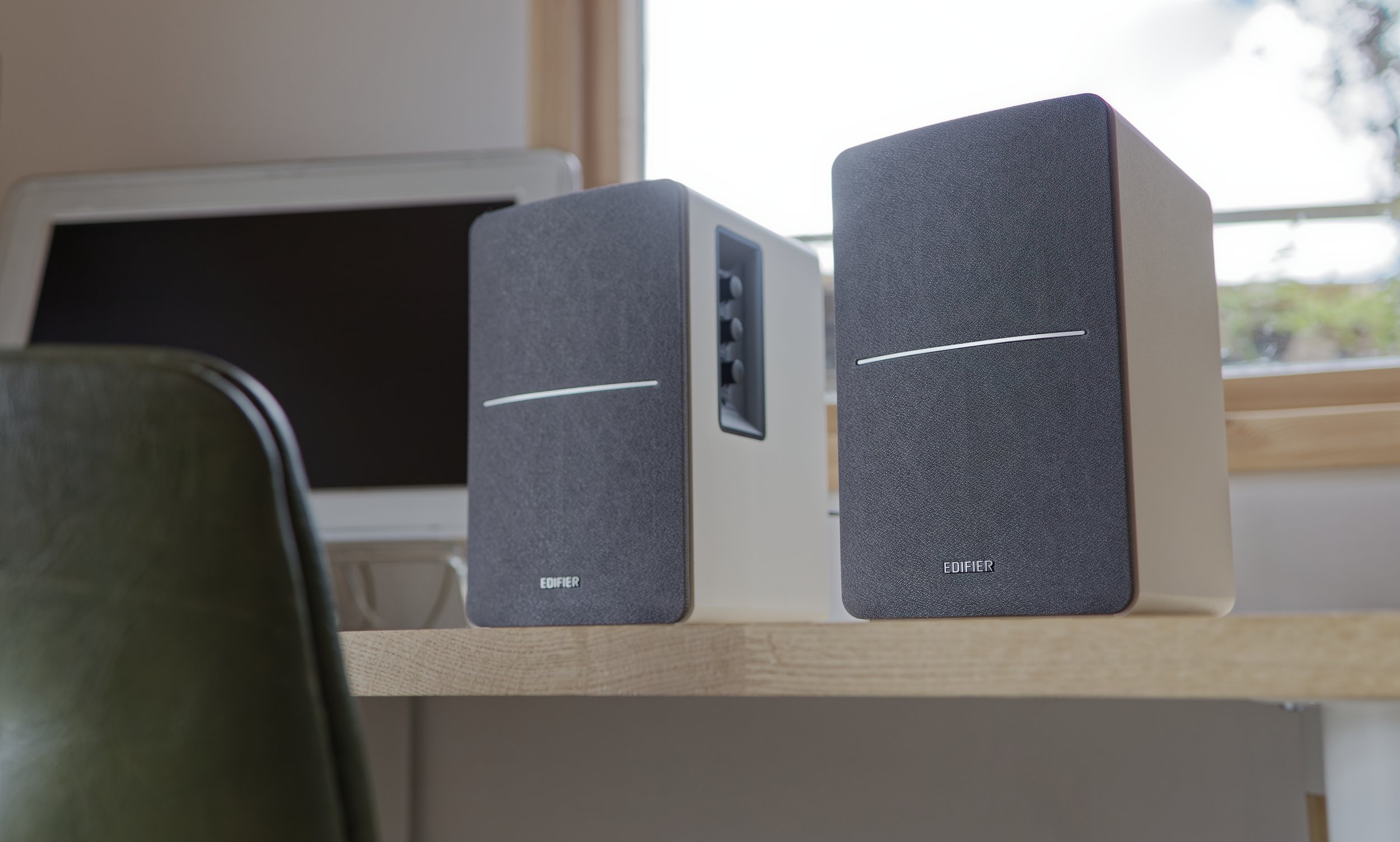
The enclosure arrives wrapped in textured vinyl over MDF with internal bracing tuned for the cabinet size, prioritizing domestic acceptability over audiophile heft. The front baffle houses a 4-inch woofer and a silk dome tweeter, with driver materials selected for cost-effective reproduction rather than exotic specification. Physical controls for treble, bass, and input selection sit atop the active unit, implemented via potentiometers that raise valid questions about long-term durability under daily use. The included remote is basic plastic and functional, without the substantial controls found on more expensive separates. These are not heirloom-grade monitors; they're utilitarian tools designed for nearfield desktop duty where space constraints trump luxury finishes.
Connectivity & Features
The integrated DAC and Bluetooth implementation prove competent for casual listening, though the absence of aptX HD or LDAC support remains a conspicuous limitation for lossless enthusiasts streaming from modern smartphones. Wired inputs include RCA and optical connectivity. Crucially, Edifier includes an RCA sub-out—a feature that transforms the system's long-term viability, allowing users to bypass the 4-inch woofers' inherent macrodynamic limitations when paired with an external woofer.
Sound Performance
The documented sound profile is deliberately warm and mid-forward, prioritizing musical engagement over analytical precision. The DSP implementation favors a tonal balance that flatters compressed streaming sources—think standard-quality digital audio—masking micro-detail retrieval that more resolving systems would expose. In nearfield desktop configurations, the R1280DB creates an intimate, enveloping listening bubble where acoustic guitars and vocals receive pleasing emphasis.
Push them into larger rooms, however, and the compromises emerge. The amplification stage struggles with macrodynamic swings during complex orchestral passages or bass-heavy electronic music without the dedicated sub-out engaged. The port tuning suggests a roll-off that favors warmth over extension, and sustained high-SPL sessions will reveal the limits of the compact amplification. Stereo imaging stays coherent within the sweet spot, but off-axis response exhibits the expected narrowing typical of budget two-ways.
Comparisons
Against passive separates like the Sony SSCS5 paired with a budget amplifier, the R1280DB trades ultimate transparency for immediacy. The passive route demands cable management and component matching but rewards with superior transient articulation and treble air. Conversely, the R1280DB's all-in-one convenience competes favorably with other powered monitors in its class, though competitors offering balanced inputs or superior codec support may sway users prioritizing studio utility over living-room friendliness. Alternative compact speakers may offer different tuning philosophies, but the Edifier's Bluetooth integration and remote control functionality remain differentiating factors at this price.
Who It's For
This is the starter system for the college dorm, the secondary bedroom setup, or the kitchen counter where critical listening takes a backseat to background warmth. It suits users who value remote-controlled convenience and sub-out expandability over the ritual of component matching. Audiophiles seeking micro-detail retrieval or planar-magnetic speed should look elsewhere; the R1280DB serves listeners transitioning from Bluetooth pods to something resembling a traditional hi-fi without the intimidation factor.
Technical and perceptual consequences
The R1280DB’s active/passive arrangement concentrates amplification, conversion, controls, and inputs in one cabinet, with the second speaker connected by cable. That design removes the need to select an amplifier or calculate a passive load, which is central to the product’s appeal. It also means the electronics and loudspeaker cannot be upgraded independently in the way a separates system can. Buyers are choosing a complete operating model, not simply a pair of small cabinets.
The 4-inch woofer and compact enclosure establish the system’s scale limits. The retained sound pattern—warm balance, vocal emphasis, coherent nearfield imaging, and reduced composure on large dynamic swings—is consistent with a product optimized for short listening distances and moderate output. The subwoofer output provides a route to greater low-frequency reach, but it should not be mistaken for evidence that the main speakers become large-room monitors. The prior copy describes the output as a simple extension path rather than a fully managed crossover system, so subwoofer setup and level matching remain external responsibilities.
Tone controls are useful precisely because placement and short listening distances vary. Bass adjustment can temper boundary reinforcement on a desk or counter, while treble adjustment can shift the forgiving balance toward greater presence. Those controls do not add missing resolution or macrodynamic headroom; they alter tonal balance within the system’s existing limits. Similarly, optical input avoids an extra analog conversion in a basic TV or digital-source setup, whereas Bluetooth prioritizes convenience. The absence of aptX HD and LDAC matters most to buyers who specifically require those codecs, not to every casual stream.
Real-world roles and value
On a desk, the R1280DB’s narrow sweet spot is less restrictive because the listener’s position is stable and close. In a bedroom, dorm, or kitchen, remote operation and source switching reduce daily friction. In a large living room, the same attributes cannot compensate for limited output and bass scale. The decision should therefore begin with distance and required loudness, not with the number of input logos on the rear panel.
The speaker also has a defensible TV role when optical connectivity and stereo separation matter more than HDMI control or surround processing. It is not presented as an HDMI ARC system, and buyers wanting television-remote integration should compare products designed around that workflow. For a turntable, the current copy supports RCA connectivity but does not establish an onboard phono stage; a source without line-level output may require separate phono amplification. Avoiding that assumption is part of comparing total system cost accurately.
At the recorded $130 MSRP, the value case is the bundled amplification, conversion, Bluetooth, remote, tone controls, and subwoofer expansion path. MyHiFi has not independently verified a current July 2026 selling price. If the checkout price approaches more capable powered speakers, balanced-input monitors, or systems with newer wireless features, the recommendation weakens. Against Sony SSCS5-based separates, choose Edifier for immediate setup and fewer boxes; choose separates for an upgrade path and the reported gains in transient clarity and treble air. Against pricier active speakers, choose the R1280DB only when its warm nearfield character and basic connectivity satisfy the job without paying for unused studio or network features.
Verdict
The Edifier R1280DB succeeds not by transcending its price point, but by strategically accepting its limitations. It delivers a polished, engaging listen within arm's reach, provided you don't ask it to fill a living room or dissect dense metal mixes. Think of it as a specialized tool—exceptional for desktop duty, merely adequate for room-filling duty without augmentation. The build quality trade-offs and Bluetooth codec limitations are real, yet the value proposition remains undeniable for the target demographic. It's a Recommended gateway drug that understands exactly who it's meant to serve.
Scorecard
Rating: Recommended. Composite: 77/100.
Buying decision and value
Buy the R1280DB for a compact desk, bedroom, dorm, or kitchen system when amplification, remote control, Bluetooth, tone controls, and a subwoofer output are more important than high output or forensic detail. Skip it for large rooms, studio work that needs balanced inputs, or listeners who prioritize modern high-resolution Bluetooth codecs.
The original review used roughly $130 as its price context. MyHiFi has not independently verified a live July 2026 street price, so that figure should be treated as historical rather than current. Its value depends on remaining clearly cheaper than more capable powered speakers; compare the checkout price and warranty before ordering.
Methodology
This review is an editorial assessment based only on the specifications, comparisons, and sound findings preserved in the original review. MyHiFi did not perform hands-on testing of this unit. Historical research files and source counts were not reconstructed. Unverified specifications remain identified as such rather than guessed.
Price context was reviewed in July 2026. Retail prices and availability change; verify the current price before buying.
MyHiFi may earn a commission from purchases made through affiliate links. This does not influence our editorial decisions or source selection.