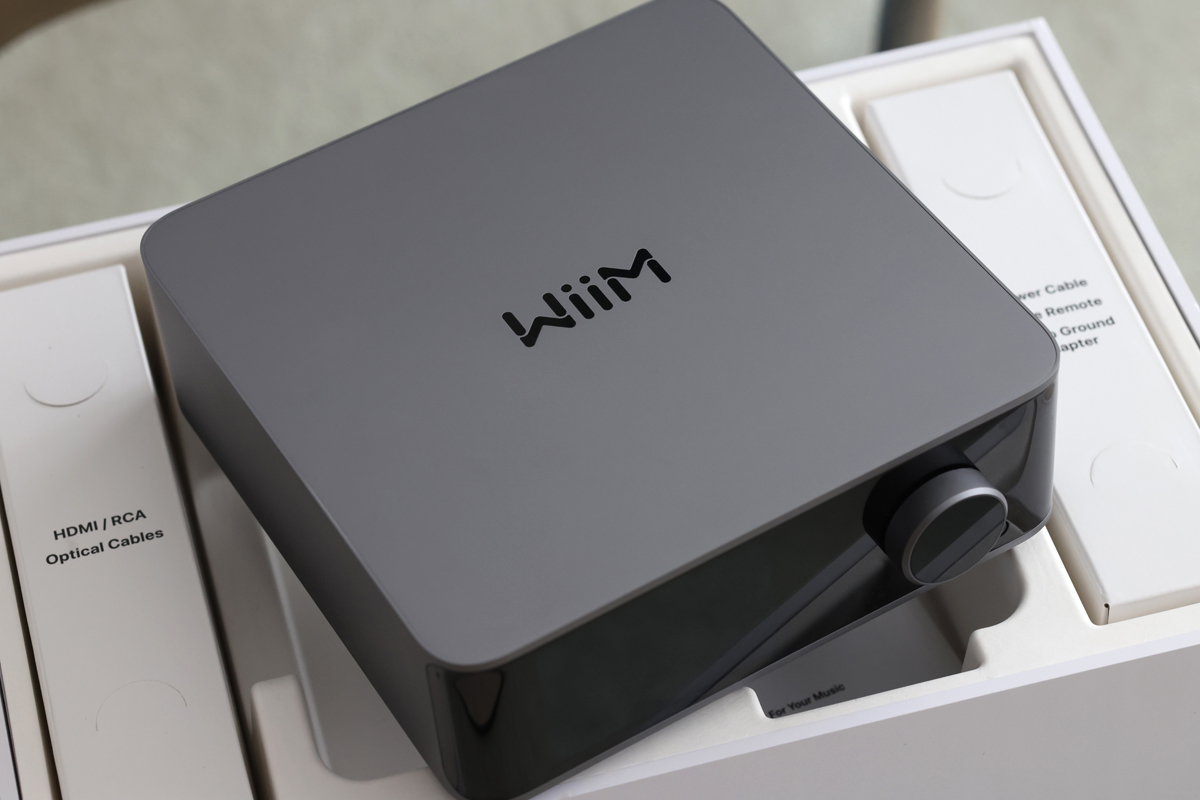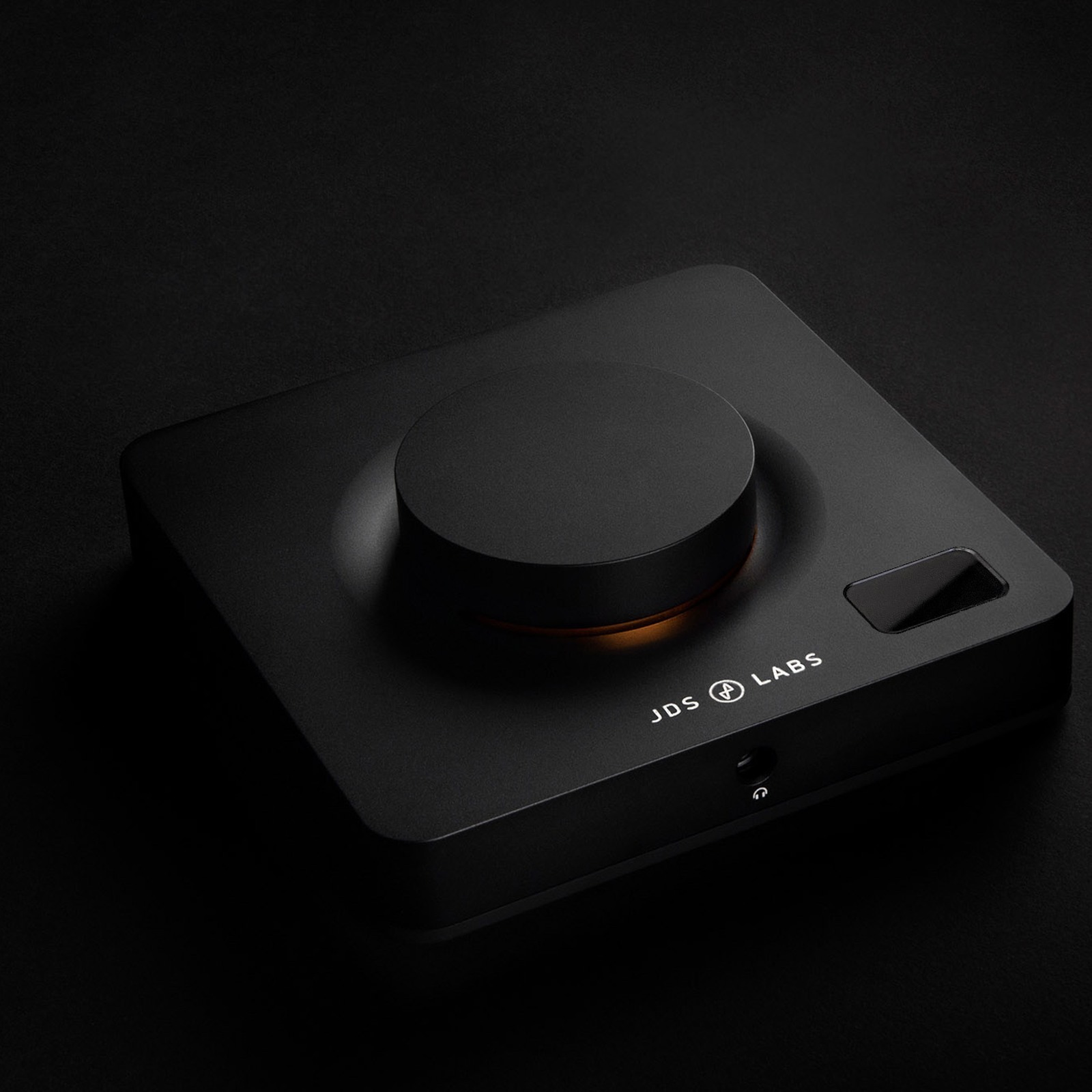
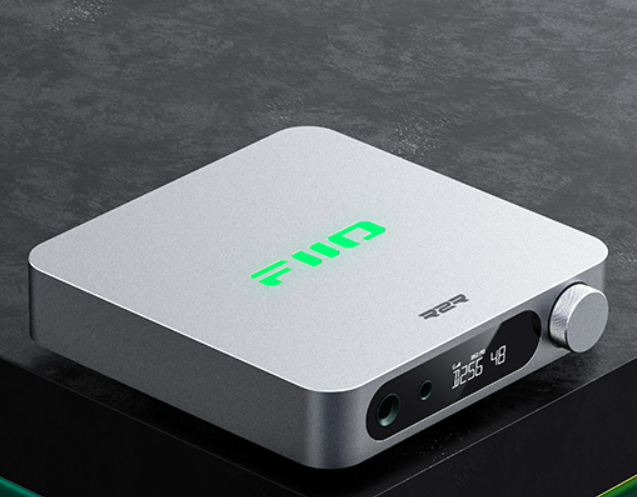
The FiiO K11 R2R is a compact desktop DAC, headphone amplifier and preamplifier built around a discrete resistor-ladder conversion stage. Its importance is less about proving that one DAC architecture has a universally “analog” sound and more about making R2R experimentation available in a practical sub-$200 component. Multiple digital inputs, two headphone sockets, selectable gain, fixed or variable RCA output and oversampling choices give it a credible role as the center of a small desktop system.
The K11 R2R is an unusually strong value, though buyers should understand the absence of Bluetooth, remote control and balanced line outputs, as well as the technical trade-offs associated with an inexpensive ladder DAC. Its appeal is architectural choice plus desktop utility, not a promise that resistor ladders automatically outperform conventional DAC chips.
Architecture and verified features
Rather than use the delta-sigma converter chip found in the standard K11, the K11 R2R uses a fully differential 24-bit resistor array. FiiO describes four channels with 48 resistors per channel, for 192 precision thin-film resistors in total. Maintaining tight resistor matching is central to linearity in a ladder DAC, and the architecture is technically distinctive at the launch MSRP of $169. It should not, by itself, be treated as evidence of superior sound.
Digital inputs comprise USB Type-C, optical S/PDIF and coaxial S/PDIF. The rear analog connection is stereo RCA, configurable as fixed line output or variable preamplifier output. The front provides 6.35mm single-ended and 4.4mm headphone sockets. The 4.4mm path is the higher-power balanced headphone output; there are no balanced XLR or TRS line outputs.
The central multifunction knob controls volume and menu navigation, while the display reports operating status. Three gain levels broaden compatibility from sensitive earphones to many full-size headphones. OS and NOS modes allow users to choose oversampling or non-oversampling operation. FiiO specifies PCM support up to 384kHz/24-bit and DSD256 through USB. Exact format support can vary by input and host configuration, so buyers should consult the current manual and driver information for their platform.
The aluminum-alloy enclosure is compact enough for a crowded desk and visually more substantial than a plastic interface. An external 12V power supply keeps mains circuitry outside the small chassis. The trade-off is another power brick and cable. There is no wireless input, network streaming, analog input or remote.
Headphone output and load matching
FiiO rates the balanced output at up to 1,300mW into 32 ohms and the single-ended output at 460mW into 32 ohms under stated test conditions. Those figures indicate useful current capability for common low-impedance planars, while the available voltage also makes the unit suitable for many 150- and 300-ohm dynamic headphones. They do not establish compatibility with every difficult planar or guarantee identical performance at clipping limits.
The three gain settings and digitally managed volume range are valuable in daily use. Low gain offers finer adjustment for sensitive earphones, while higher settings preserve headroom for less efficient full-size models. Noise behavior should still be checked with exceptionally sensitive IEMs; “no hiss with anything” is too broad a claim without a defined load and measurement condition.
The 4.4mm connector should be chosen for compatible wiring and useful extra output, not because balanced drive automatically sounds better. Users must never adapt a conventional shared-ground headphone plug into a balanced output with an unsafe passive adapter. The 6.35mm output remains the simpler option whenever it supplies enough clean level.
Conversion modes and performance pattern
OS mode oversamples incoming PCM before conversion, while NOS mode avoids that process. The modes can produce measurable differences in frequency response and ultrasonic images. Published impressions often characterize NOS as softer or more relaxed and OS as crisper, but language such as “analog magic” is not a verified technical result. Audibility depends on content, level matching, downstream equipment and listener sensitivity.
Evidence patterns around the K11 R2R describe a slightly smooth, full presentation rather than the maximally sharp character associated—fairly or not—with some inexpensive delta-sigma products. The more responsible interpretation is that implementation and filtering matter alongside topology. Modern competently engineered DACs can differ less audibly than sighted comparisons suggest, and the K11 R2R should be purchased for its complete feature set as well as curiosity about ladder conversion.
Technical performance is strong enough for its intended use but should not be confused with the chart-leading noise and distortion figures available from similarly priced delta-sigma DAC/amps. R2R linearity, NOS behavior and the affordable implementation involve different engineering priorities. The device’s merit is that those choices coexist with adequate headphone power, useful input selection and preamp functionality rather than requiring a costly specialist box.
DAC and preamplifier use
The RCA output makes the K11 R2R more than a headphone-only device. Fixed line mode can feed an integrated amplifier or separate headphone amplifier; variable mode can control powered monitors or a power amplifier. Users should confirm the selected mode before changing connections, because sending a fixed high-level output into an unexpectedly sensitive downstream chain can create an abrupt level jump.
The lack of a remote matters little at arm’s reach and substantially more across a room. Likewise, RCA-only output is entirely adequate for short desktop runs but less ideal in electrically noisy studios or long cable installations where balanced interconnection offers common-mode rejection. There is no analog input, so the K11 R2R cannot serve as a general analog preamp for a turntable stage or other line source.
USB makes the clearest computer-audio route. Optical input can break a ground connection and is useful for televisions or consoles, subject to their PCM output settings. Coaxial supports transports with a compatible digital output. This range gives the K11 R2R excellent desktop versatility without pretending it is a streamer or home-theater controller.
Rivals and value
Launch MSRP was $169. This review was refreshed in July 2026; no current retail price or stock status was independently verified. Buyers should compare live pricing, seller authorization, power-supply region and warranty terms. A low marketplace price is less attractive if returns or firmware support are uncertain.
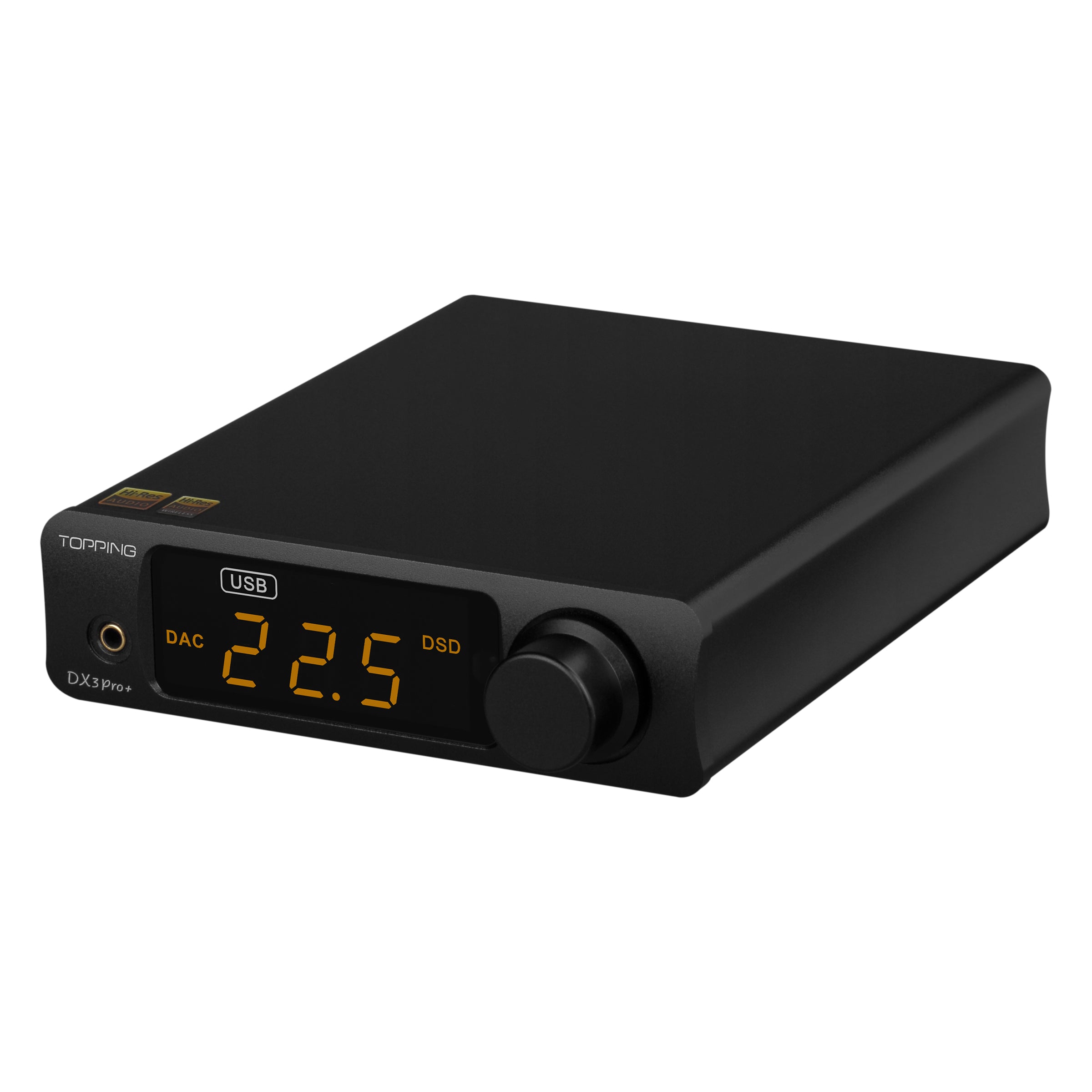
The Topping DX3 Pro+ is the most obvious alternative for buyers who prioritize very low measured distortion, Bluetooth and remote operation over ladder architecture or a 4.4mm output. The FiiO K11 delta-sigma version shares much of the chassis concept and may cost less, making it the rational choice for users with no specific interest in R2R or NOS. A Schiit Modi and Magni stack separates DAC and amplification for easier component upgrades, but uses more space, cables and power connections and may not match the K11 R2R’s input/output convenience at the same total price.
Value is the K11 R2R’s strongest dimension. The original price bought an unusual converter architecture, capable headphone stage and functional preamp in one enclosure. The qualification is that users who need Bluetooth or a remote must add another device or choose a rival, eroding that advantage.
Who it is for—and who it is not for
The K11 R2R is for desktop listeners who want one wired hub for a computer, digital transport, headphones and powered speakers. It also suits buyers curious about OS/NOS and resistor-ladder conversion without committing to an expensive standalone DAC.
It is not for measurement absolutists seeking the lowest possible SINAD, living-room users who require remote volume, wireless listeners, or systems needing balanced line output. Extremely insensitive headphones should be matched against required voltage and current rather than relying on the headline 32-ohm figure.
Verdict
FiiO’s K11 R2R succeeds because the ladder DAC is attached to a sensible product. Its input selection, dual headphone outputs, gain control and selectable RCA behavior make it genuinely useful, while OS/NOS provides a meaningful way to explore the architecture. Missing wireless and remote features are real, and the R2R label should not be romanticized, but the package offers rare technical variety at an accessible price.
Composite Score: 88/100 (Highly Recommended)
• Technical Performance: 86/100 • Build Quality: 84/100 • Value: 93/100 • Versatility: 88/100
MyHiFi weights Technical Performance at 30%, Value at 30%, Build Quality at 25% and Versatility at 15%. The weighted result is 87.9, rounded to 88/100, within the Highly Recommended band.
Methodology
This assessment draws on verified manufacturer specifications and recurring patterns in published technical and professional evaluations. Confidence: High for features, topology and output capability; moderate for long-term ownership. MyHiFi did not perform hands-on testing of the FiiO K11 R2R. The historical source archive was not reconstructed.
MyHiFi may earn a commission from purchases made through affiliate links. This does not influence our editorial decisions or source selection.