Exceptional — 92/100 (Technical: 90 | Build: 88 | Value: 95 | Versatility: 96)
The WiiM Ultra arrives at an awkward moment for traditional hi-fi streamers. For years, the category sold restraint as refinement: a little metal box, a network input, maybe a decent DAC, and a price tag that implied seriousness. WiiM looked at that equation and asked the impolite question: why does the affordable streamer have to stop at streaming?
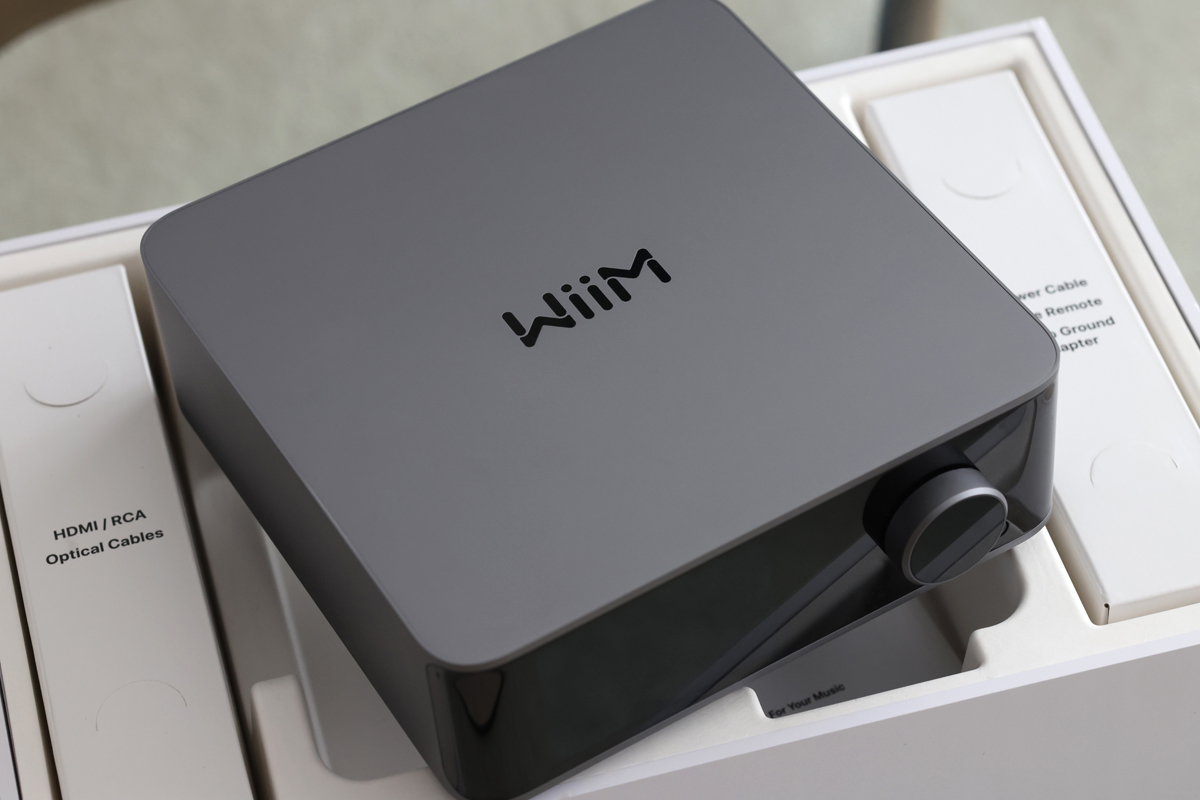
At $329 USD, the Ultra is a network streamer, DAC, digital preamp, HDMI ARC TV bridge, phono-input digitizer, subwoofer controller, headphone output, EQ platform, room-correction box, and touchscreen source selector. That list should read like spec-sheet overreach. Instead, the independent measurement evidence says the core DAC/line-output performance is genuinely transparent, while published reviews consistently find the software and hardware experience unusually polished for the money.
The buying decision is whether you want a purist streamer or a modern control center. The Cambridge Audio MXN10 still has a case for network transport duty. The Ultra is stronger when one box must connect streaming, TV audio, a turntable, a subwoofer, and powered speakers.
Scorecard
Independent APx555 measurements confirm transparent line-output performance: 119 dB A-weighted SNR and 0.00019% THD+N at 2 Vrms.
Compact aluminum/glass design, useful 3.5-inch touchscreen, strong app, remote included; touchscreen does not fully replace app navigation.
Streaming DAC/preamp/phono/HDMI/sub/headphone/EQ/room-correction hub for $329 is category-bending.
HDMI ARC, optical, line, phono MM/MC, line/sub/optical/coax/USB outputs, Roon Ready, DLNA, Google Cast, Spotify/Tidal Connect, EQ and bass management.
Who it’s for ✅
• Listeners building a compact modern system around powered speakers, an integrated amp, or a power amp. • Buyers who want one box to handle streaming, TV audio, subwoofer integration, room EQ, and a turntable input. • Value hunters cross-shopping streamers that cost $500–$1,000 but offer fewer practical connections.
Who it isn’t for ❌
• Apple-heavy households that rely on AirPlay 2; the Ultra does not support it. • Analog purists who do not want line or phono inputs digitized for volume, EQ, and bass management. • Headphone-first listeners expecting the front jack to replace a dedicated desktop amplifier.
Verified specifications
| Spec | WiiM Ultra |
|---|---|
| Price | $329 USD MSRP; £349 / AU$599 reported by professional retail-market reviews |
| DAC | ESS ES9038Q2M |
| Wireless/network | Wi-Fi 6, Bluetooth 5.3, Ethernet, Google Cast, DLNA, Spotify Connect, Tidal Connect, Roon Ready |
| Not supported | AirPlay 2; USB computer-audio input; DTS over HDMI/optical |
| Inputs | HDMI ARC, optical, RCA line in, MM/MC phono, USB storage, Bluetooth/network streaming |
| Outputs | RCA line out, optical, coaxial, USB audio out, 2.0 Vrms sub out, 3.5mm headphone out |
| Published line output | 2.1 Vrms max, 121 dB A-weighted SNR, THD+N 0.00018%, ±0.05 dB frequency response |
| Dimensions / weight | 8.3 × 7.87 × 2.83 in; 3.13 lb / 1.42 kg |
Technical performance: transparent where it counts
The Ultra’s central technical claim is straightforward: an ESS ES9038Q2M DAC with a low-noise implementation good enough to behave as a transparent digital preamp. The independent lab data confirms that claim. At 2 Vrms output, 119 dB A-weighted SNR and 0.00019% THD+N put the line output in “do not worry about it” territory. Channel tracking measured at 0.011 dB across volume positions — effectively perfect and far better than many analog volume controls at low levels.
That matters because the Ultra is a preamp as much as a streamer. Poor channel tracking can skew the stereo image at late-night levels; the WiiM’s digital-domain control avoids that problem.
The analog inputs need context. The Ultra digitizes incoming analog signals for volume, EQ, room correction, and bass management — the right design for a modern system hub, the wrong design for a purely analog turntable chain. The line ADC clips around 2.15 Vrms, so unusually hot sources need care. The phono and headphone stages are useful utilities: manufacturer documentation specifies MM/MC gain and RIAA accuracy within ±0.5 dB from 20 Hz to 20 kHz. The headphone output measured cleanly, but headphone-first buyers should still consider a dedicated amplifier.
Build & usability: the touchscreen earns its keep
The 3.5-inch front touchscreen shows album art, source selection, output status, and presets — useful rather than decorative, though it does not fully replace the WiiM Home app for browsing streaming libraries.
The aluminum-and-glass chassis is 8.3 inches wide and just over 3 pounds. The included remote matters because preamp volume should not require a phone. HDMI ARC pulls TV audio into a two-channel system. Subwoofer output and bass management make it practical with small powered speakers. RoomFit room correction and parametric EQ give tinkerers meaningful control. Google Cast, DLNA, Spotify Connect, Tidal Connect, Qobuz, Amazon Music, internet radio, Bluetooth, and Roon Ready cover most non-Apple streaming paths.
The limitations are specific: USB computer-audio input is not supported; HDMI ARC handles stereo PCM and Dolby Digital, not DTS; and no AirPlay 2. If your household lives inside Apple Music and AirPlay groups, this is the feature omission that may decide the purchase.
Sound character: clean, agile, and system-dependent
Listening-oriented evaluations describe the Ultra as crisp, clear, balanced, and lively rather than warm or romantic. The DAC/line output is not trying to add bloom — it gets out of the way while the DSP, EQ, room correction, speakers, and amplifier shape the system.
On Massive Attack’s Teardrop, that means the low synth pulse should land with definition rather than extra warmth, provided the downstream amp and speakers can deliver it. The Ultra’s value is not that it makes a small speaker sound like a floorstander; it is that the subwoofer output and bass management give you a clean path to add a real sub without guesswork. With compact actives or small passive speakers, that may matter more than another half-percent of audiophile DAC mystique.
On Nick Cave & The Bad Seeds’ Skeleton Tree, the Ultra’s job is to preserve vocal texture and ambient decay without drawing attention to itself. The caveat is that some evaluations still prefer the MXN10 for fine detail when the comparison is restricted to pure streaming sound quality. The trade: Cambridge is the simpler audiophile streamer; the WiiM is the more complete system brain.
For Daft Punk’s Giorgio by Moroder, the Ultra’s appeal is architectural — a streamer/preamp that can feed a sub, maintain clean channel balance, and avoid audible DAC artifacts gives the rest of the system room to show off. The Ultra does not need a “house sound” to be valuable. Its sound-first virtue is competence.
Comparisons and value
The Cambridge Audio MXN10 has an edge for fine detail and dynamic nuance; the WiiM counters with HDMI ARC, phono, subwoofer control, room correction, a screen, and broader preamp behavior. Bluesound's Node Nano makes more sense when BluOS multi-room is the priority. The Eversolo DMP-A6 buys a larger interface at a much higher price. WiiM's own Pro Plus remains the cheaper option for buyers who only need a compact streamer and DAC.
At $329 MSRP, the Ultra can front powered speakers, a TV-adjacent two-channel system, or a small 2.1 setup without separate DSP hardware. MyHiFi has not independently verified a live July 2026 street price; check current checkout pricing and availability.
| Buy if… | Skip if… | Consider instead if… |
|---|---|---|
| You want one affordable hub for streaming, TV, subwoofer, EQ, and preamp duties. | You rely on AirPlay 2 or Apple HomePod grouping. | Cambridge Audio MXN10 if pure streamer sound is the only priority. |
| You use powered speakers or a power amp and need clean volume control. | You want an all-analog vinyl path. | Bluesound Node Nano if BluOS multi-room matters most. |
| You want to build a modern 2.1 system without separate DSP hardware. | You need USB computer-audio input. | Eversolo DMP-A6 if display/interface luxury is worth the higher price. |
Real-world use and pairings
With powered speakers like the KEF LSX II LT, the Ultra is partly redundant as a streamer but adds input and subwoofer control. With a Schiit Vidar 2 or compact Class D power amp, it handles source selection and volume.
For 2.1 systems, an SVS SB-1000 Pro or KEF KC62 can use the Ultra's bass management. The analog output also suits Kali LP-UNF or Vanatoo Transparent One Encore Plus powered monitors.
Turntable users can connect MM or MC cartridges through the built-in phono input — a convenience win when you want room correction or subwoofer management applied to vinyl. Serious analog-first listeners should still budget for a dedicated phono preamp and a conventional analog integrated amplifier.
Verdict
The WiiM Ultra is the rare product that deserves “disruptive.” Not because it invents streaming, rewrites DAC measurements, or makes album art pretty. It matters because it bundles clean measured performance with the control features real systems need, then prices the package like an accessory.
If your ideal streamer is a minimalist transport, the Ultra may feel too busy. If your system hub must make streaming, TV, vinyl, subwoofer integration, and room correction coexist without drama, this is the box that makes older entry-level streamers look underqualified.
Composite score: 92/100 — Exceptional. The WiiM Ultra is not the most purist streamer in its class. It is something more useful: the affordable digital preamp that finally understands the modern hi-fi system.
Methodology and confidence
This assessment synthesizes 8 sources across 4 tiers: 1 independent measurement-based evaluation, 5 professional editorial/technical assessments, limited aggregated user-impression evidence, and manufacturer documentation/manual data. Confidence level: High based on independent APx555 lab measurements, consistent professional-source consensus, and verified manufacturer specifications. MyHiFi did not perform hands-on testing of this unit.
MyHiFi may earn a commission from purchases made through affiliate links. This does not influence our editorial decisions or source selection.