Highly Recommended – 85/100 (Technical: 85 | Build: 82 | Value: 90 | Versatility: 78)
The KEF LSX II LT arrives as a calculated exercise in subtraction. By stripping away the wireless inter-speaker link, the analog auxiliary input, and the high-gloss finish options of its flagship sibling, KEF has carved out a $999 entry point into their esteemed wireless speaker ecosystem—roughly $300 less than the standard LSX II. But this is no “budget” compromise in the traditional sense. What remains is the identical 11th-generation Uni-Q driver array, the same 200-watt Class D amplification scheme, and the full suite of KEF’s W2 streaming platform. For the listener who cables their speakers once and forgets them, the LT represents perhaps the most coherent value proposition in compact active audio.
Design and build
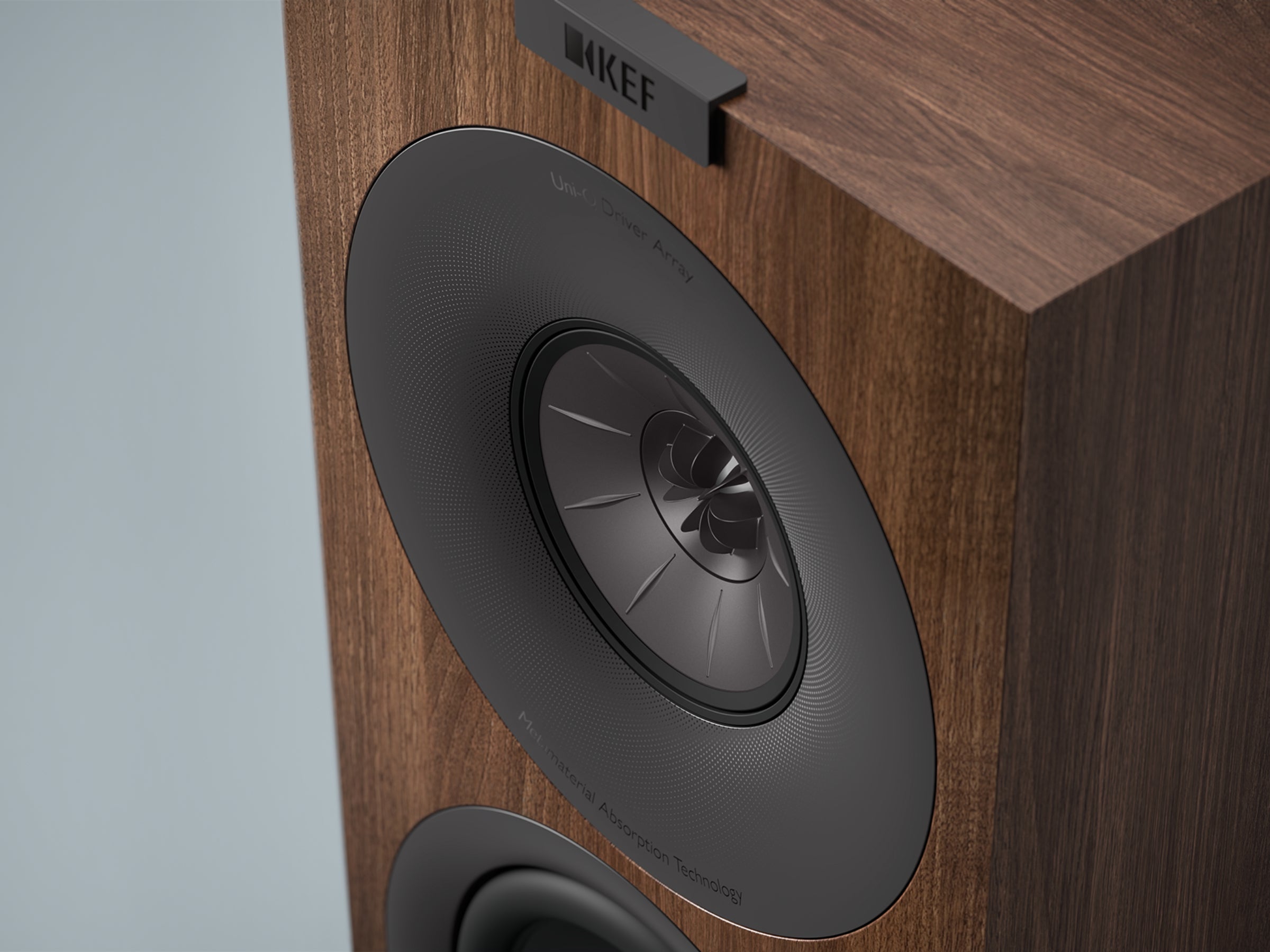
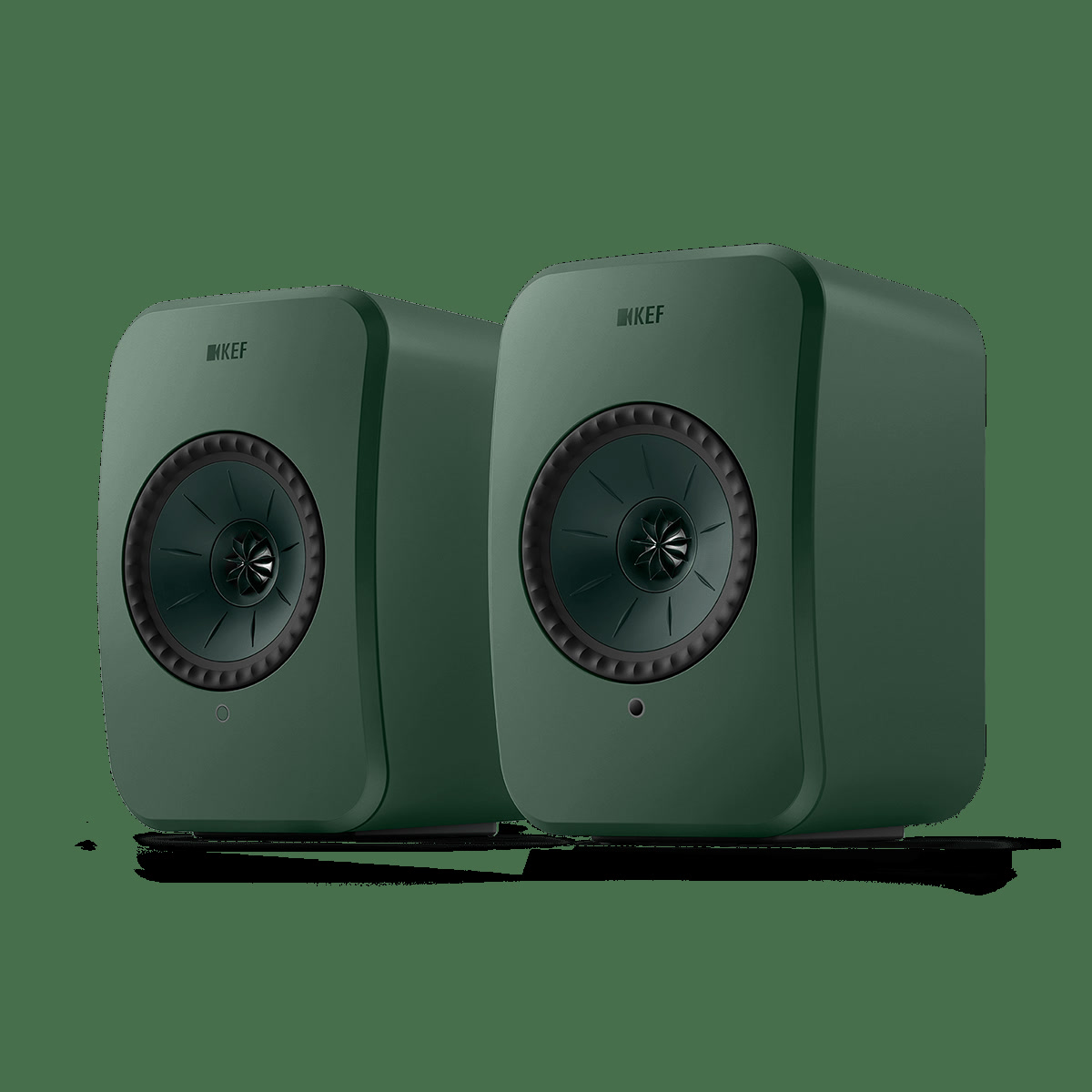
Physically, the LSX II LT is nearly indistinguishable from the LSX II. Each cabinet measures a desk-friendly 9.5 × 6.1 × 7.1 inches, with the same gracefully curved front baffle designed by Michael Young to minimize diffraction. The Uni-Q coaxial driver—combining a 19mm aluminum dome tweeter concentrically mounted within a 115mm magnesium/aluminum mid/bass cone—remains the visual centerpiece, finished with KEF’s signature tangerine waveguide.
Where the LT diverges is in its finishes and connectivity architecture. Gone are the high-gloss Mineral White and Lava Red options, replaced by satin Graphite Grey, Stone White, and Sage Green. The fabric grille options have also been eliminated; the LT uses fixed grilles with a more utilitarian aesthetic. The build quality remains reassuringly dense—these are 6.8kg of speaker that feel planted and inert when placed—but the tactile luxury is dialed back from the LSX II’s more boutique presentation.
The most significant physical change is invisible at first glance: the inter-speaker connection. While the LSX II offers a wireless link between primary and secondary cabinets, the LT relies exclusively on a proprietary USB-C cable (5m included, 8m optional accessory). This cable carries both 24-bit/96kHz audio and 5V DC power to the secondary speaker, meaning the LT uses a single power supply rather than the dual-supply architecture of its sibling. This is the primary cost-saving mechanism, and it imposes a hard limit on speaker separation and placement flexibility.
Features and connectivity
Despite the “Light” designation, the LSX II LT retains the core digital connectivity that defines modern hi-fi. The W2 wireless platform provides AirPlay 2, Google Chromecast, Spotify Connect, Tidal Connect, and UPnP/DLNA streaming, with Bluetooth 5.0 (SBC and AAC codecs) for casual device pairing. The KEF Connect app remains the control center, offering integration with Amazon Music, Qobuz, Deezer, internet radio, and podcast services, plus room-placement EQ presets including a dedicated Desktop mode.
Physical inputs on the primary speaker include HDMI ARC (for TV integration), USB-C (for computer audio up to 24-bit/96kHz), optical TOSLINK (up to 24-bit/96kHz), and Ethernet for network stability. A mono RCA subwoofer output allows for bass extension via external subs like KEF’s own Kube 8 MIE, with the app providing crossover adjustment and DSP-managed high-pass filtering for the main speakers.
What you sacrifice is analog flexibility. There is no 3.5mm auxiliary input, meaning turntable users must route through an external phono stage with digital output or use a separate ADC. The absence of Roon Ready certification (present in the LSX II) may also give dedicated Roon users pause, though the LT remains discoverable as a Roon endpoint via AirPlay or Chromecast. Notably, MQA decoding has also been omitted, though with Tidal’s shift toward FLAC for high-resolution streaming, this omission carries less weight than it once might have.
Sound character and room fit
Measurements and published evaluations point to a tightly integrated, coherent soundstage despite the speakers' compact dimensions. The Uni-Q array's dispersion creates a stable listening area, making the LT relatively forgiving away from the central seat. That matters on a desk or in a small room where perfect toe-in is not always practical. MyHiFi has not performed hands-on testing of this system.
The tonal balance is slightly laid back in the upper treble, with a gentle dip that avoids fatigue during long sessions but may sacrifice some air and sparkle compared to more aggressively voiced competitors. The midrange is the star: vocals and acoustic instruments emerge with natural body and minimal coloration, the concentric driver design eliminating the phase anomalies that plague traditional two-way layouts.
Bass extension is specified at 54Hz (±3dB), though real-world output begins to taper around 60Hz in typical room placements. The 70-watt Class D amplifier driving the mid/bass driver provides genuine punch and dynamic headroom—the LT will reach 102dB SPL at one meter, sufficient for near-field listening and small-to-medium rooms. However, the rear-firing bass port demands respect; placement within 6 inches of a wall will result in boom and muddiness. These are not “shove against the wall” speakers.
For desktop use, the imaging is strikingly holographic. The speakers disappear as point sources, projecting a soundstage that extends laterally beyond the cabinet boundaries and vertically above the desk plane. This makes the LT exceptional for focused work sessions, gaming, and intimate jazz or classical listening. For electronic music or hip-hop, the addition of a subwoofer is recommended—the 4.5-inch mid/bass driver simply cannot move the air required for sub-bass physicality.
Best uses and pairings
The LSX II LT excels in three specific scenarios: as a premium desktop computer audio system (via USB-C), as a TV sound solution (via HDMI ARC with CEC control), and as a minimalist bedroom or small-apartment music system. The HDMI ARC implementation is particularly seamless, allowing the speakers to wake automatically with the television and respond to volume commands from the TV remote.
For vinyl enthusiasts, the lack of analog input necessitates a workaround. A turntable with built-in phono preamp and USB output (or a separate USB phono stage) can connect via the USB-C input, though this adds complexity that contradicts the LT’s “all-in-two” philosophy. Digital sources—streaming, CD transports via optical, or computer audio—are clearly the intended use case.
Pairing the LT with KEF’s Kube 8 MIE subwoofer creates a formidable 2.1 system that addresses the bass limitations without overwhelming the Uni-Q’s midrange clarity. The DSP integration ensures proper phase alignment, resulting in a sub/satellite blend that feels cohesive rather than disjointed.
Rivals and trade-offs
Against the standard KEF LSX II, the LT asks a simple question: is wireless inter-speaker connectivity worth $300? If your setup allows for the wired USB-C connection—and for most desktop or TV-adjacent installations, it will—the sonic performance is functionally identical. You lose only the aux input and Roon Ready certification, neither of which affects the core streaming experience.
Compared to the Triangle AIO Twin (a similarly priced competitor), the KEF offers superior driver integration and a more refined, less “hi-fi flashy” tonal balance, though the Triangle provides analog RCA input for easier turntable connection. Against studio monitors like the Kali LP-UNF, the LT trades absolute neutrality and balanced XLR inputs for consumer-friendly features like HDMI ARC, app-based EQ, and streaming integration.
The most significant tradeoff is placement flexibility. The wired inter-speaker connection limits separation to the length of the cable (or an optional 8m extension), and the rear port mandates careful wall clearance. These are not speakers for cramped bookshelves pushed against walls.
Value and buyer fit
At its $999 launch MSRP, the LSX II LT occupied a useful position in the active-speaker market. Current pricing varies. It combines amplification, conversion and streaming in one stereo system, so comparisons with passive speakers need to include the cost of the missing electronics. Its value is strongest for listeners who prioritize streaming and digital inputs over analog source support.
Verdict
The KEF LSX II LT is a study in intelligent cost-cutting. By removing features that many modern listeners never use—wireless speaker links and analog inputs—KEF has made their acclaimed Uni-Q sound accessible to a broader audience without compromising acoustic integrity. The result is a Highly Recommended (85/100) compact system that serves as an ideal entry point into serious hi-fi, provided you can accommodate its wired architecture and rear-ported bass loading.
For desktop audio, small-room primary systems, or TV sound upgrades, the LT is arguably the smarter buy over the standard LSX II. It demands little space, less money, and offers the same sonic sophistication that earned its predecessor multiple industry accolades. Just keep them away from the wall, and embrace the cable.
The four scores are Technical Performance 85, Value 90, Build Quality 82 and Versatility 78. MyHiFi weights those dimensions at 30%, 30%, 25% and 15% respectively, producing a rounded composite of 85/100 in the Highly Recommended band.
Price context
Launch MSRP was $999. Current pricing varies by finish, market and promotion. This review was refreshed in July 2026, so compare live prices and confirm which inter-speaker cable is supplied.
Methodology
This older review was refreshed from its original research, verified specifications, measurements where available, and recurring patterns across professional reviews and owner reports. MyHiFi did not perform hands-on testing of the LSX II LT. No historical research file was reconstructed to fill gaps.
Affiliate disclosure: MyHiFi may earn a commission from purchases made through affiliate links, at no additional cost to you. Affiliate relationships do not determine scores or recommendations.