Launched at the precipice of the HDMI 2.1 transition, the original Sonos Arc represents a fascinating inflection point in mainstream immersive audio—an attempt to distill serious home theater ambition into a single, lifestyle-friendly enclosure. As the company’s first Dolby Atmos soundbar, it arrived promising to elevate the Playbar/Beam lineage through sheer driver density and acoustic sophistication. Four years later, with subsequent generations and competing flagships crowding the market, the question isn’t whether the Arc produces sound—it manifestly does—but whether its ecosystem-centric approach and ceiling-dependent virtualization justify the investment against more flexible, if less elegant, competition.
Design and placement
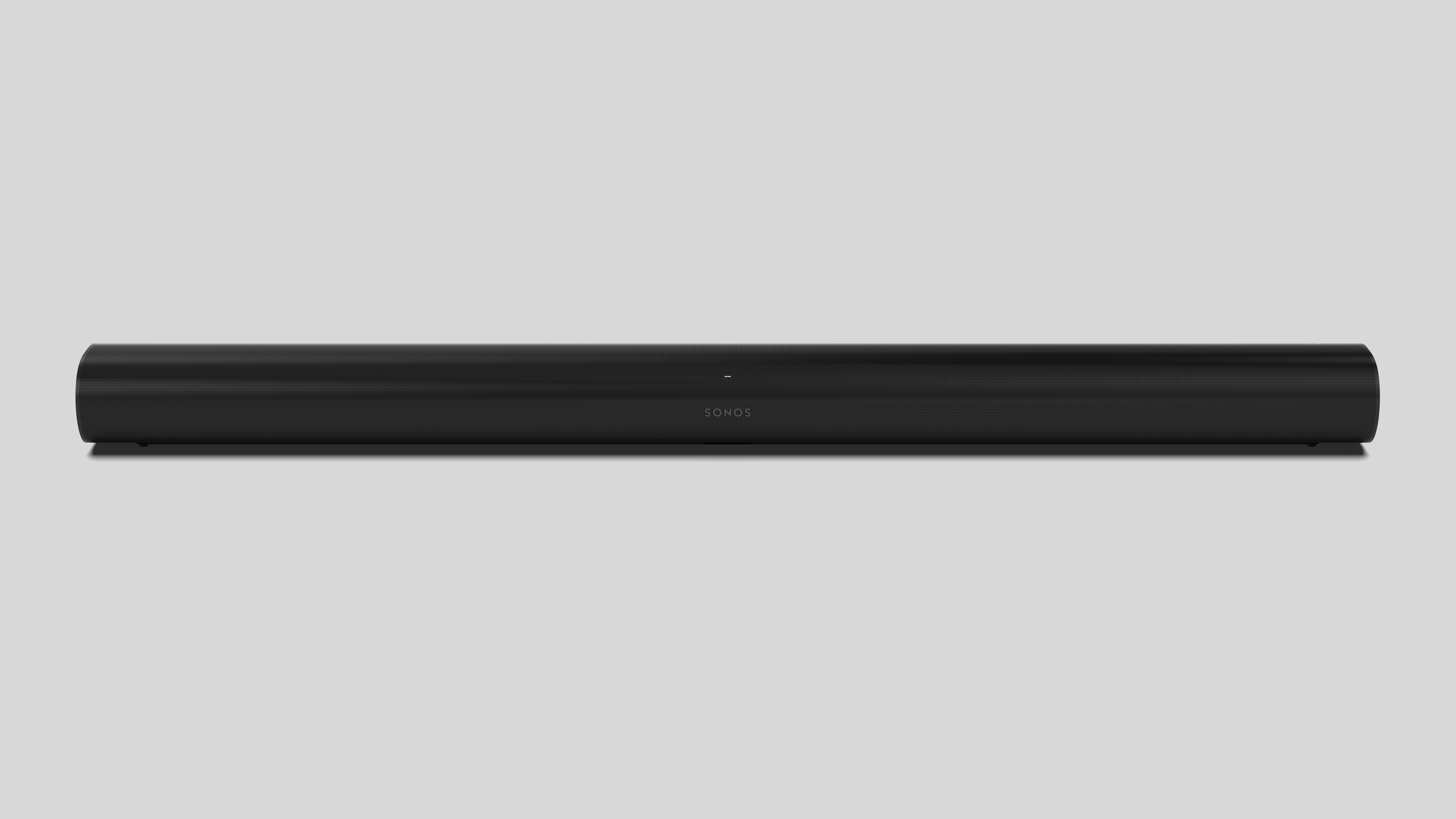
The Arc abandons the rectangular utilitarianism of traditional soundbars for a curved polycarbonate chassis wrapped in a precision-molded grille containing 76,000 individually tuned perforations. This isn’t mere industrial vanity; the pattern minimizes diffraction while allowing the 11-driver array to breathe. Inside, eight elliptical woofers and three silk-dome tweeters flank four upward-firing drivers—two firing directly upward, two angled—each powered by discrete Class D amplification.
At 45 inches wide and 14 pounds, the Arc demands furniture real estate, yet its elliptical profile avoids the black-box aesthetic that dominates the category. Build quality is exemplary: the enclosure feels dense and inert, with no cabinet resonance even when the woofers excavate deep into the 47.6Hz range. It’s a piece of hardware designed to be seen as much as heard, though prospective buyers should verify TV stand depth; the curvature requires stable support and precise placement for optimal height-channel reflection.
Connectivity and ecosystem
Here lies the Arc’s most contentious compromise. A single HDMI eARC port handles all audio duties—there are no HDMI inputs for switching, no 4K/120Hz passthrough, and no dedicated analog or digital auxiliary inputs. This forces complete reliance on the television’s eARC implementation, creating potential latency or format negotiation issues with older sets lacking full eARC bandwidth. For users with multiple gaming consoles or source components, this necessitates an external HDMI switch or accepting the TV’s audio processing limitations.
Wireless connectivity fares better, with dual-band Wi-Fi, AirPlay 2, and Spotify Connect, though the conspicuous absence of Bluetooth streaming remains puzzling for a lifestyle-oriented product. The proprietary Trueplay room correction system utilizes the Arc’s beamforming microphone array for initial calibration, but requires an iOS device to execute—Android users are locked out of acoustic optimization. Codec support encompasses Dolby Atmos via Dolby Digital Plus and TrueHD, with DTS:X added via a 2022 firmware update, though implementation remains limited compared to native DTS soundbars.
Sound character and Atmos conditions
The Arc’s sonic signature leans warm-neutral with deliberate elevation in the 80–120Hz region, providing cinematic weight that belies its standalone status. In-room measurements suggest usable extension to approximately 48Hz—impressive for a single-bar solution—though this low-end enthusiasm can border on bloated in smaller, resonant spaces without acoustic treatment.
Dialogue intelligibility is exceptional, courtesy of the dedicated center channel and adjustable Speech Enhancement DSP. Streaming content from Netflix and Disney+ reveals a wide, hemispherical soundstage that extends well beyond the physical enclosure, with side-firing drivers creating convincing phantom center imaging. The upward-firing height channels deliver genuine Atmos immersion, but performance is ceiling-dependent: optimal results require flat, reflective ceilings between 7.5 and 10 feet. Vaulted ceilings, acoustic treatments, or ceiling fans significantly degrade the vertical bubble, reducing the experience to a wide stereo spread rather than true three-dimensional audio.
Musically, the Arc performs best with pop, electronic, and hip-hop, where its bass emphasis and smooth treble presentation flatter compressed recordings. Acoustic and classical genres expose limitations in high-frequency extension and micro-detail retrieval compared to dedicated stereo systems, and dense orchestral passages can exhibit slight congestion at high volumes—suggesting amplifier headroom constraints when all 11 drivers are driven simultaneously. For background listening and unified TV/music duty, it suffices; for critical listening, it defers to proper separates.
Rivals and system costs
Against the Bose Smart Soundbar 900, the Arc offers superior low-end extension without requiring an external subwoofer, and a more refined, less fatiguing treble response. However, Bose’s ADAPTiQ room correction works across platforms, unlike Trueplay’s iOS exclusivity.
The Sony HT-A7000 provides HDMI input switching and superior DTS:X implementation, with a more aggressive, detail-forward presentation that some listeners may prefer for film dialogue. Yet the Sony lacks the Arc’s musical coherence and ecosystem integration, feeling more like a home theater component than a multi-room audio citizen.
Where the Arc struggles most is against Samsung’s HW-Q950A (and subsequent iterations). While the Arc demands an additional $700+ investment in the Sub Gen 3 and Era 300 surrounds to achieve true 5.1.2 or 7.1.4 immersion, Samsung’s package includes physical surrounds and a subwoofer at similar total cost, delivering more consistent rear imaging and tactile low-frequency impact. The Arc’s modular approach offers upgrade flexibility, but extracts a severe “modular tax” for the complete experience.
Who should buy it, and who should not
The Arc Gen 1 remains compelling for existing Sonos ecosystem owners seeking an Atmos upgrade path without rewiring their living room. It excels in apartments and condos where the Wife Acceptance Factor (WAF) demands minimal cable clutter and furniture intrusion, and where 10-foot ceilings provide optimal reflection surfaces.
Streaming-first users who prioritize Dolby Atmos from Netflix and Disney+ over physical media will find the codec support sufficient, while those seeking a unified TV and casual music system will appreciate the AirPlay 2 integration and multi-room capabilities.
Look elsewhere if your ceiling exceeds 10 feet or features acoustic absorption, if you require DTS:X support for extensive Blu-ray collections, or if you demand HDMI input switching for multiple 4K/120Hz gaming sources. Similarly, budget-conscious buyers should calculate the total cost of entry including eventual Sub and surround additions; the Arc alone is an incomplete solution for serious home theater.
Verdict
The Sonos Arc Gen 1 remains a technically accomplished soundbar that prioritizes musical coherence and ecosystem integration over raw specification dominance. Its 11-driver array delivers convincing height virtualization and exceptional dialogue clarity, though the ceiling-dependent Atmos performance and iOS-locked room correction create tangible friction for mixed-platform households.
As a standalone $899 investment, it faces stiff competition from all-in-one packages that include physical surrounds. However, for those already invested in the Sonos ecosystem—or those willing to pay the premium for elegant industrial design and seamless multi-room audio—the Arc provides a foundation capable of growing into a genuinely immersive system, provided one accepts the substantial additional investment required to realize its full potential.
Composite Score: 79/100 (Recommended)
• Technical Performance: 82 • Build Quality: 90 • Value: 68 • Versatility: 75
MyHiFi weights Technical Performance at 30%, Value at 30%, Build Quality at 25% and Versatility at 15%. The weighted result rounds to 79/100, within the Recommended band.
Price context
The original Arc launched with an $899 MSRP. Current pricing varies, especially for remaining stock and used units. This review was refreshed in July 2026. Compare the total system cost, including any Sonos Sub and surround speakers, rather than judging the bar's price in isolation.
Methodology
This older review was refreshed from its original research, verified specifications, measurements where available, and recurring patterns across professional reviews and owner reports. MyHiFi did not perform hands-on testing of the Sonos Arc (Gen 1). No missing historical research files were reconstructed.
Affiliate disclosure: MyHiFi may earn a commission from purchases made through affiliate links, at no additional cost to you. Affiliate relationships do not determine scores or recommendations.