Triangle Borea BR04 Review: The Standmount Speaker That Refuses to Compromise
The mid-priced standmount speaker market has become something of a shark tank. With heavyweights like the Bowers & Wilkins 607 S3, KEF Q3 Meta, and Monitor Audio Bronze 50 7G circling the same $500–$900 waters, any new contender needs either deep pockets or a very sharp tooth. Enter the Triangle Borea BR04—not a radical reinvention, but a calculated evolution that addresses nearly every limitation of its smaller BR03 sibling while maintaining the French brand’s signature vocal clarity.
Design & Engineering: Purposeful Evolution
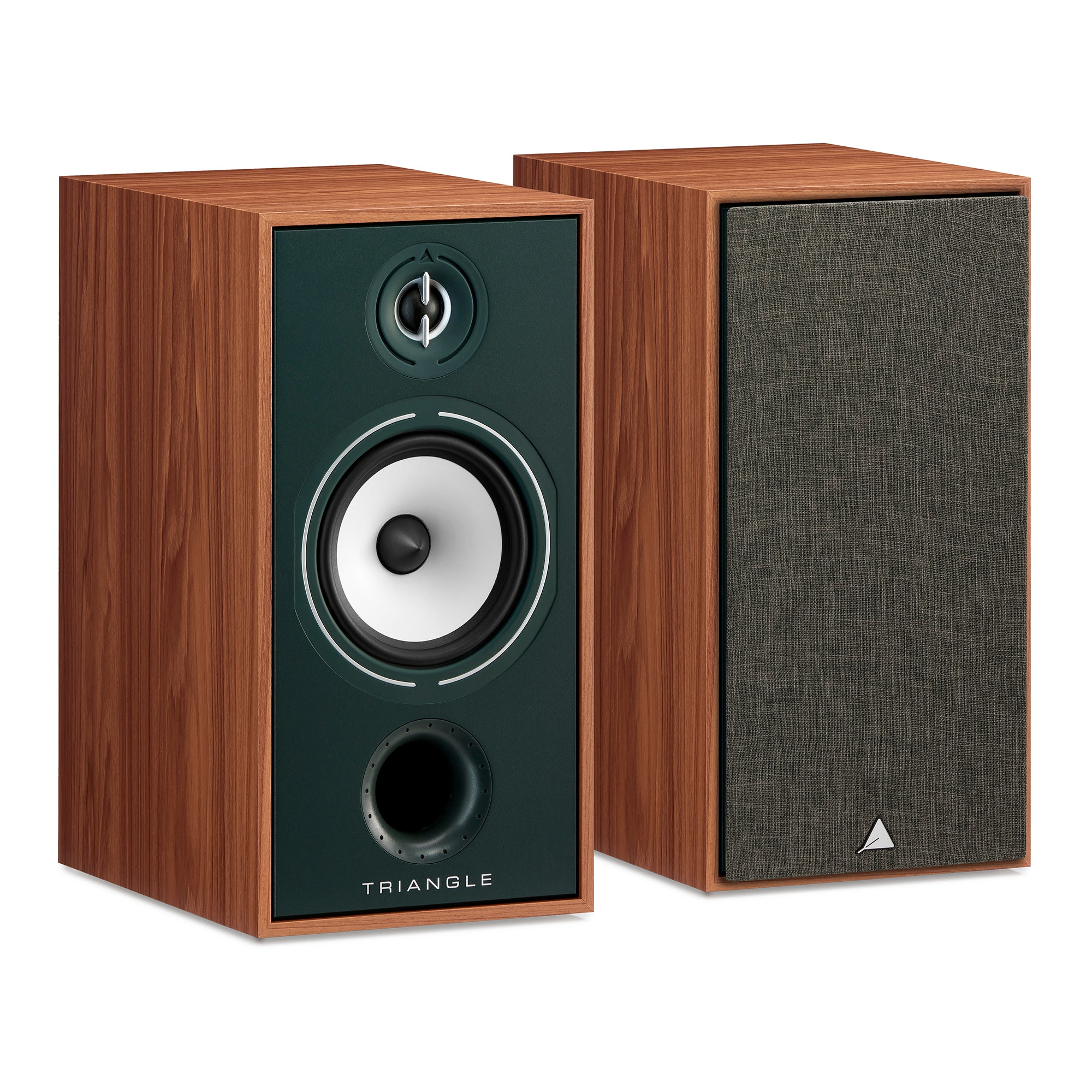
At 42.5cm tall and 8.6kg per cabinet, the BR04 is unapologetically substantial. This is not a desktop speaker masquerading as a hi-fi component; it’s a proper standmount that demands robust supports (Triangle recommends 60cm stands) and a modest footprint. The cabinet architecture expands upon the BR03’s foundation with a reworked internal volume and airflow optimization, while the front-firing bass reflex port—redesigned for the BR04—liberates placement options. You can position these within inches of a rear wall without the bass bloat that plagues rear-ported competitors.
The aesthetic follows Triangle’s established playbook: six finishes (including a striking oak green and chestnut) with contrasting front baffles on most variants, save for the monolithic black and white options. Magnetic fabric grilles attach with satisfying precision, and the double binding posts suggest serious intent for bi-wiring or bi-amping experimentation. The specified construction and professional-review pattern support a solid build assessment for the price. Country of manufacture is not treated as a proxy for quality.
Driver Technology: The French Connection
Triangle’s EFS (Efficient Flow System) 25mm silk-dome tweeter returns, complete with phase plug and partial horn-loading that minimizes ceiling and floor reflections. Powered by a neodymium motor, it crosses over at a notably high 3.2kHz to the redesigned 160mm cellulose pulp mid/bass driver. Triangle’s decision to eschew surface treatments on the natural fiber cone pays dividends in midrange purity—there’s no metallic sheen or plastic artifice, just the organic texture of paper doing what paper does best.
The impedance remains a amplifier-friendly 8 ohms nominal (dipping to 4.6 ohms minimum) with 90dB sensitivity, meaning the BR04s sing with modestly powered integrated amps. A 50Wpc solid-state design or even a muscular Class D streamer-amp like the WiiM Amp Pro will drive them to satisfying levels without strain.
Listening Impressions: The BBC Monitor Reborn
Published reviews consistently identify the midrange as the BR04’s defining strength. Voices—whether it’s Nick Cave’s gravelly baritone or the crystalline soprano of Anette Askvik—emerge with a clarity that recalls the best BBC LS3/5A derivatives. There’s no sibilance, no nasality, and crucially, no chestiness that often afflicts budget two-ways. The cellulose cone renders speech with such intelligibility that these speakers double as exceptional home cinema fronts, eliminating the need for a dedicated center channel in smaller setups.
The bass extension represents the most significant leap over the BR03. Where the smaller sibling struggled to anchor orchestral weight, the BR04 reaches down to a claimed 44Hz with genuine authority. More importantly, the quality matches the quantity—bass lines are distinct, textured, and controlled rather than the muddy blur that often passes for low-end in this category. The front port deserves credit here; not only does it ease placement, but it delivers port output that integrates seamlessly with the driver’s natural roll-off.
Treble performance strikes a delicate balance. The silk dome provides ample air and detail retrieval without the metallic bite that can fatigue during long sessions. It’s smooth, yes, but not dull—cymbal crashes retain their metallic sheen, and upper harmonics on piano recordings decay naturally. The high crossover point (3.2kHz) keeps the tweeter out of the vocal range, preventing the “shout” that plagues some two-way designs.
Comparative Context
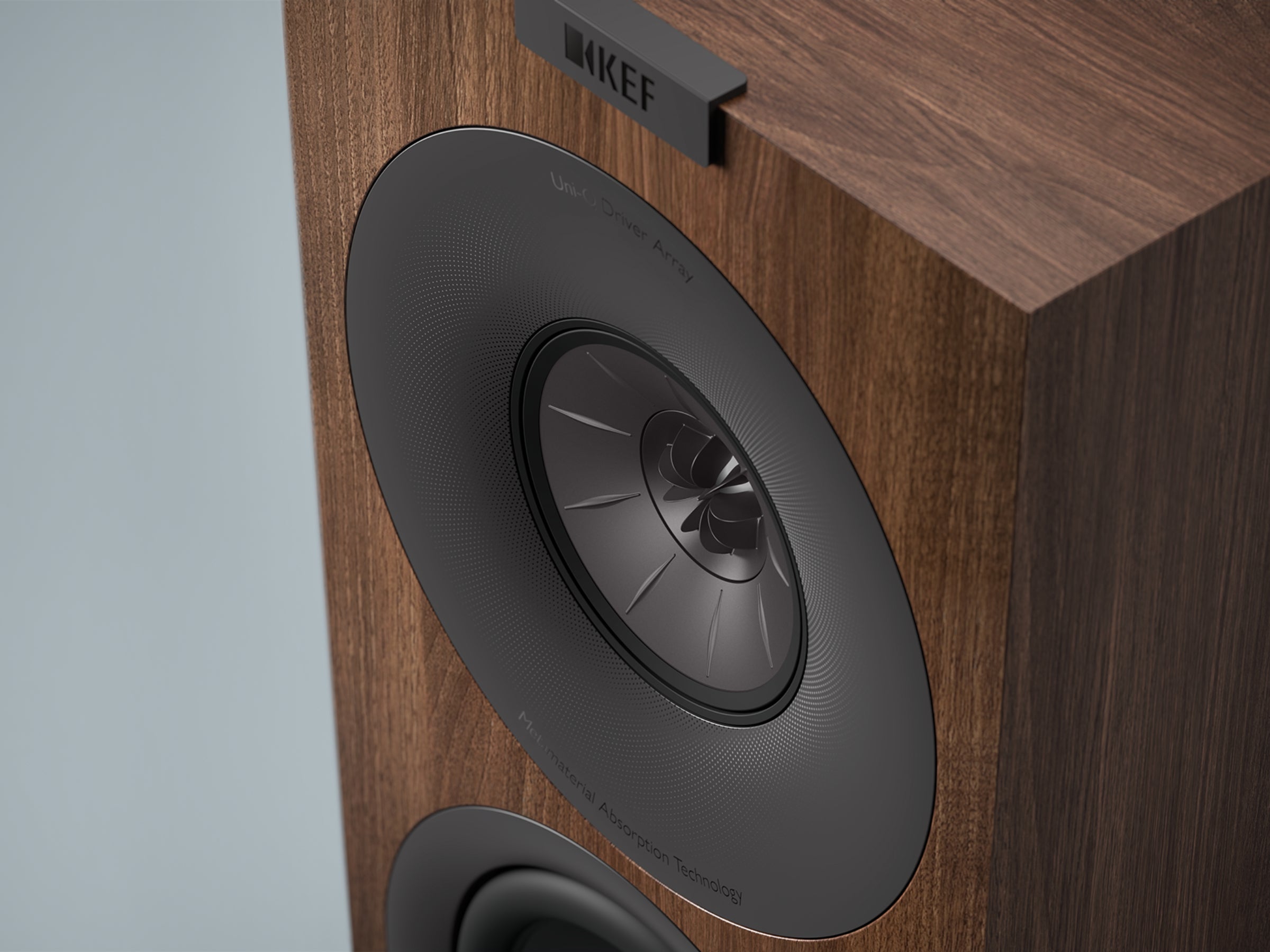
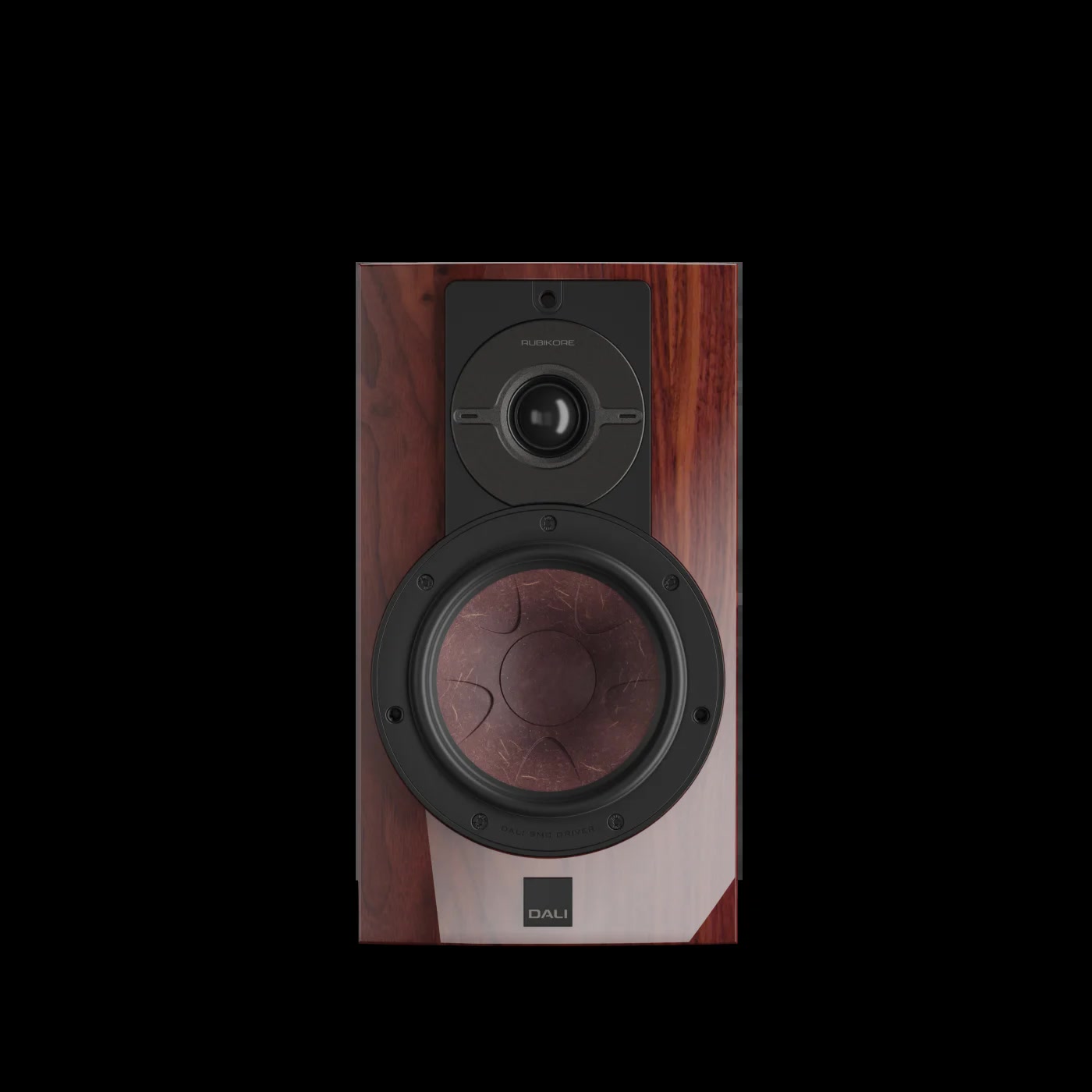
Against the KEF Q3 Meta, the BR04s lack the absolute soundstage depth and holographic imaging that Uni-Q drivers provide, but they counter with superior dynamic punch and a more immediate, tactile presence. Compared to the Dali Oberon 3—frequent shopping-list competitors—the Triangles offer tighter bass control and a more refined treble, though the Dalis may edge ahead in sheer warmth for acoustic folk.
The BR04’s most direct internal competition comes from the floorstanding BR08. While the towers offer greater scale and bass extension, the BR04s actually present an easier electrical load and more forgiving placement requirements, making them the pragmatic choice for apartments or shared living spaces.
Trade-offs & Considerations
No speaker is flawless, and the BR04’s strengths come with caveats. While dynamics are bold, they don’t quite match the transient snap of the Bowers & Wilkins 607 S3 or the rhythmic drive of the Monitor Audio Bronze 50 7G. The BR04s can, on occasion, apply a similar sonic brush to disparate recordings—jazz, rock, and classical all receive the same polite, detailed treatment rather than adapting their character to the genre. This consistency is admirable for background listening, but critical listeners may crave more expressive variation.
Additionally, the physical size demands respect. These are not bookshelf speakers in the literal sense—they’re standmounts that require dedicated supports and breathing room to perform optimally.
Amplifier Pairing Recommendations
The BR04s thrive with neutral to slightly warm amplification. A Hegel H190 brings out their refined, open character, while a Yamaha A-S501 emphasizes their dynamic capabilities. For the budget-conscious, the NAD C 3050 or Cambridge Audio CXA82 provide ideal matches—plenty of current delivery without brightness that might clash with the silk-dome tweeter. Vinyl enthusiasts should note that the high sensitivity pairs well with tube phono stages, though the 4.6-ohm minimum impedance demands amplifiers with stable 4-ohm performance.
Verdict
The Triangle Borea BR04 represents a mature, considered evolution of the Borea formula. It retains the vocal intimacy that made the BR03 a darling of the budget audiophile set while adding the bass extension and cabinet refinement necessary to compete in the $600–$700 bracket. In a market saturated with competent but forgettable boxes, the BR04 offers personality—a speaker that prioritizes the human voice and the tactile presence of instruments over clinical accuracy or exaggerated excitement.
Composite Score: 85/100 (Highly Recommended) Technical: 85 | Build: 82 | Value: 88 | Versatility: 85
Price context: MSRP at publication was $649; review refreshed July 2026. Check current retailer pricing. The BR04 is for listeners who want vocal clarity, useful bass extension and easier near-wall placement from a substantial standmount. It is not for desktops, tiny shelves or buyers chasing the deepest imaging and fastest transients. Choose it over the KEF Q3 Meta for immediacy and front-port flexibility; choose the KEF for more precise spatial consistency. The DALI Oberon 3 is the warmer alternative.
Methodology
This older review was refreshed from its original research, manufacturer specifications, independent measurements where available, professional evaluations and owner patterns. MyHiFi has not performed hands-on testing of this product. Confidence: Moderate.
MyHiFi may earn a commission from purchases made through affiliate links. This does not influence our editorial decisions or source selection.