Desktop monitor shopping usually means a compromise: buy small and accept thin bass, or buy big and give up desk space. The Kali Audio LP-UNF refuses both. With a 4.5-inch woofer in a 10-inch cabinet, it reaches 39 Hz at -10 dB — a number most 6-inch monitors cannot match. With USB-C, Bluetooth, balanced TRS, and RCA inputs, it replaces a DAC, preamp, and speaker amp in one pair. And with seven boundary EQ settings, it accounts for the fact that most desktop monitors sit on a desk against a wall.
Independent near-field scanner measurements confirm generally good on-axis response, well-controlled directivity from the 3-D imaging waveguide, and an intentional ~200 Hz dip that the manufacturer confirms is a cabinet resonance mitigation filter. At $274–$299/pair on Amazon in July 2026, with 136 ratings averaging 4.6/5 (81% five-star), the LP-UNF has established itself quickly.
The trade-offs are modest: no subwoofer output, an external power brick, a thin interconnect cable, and touch controls that some owners report as inconsistent.
Scorecard
Good on-axis response, controlled directivity, impressive bass extension; intentional 200 Hz dip and limited max SPL beyond 0.8m
Solid MDF cabinets, useful DIP switches, versatile I/O; external brick, thin interconnect, touch control QC issues
Active bi-amped pair with USB-C/BT/TRS/RCA and 39 Hz extension at $274–$299 — exceptional
Four input types, seven boundary EQ settings, four colors; no sub out, 0.8m design limits room use
Who it is for: desktop producers and mixers who need accurate nearfield monitoring in small spaces; listeners who want powered speakers with USB-C and Bluetooth without buying separate components; anyone who has limited desk space but refuses to sacrifice bass extension.
Who should skip it: listeners who need room-filling SPL beyond desktop distance; anyone who requires a subwoofer output or HPF; users who need passive speakers for an existing amplifier; listeners in treated rooms who would benefit from larger monitors.
Verified specifications
| Specification | Published value |
|---|---|
| Configuration | 2-way active bi-amped (per pair) |
| LF driver | 4.5-inch long-excursion woofer |
| HF driver | 1-inch textile dome |
| Amplifier | Class D, 40W HF + 40W LF per speaker (160W total) |
| Frequency response | 39 Hz – 25 kHz (-10 dB); 54 Hz – 21 kHz (±3 dB) |
| Max SPL | 103 dB (rated); ~91 dB @ 1m (measured) |
| Continuous SPL | 85 dB @ 0.8m with 20 dB headroom |
| Crossover | 1,950 Hz (DSP) |
| Inputs | USB-C (24-bit/48kHz), Bluetooth 5.1, TRS balanced, RCA unbalanced |
| Boundary EQ | 7 placement DIP switch settings |
| Trim | LF ±2 dB, HF ±2 dB (DIP switches) |
| Dimensions | 10" × 6.5" × 7.4" (25.4 × 16.4 × 18.6 cm) |
| Weight | 3.2 kg (primary) / 3.0 kg (secondary) |
| Colors | Black, White, Mojave Red, Pacific Blue |
Design and build: compact MDF with real DSP
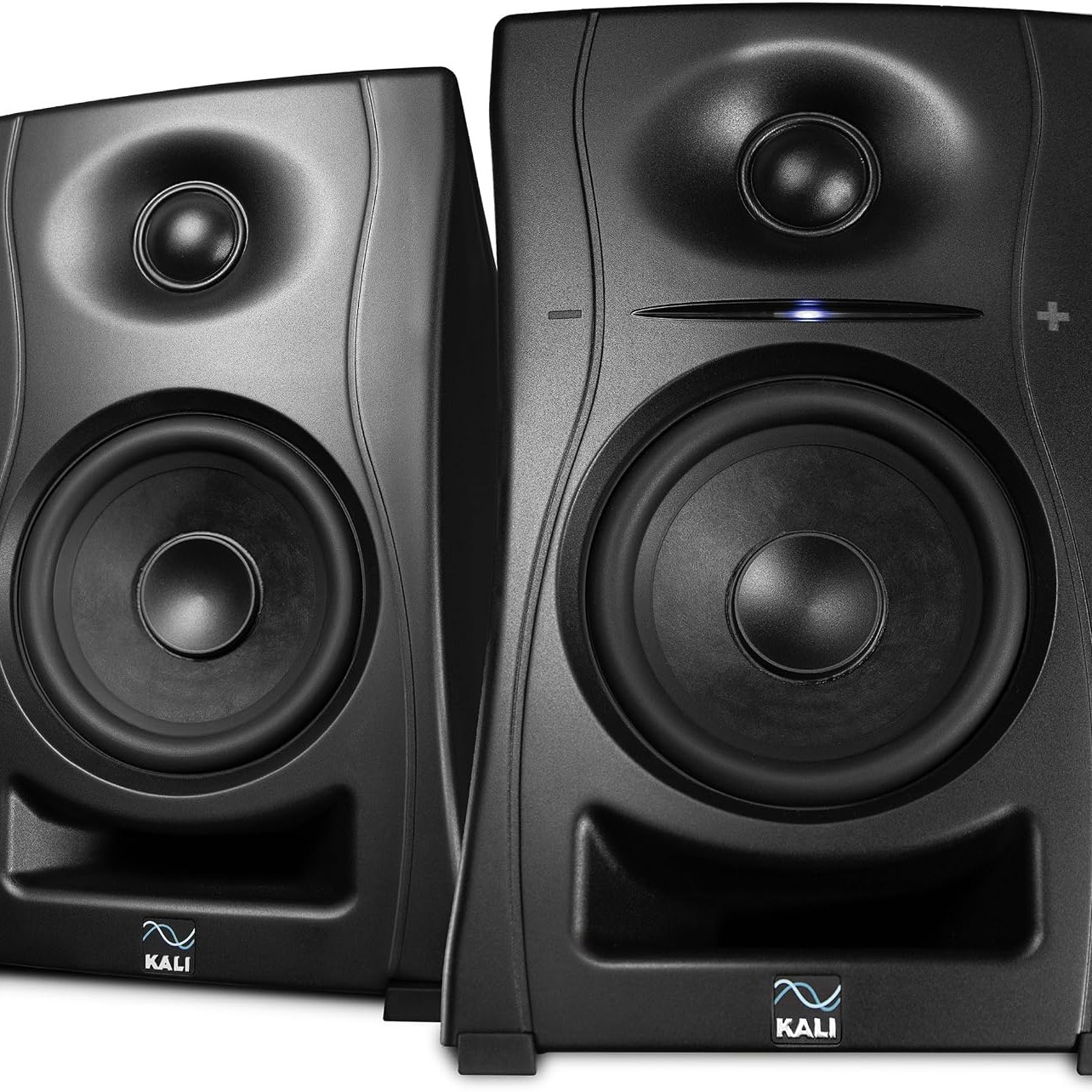
The LP-UNF cabinets are MDF with a matte finish, 10 inches tall by 6.5 wide by 7.4 deep, weighing 3.2 kg per speaker. The front panel features a 1-inch textile dome tweeter above a 4.5-inch woofer, flanked by a front-firing port shaped via fluid dynamics modeling to eliminate port noise.
All electronics live in the primary speaker; the secondary connects via a 4-conductor cable carrying signal and power. The crossover is DSP-based — genuinely active, not a passive network after the amp. The interconnect cable is thin and does not seat with a positive click, which multiple owners have noted.
The rear panel hosts the DIP switch array: seven boundary EQ settings for common desktop placements, plus LF and HF trim at ±2 dB. An independent measurement lab verified each setting alters response as intended. The front panel has capacitive touch controls for volume, mute, and Bluetooth pairing — convenient when they work, but one owner reported a defective button and another reported unresponsiveness during rapid adjustment.
What the measurements mean
Independent near-field scanner measurements provide a full CTA-2034 standard dataset. On-axis response is generally good with a narrow dip around 200 Hz that the manufacturer confirms is an intentional cabinet resonance filter. The measurement reviewer found it inaudible in practice.
Directivity is a strength. The 3-D imaging waveguide — the same technology used in Kali's larger LP-6 V2 and LP-8 V2 — controls horizontal and vertical dispersion consistently, translating to the wide, detailed soundstage and clear center imaging that owners and reviewers praise.
Max SPL measured at approximately 91 dB at 1 meter, below the rated 103 dB. The measurement reviewer explicitly notes that his 1m test exceeds the intended 0.8m desktop use case. At 0.8m, the LP-UNF delivers higher effective SPL with 20 dB headroom for transients. Harmonic distortion and multitone tests confirm clean performance within the intended SPL range.
Sound character: neutral, immersive and surprisingly deep
The LP-UNF sounds larger than it looks — the most consistent observation across reviewers, measurements, and owners. The 4.5-inch woofer reaches lower than its size suggests, producing bass that is felt as much as heard. At 39 Hz (-10 dB), it out-extends many 6.5-inch monitors. The ±3 dB point of 54 Hz is still impressive for the driver size.
The midrange is neutral and transparent. Vocals sit naturally without forwardness. The intentional 200 Hz dip is inaudible in typical desktop use. The textile dome tweeter is clean and extended without aggression. Some owners describe the treble as crisper than the larger LP-6 V2, which one user linked to faster ear fatigue. The HF trim DIP switch can address this.
Imaging is the standout. The 3-D waveguide produces a stereo image that extends beyond the physical speaker boundaries. Multiple owners describe hearing a center image for the first time on their desktop. The trade-off is a narrow sweet spot — moving outside the 0.8m equilateral triangle collapses the image.
Bass is the LP-UNF's most surprising attribute. Owners confirm the 39 Hz extension with sub-bass material. The front-firing port means desk and wall placement do not produce chuffing or boom. Adding a subwoofer helps above 100 Hz for some, but the standalone bass is strong.
Comparisons: what else should you buy?
The ADAM Audio D3V at roughly $399/pair is the direct desktop competitor. It offers a similar compact form factor with USB-C connectivity but uses a 3-inch driver — the LP-UNF's 4.5-inch woofer delivers substantially more bass extension. Choose ADAM for the smallest possible footprint; choose Kali for bass and value.
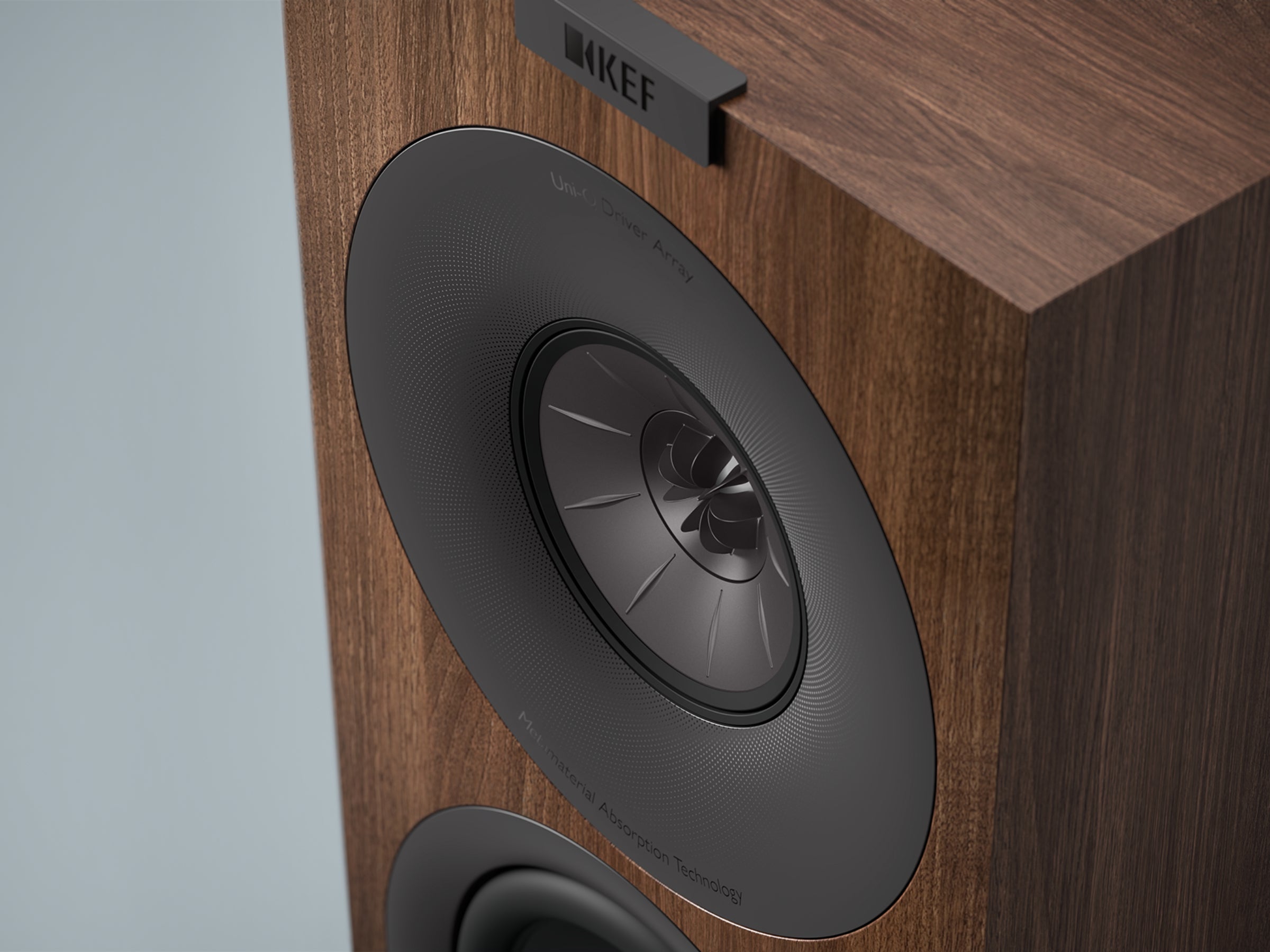
The KEF LSX II LT is the premium step-up. At roughly $999/pair, it offers a Uni-Q coaxial driver, app control, and streaming integration. The LP-UNF cannot match the KEF's feature set or finish, but it delivers 80% of the sound quality at 30% of the price. Choose KEF for lifestyle and streaming; choose Kali for monitoring accuracy and value.
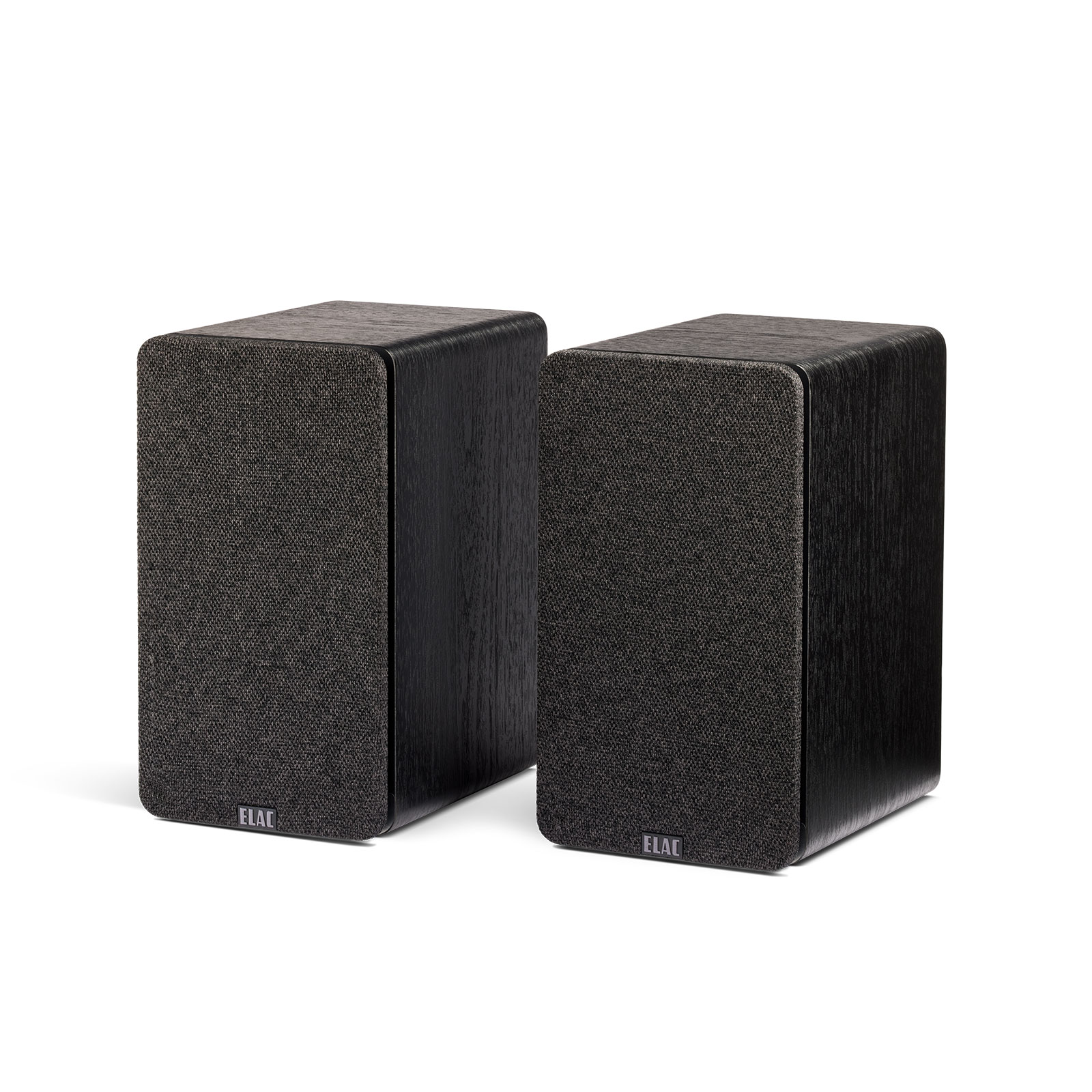
The Elac Debut ConneX DCB41 at roughly $599/pair is another powered alternative. It offers HDMI ARC for TV use and a warm, musical signature. The LP-UNF is more accurate for mixing and offers more input flexibility. Choose Elac for TV and casual listening; choose Kali for desktop production.
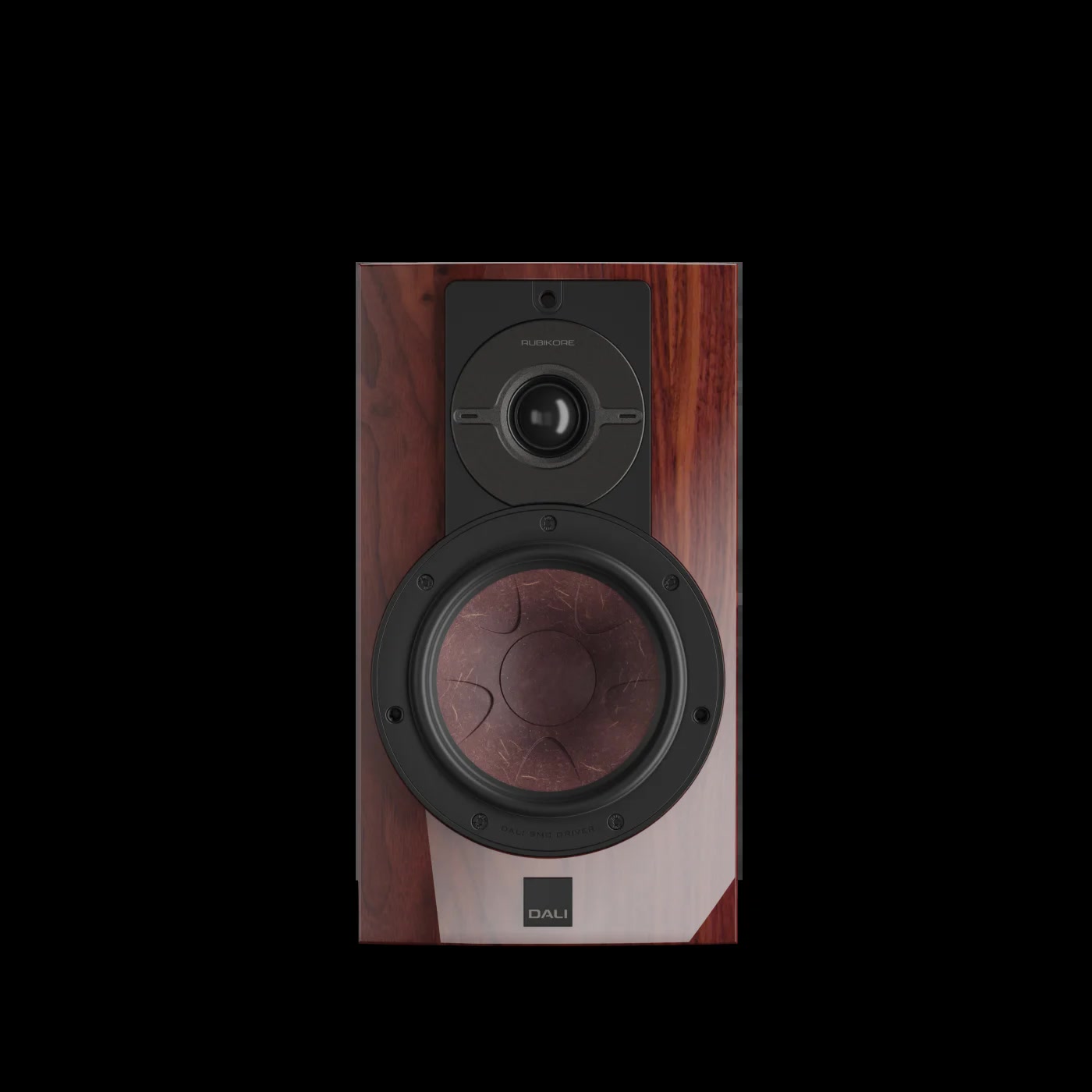
The Kali Audio LP-6 V2 at $249/each ($498/pair) is the larger sibling. It delivers more SPL and deeper bass but requires more desk space and a separate DAC/preamp. The LP-UNF is the better desktop choice; the LP-6 V2 is the better small-room choice.
Pairing and everyday use
The LP-UNF is designed to be the only audio device on your desk. USB-C handles computer audio at 24-bit/48kHz. Bluetooth 5.1 handles phone streaming. TRS handles professional interfaces. RCA handles consumer sources. No separate DAC, preamp, or amp is required.
Positioning matters. The speakers should form an equilateral triangle with your head at 0.8m distance, tweeters at ear level. Select the boundary EQ setting that matches your placement. Firmware updates are delivered via USB-C.
Value and verdict
At $274–$299/pair, the Kali Audio LP-UNF delivers active bi-amped monitoring, four input types, seven boundary EQ settings, 39 Hz bass extension, and a 3-D imaging waveguide in a pair of 10-inch cabinets. Its 136 Amazon ratings averaging 4.6/5 reflect a product that earned its reputation through performance.
The honest qualification is that the LP-UNF is a desktop monitor, not a room monitor. Its SPL is limited beyond 0.8m, its sweet spot is narrow, and it has no subwoofer output. The touch controls and interconnect cable are areas where the price shows.
The Kali Audio LP-UNF earns 87/100 and a Highly Recommended rating because it redefines what a $300 desktop monitor pair can do. The LP-UNF is the monitor that makes "desktop" stop sounding like a compromise.
MyHiFi weights Technical Performance at 30%, Value at 30%, Build Quality at 25% and Versatility at 15%. The resulting weighted composite is 87.35, rounded to 87/100, in the Highly Recommended band.
Methodology
This assessment draws on one independent measurement source (full Klippel NFS/CTA-2034 spinorama suite), three professional editorial reviews published 2024–2025, 13 manually coded Amazon owner reviews, Amazon rating data totaling 136 ratings, official Kali Audio specifications, and live July 2026 pricing. The primary measurement speaker was loaned by the manufacturer; no compensation was received. Confidence: High for measurement and value conclusions, Moderate for long-term reliability due to limited time on market and touch-control QC reports. MyHiFi did not perform hands-on testing.
Affiliate disclosure: MyHiFi may earn a commission from purchases made through affiliate links, at no additional cost to you. This does not influence our editorial decisions, scores or source selection.