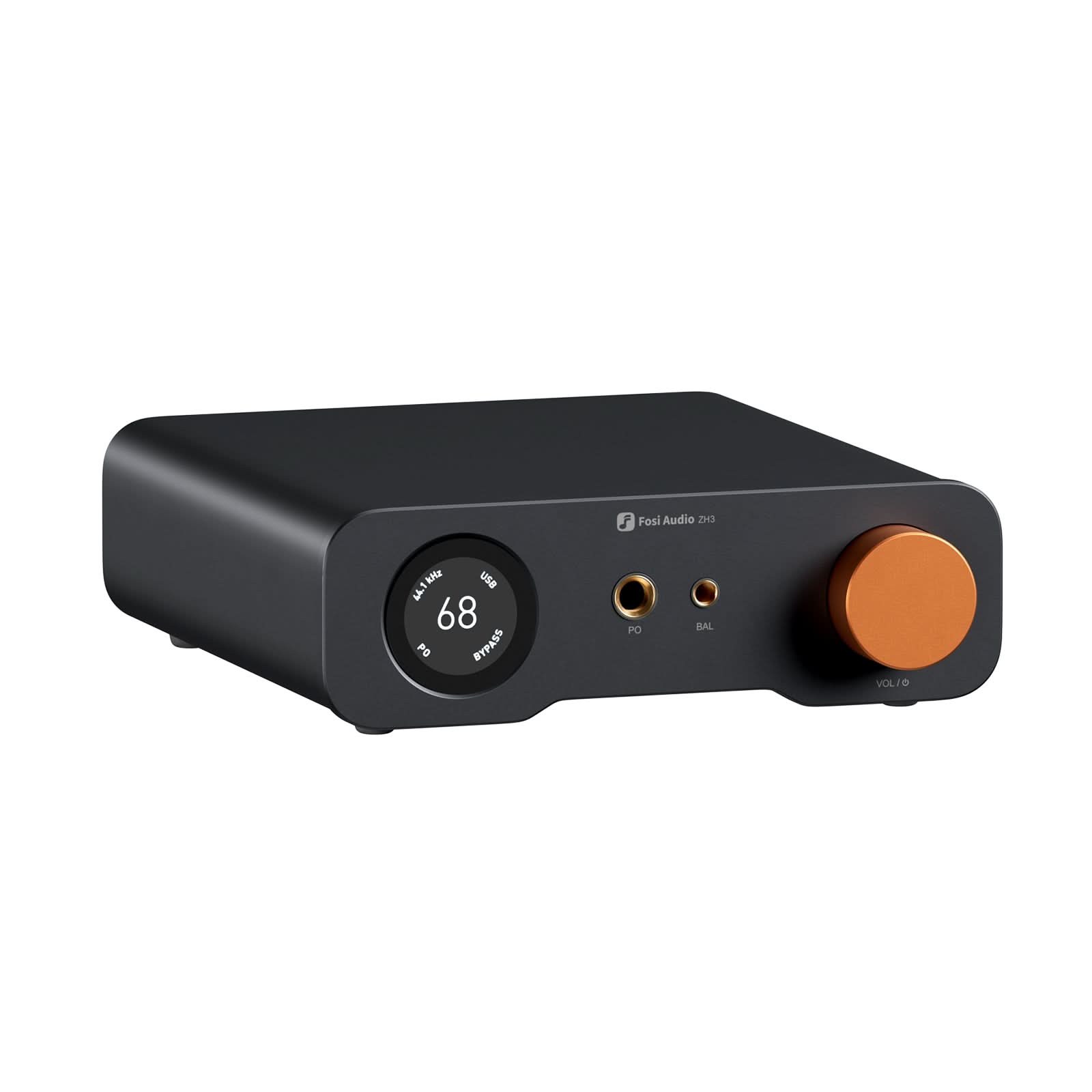
A desktop DAC should make a desk simpler. The Fosi Audio ZH3 makes a convincing case for becoming its centre: a computer on USB, a television on optical, an analog source on RCA, headphones at the front, and powered speakers at the rear. A remote switches between them without a cable shuffle. At US$199.99, it is unusually well equipped for that job.
There is a catch in the abundance. The 4.4mm balanced headphone jack has enormous headroom, but it is not automatically the quietest choice for a very sensitive earphone. Some owners report the start of a sound being cut off after silence; Fosi acknowledges brief playback interruptions and offers troubleshooting guidance. The front knob is handsome but less predictable in the menu than the remote. These are reasons to choose your connection and setup carefully, not reasons to dismiss a capable small box.
The ZH3 uses an AKM AK4493SEQ DAC and XMOS XU316 USB receiver. Its useful distinction is not the chip name or the claimed 32-bit/768kHz ceiling; it is the combination of a measured high-power headphone stage and flexible, switchable line outputs in a single, reasonably priced desktop component.
Scorecard
Independent testing found around 113dB balanced-headphone SINAD and about 2.5W into 33 ohms; 50mV noise and reported first-audio truncation temper the result
Sturdy metal case, remote and output-specific volume memory; menu navigation can be erratic, with several owner reports of warmth
Headphone power, XLR and RCA line outputs, an analog input and a remote at US$199.99; no Bluetooth or recording input
Four input types, two headphone jacks, fixed or variable line outputs and triggers; tone adjustment is unavailable on the rear outputs
Who it is for: Someone who alternates between wired headphones and powered speakers, wants a remote for a PC-and-TV setup, or needs a substantial balanced headphone output without assembling separate DAC and amp boxes.
Who should skip it: Someone who needs Bluetooth, a microphone or an audio interface for recording; a buyer who depends on the first instant of every alert or short clip being played intact; someone who wants to adjust speaker tone from the ZH3; or an IEM-only listener who can find a quieter low-level match elsewhere.
Verified specifications
| Specification | ZH3 |
|---|---|
| DAC and USB controller | AKM AK4493SEQ, XMOS XU316 |
| Digital inputs | USB-C, optical, coaxial |
| Analog input | Stereo RCA |
| Headphone outputs | 6.35mm single-ended, 4.4mm balanced |
| Rear outputs | RCA and balanced XLR, fixed line level or variable preamp mode |
| Manufacturer-rated power at 32 ohms | Up to 640mW per channel on 6.35mm; up to 2,570mW per channel on 4.4mm (USB, high gain, THD+N under 1%) |
| Independent headphone power | Around 2.5W into 33 ohms on 4.4mm, high gain; around 273mW into 300 ohms on 4.4mm, high gain |
| Maximum USB input format | PCM 32-bit/768kHz, DSD512 (manufacturer specification) |
| Controls | Remote, rotary/push front control, low/medium/high gain, six digital filters, bass/treble adjustment and bypass |
| System connections | 12V trigger input and output; external 12V DC supply |
The manufacturer power ratings and independent measurements use different loads and test conditions. They broadly agree on the ZH3's balanced-output reserve, but neither number describes the 6.35mm jack at the same load. Nor does a high-resolution USB format prove audible superiority with an ordinary recording.
Design and daily use
The ZH3's circular display and orange volume control mirror one another across the two front headphone sockets. A metal chassis and rubber feet give it the feel of a permanent desk component rather than a portable dongle. It needs its included power adapter; the USB connection carries audio, not the power required to run this amplifier.
On the back, USB-C is the obvious computer source. Optical is a practical TV connection, coaxial suits a digital transport, and stereo RCA accepts an external analog source. The RCA input also lets the ZH3 act as a headphone amplifier without using its internal DAC. There is no balanced analog input: the XLR pair is an output for a downstream amplifier or powered speakers, not somewhere to connect a balanced source.
Those rear outputs can run at a fixed level into another amplifier, or at an adjustable level when the ZH3 controls powered speakers. The unit remembers separate levels for headphone and line-output use. That small piece of housekeeping matters more than a sixth digital filter when you regularly move between quiet headphones and speakers. Compatible 12V trigger connections can bring other gear up and down with it.
The remote is central to the experience. Multiple hands-on reports found it quicker to change inputs, outputs and settings than working through the knob. One independent tester also encountered occasionally erratic menu movement from the front control. If the box will sit beyond arm's reach, the remote is a strength; if you expect to do everything from one knob, try the interface before deciding. Bass and treble adjustment works on the headphone outputs, not the RCA/XLR speaker outputs. The filters and gain settings also depend on mode; this is not a universal parametric EQ. Several owners say the case runs warm, although others found only slight warmth and no controlled temperature comparison is available.
What the measurements tell us
On the 4.4mm headphone output at medium gain, an independent bench test measured roughly 113dB SINAD and around 114dB of dynamic range at 4V. In a 33-ohm load test, the balanced high-gain path reached approximately 2.5 watts without a conventional clipping knee within the sweep. Into 300 ohms, its measured high-gain maximum was approximately 273mW. That is serious headroom for many full-size dynamic and planar headphones, provided they use a suitable balanced cable. It does not mean every headphone needs high gain; start low and raise it only when necessary.
The subtlety is at quiet listening levels. At a 50mV output into 600 ohms, the same test found about 86dB signal-to-noise ratio from the 6.35mm low-gain path; the balanced path measured roughly 8dB worse under that test condition. Two hands-on listeners said their particular IEMs were quiet in use. Both observations can be true: an electrical noise difference is not the same as guaranteed audible hiss with every earphone. For a sensitive IEM, start with the 6.35mm socket and low gain rather than assuming the 4.4mm jack must sound better.
The lab work examined the headphone paths, not a full bench characterization of the RCA and XLR line outputs, every filter, or the analog-input path. The published performance of those paths remains less certain. Three separate hands-on reports, meanwhile, describe clean, neutral playback and useful speaker/headphone switching. That listening agreement supports the ZH3 as a capable control centre; it does not establish a special sonic signature from its DAC chip.
Sound and fit
A good modern DAC/amp is not supposed to add a dramatic character. The strongest shared finding here is that the ZH3 stays out of the way with normal headphones while leaving generous output in reserve. Full-size headphones make sense on either front socket, but the 4.4mm connection is where the measured power advantage lives. A 6.35mm cable is not a lesser-quality music signal simply because its maximum power is lower.
The six selectable filters are available for fine adjustments, not a new set of sound profiles; two hands-on accounts could not identify a meaningful difference in ordinary listening, while another heard differences with particular headphones. Bass and treble controls are more consequential if you want quick tonal adjustment without software, provided you listen through headphones. They do not shape the ZH3's rear speaker outputs.
A playback issue worth checking early
Across firsthand owner reports, some ZH3 units appear to mute the first fraction of a second when playback resumes after silence. This is particularly relevant for notification sounds, short videos and tracks that begin abruptly; it is not the same as distortion during continuous music. Fosi's ZH3 support page acknowledges brief silences and suggests a Windows sample-rate setting and its firmware upgrade guide. Owners report mixed outcomes: a firmware change resolved USB playback for some, while one still heard the issue over optical. We cannot establish a universal failure rate or guarantee a particular update fixes every input. If those short sounds matter to you, test your actual USB or optical setup within the return window and consult Fosi's current support guidance before changing firmware.
For a desk with active monitors, the deciding feature is the route through the rear XLR outputs. Send USB audio from the computer, set the outputs to variable if the ZH3 will control speaker volume, and change to headphones from the remote when the room needs to go quiet. For a television, optical and the remote make the same setup useful across a room. Neither scenario requires an added headphone amp.
ZH3 versus other desk DACs
The Fosi Audio K7 serves a different desk at a similar US price. It includes Bluetooth and a microphone path for calls and games, and its more direct controls suit frequent manual changes. The ZH3 trades those features for an RCA analog input, balanced XLR speaker outputs, triggers and remote control. Pick based on what you will actually connect rather than a claim that one is intrinsically more musical.
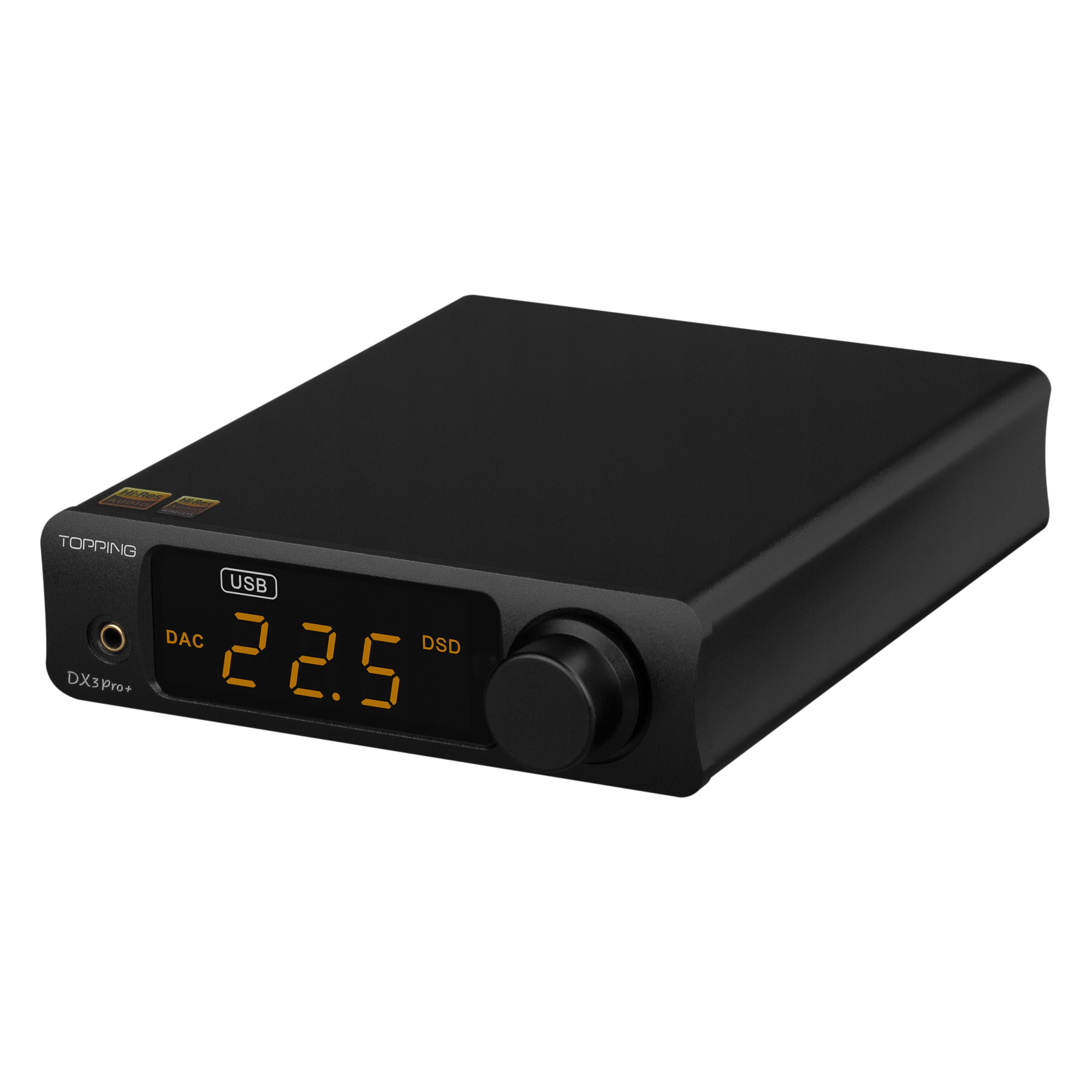
The Topping DX3 Pro+ is the compact, measurement-led alternative if Bluetooth matters and you do not need balanced headphone or XLR speaker connections. Its simpler I/O is easier to live with in a one-headphone setup. The ZH3 is the more capable control centre when several wired sources and powered monitors share the desk. If a more deliberately coloured presentation is the goal, the FiiO K11 R2R approaches that choice differently; it is not a substitute for the ZH3's analog input and speaker routing.
Value and verdict
At its observed US$199.99 price in October 2026, the ZH3 offers a rare combination: independently confirmed high balanced-headphone power, multiple wired sources, analog bypass into the amp, remote-controlled output switching, and both RCA and XLR paths for a speaker system. The same exact-model Amazon listing exists in Canada, but Canadian price and stock change; check the live local offer before buying.
There are sensible limits. The front knob is not the fastest way through its menus; check the remembered speaker level before switching outputs. Bluetooth, a microphone and USB-powered portability are absent. Very sensitive earphones deserve a low-gain, single-ended check. Speaker tone adjustment is unavailable, and reported first-audio truncation deserves an early check with your own source. The promising line-output feature set has less independent bench coverage than the headphone stage.
Those limits do not undo the appeal of a DAC that can make two listening systems feel like one. The Fosi Audio ZH3 earns 86/100, Highly Recommended, for a wired headphone-and-speaker desk. Buy it for the connections you can stop thinking about, not because its maximum sample rate or balanced jack promises to change the recording.
MyHiFi weights Technical Performance at 30%, Value at 30%, Build & Usability at 25%, and Versatility at 15%. The weighted result is 86.15, rounded to 86. Confidence is moderate: one direct independent headphone-output measurement set, three hands-on editorials, over 20 firsthand owner accounts, product documentation and manufacturer support guidance; prevalence across all units, long-term reliability and line-output bench performance remain less well established.
MyHiFi did not perform hands-on testing. The verdict synthesizes independent bench data, hands-on reviews and exact-model product information.
Affiliate disclosure: MyHiFi may earn a commission from purchases made through affiliate links. This does not affect editorial scoring.